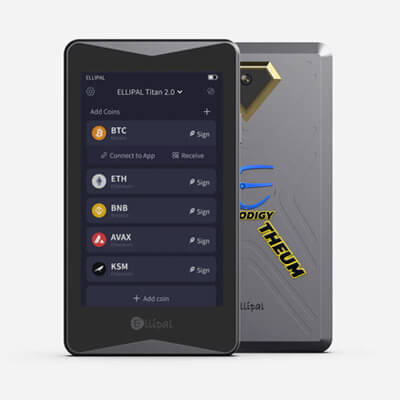


ELLIPAL Titan 2.0 Overview
Key facts
Additional details
ELLIPAL Titan 2.0 Screenshots
ELLIPAL Titan 2.0 Pros and Cons
Pros
- Fully air-gapped, QR-only signing
- CC EAL5+ certified secure element
- Self-destruct wipes keys on tampering
- 40+ chains and 10,000+ tokens natively
- 24-word seed plus optional passphrase
Cons
- Core key-generation firmware is closed
- Hong Kong jurisdiction, limited recourse
- QR send loop slower than USB signing
- Firmware updates need a MicroSD card
- No desktop app beyond MetaMask QR
Who Ellipal Titan 2.0 is Best for — and Who Should Skip It
The Titan 2.0 fits a holder who ranks attack surface above everything else and touches the device a few times a month.
- Long-term multi-chain holders get the best case: broad native chain support, no radio or cable to attack, and physical tamper defense for a device that mostly sits in a drawer.
- Buyers in gray-area or unstable regions benefit from a wallet with no geo-gate, no wallet-level KYC, and no vendor kill switch on the signing path.
- Frequent traders should pass. The QR loop adds a scan step to every send, and connected devices sign faster.
- Open-source purists should pass too. If auditable key-gen firmware is your requirement, Trezor exists and this is not that.
- NFT collectors beyond Ethereum and Polygon will outgrow the display support quickly.
What is Ellipal Titan 2.0 and How Does it Work?
The ELLIPAL Titan 2.0 is a metal-bodied, air-gapped hardware wallet with a 4-inch touchscreen and a camera, released in 2023 as the successor to the original Titan. It is one distinct product — not the smaller Titan Mini and not the newer X Card — and this review scores only the Titan 2.0.
The maker is ELLIPAL Limited, incorporated in Hong Kong in May 2017 with an office in Shatin. That jurisdiction belongs in the open, because it is half of the reason this wallet's score is capped. A hardware vendor in Hong Kong operates under a different legal and disclosure environment than a Ledger (France) or a Trezor (Czech Republic), and when the firmware that generates your keys is closed, the vendor's jurisdiction is part of your risk model whether the marketing mentions it or not.
One recency note a 2026 buyer should have: ELLIPAL discontinued its hot-wallet (software-only) service on October 31, 2025, days after a US holder reported roughly $3 million in XRP stolen from his account. The theft did not breach the Titan hardware. By ELLIPAL's account the victim had imported his hardware seed phrase into the ELLIPAL mobile app, which recreates the private keys on an internet-connected device and turns a cold setup into a hot one; ELLIPAL says no theft has ever originated from the hardware itself. It pulled the hot-wallet product to remove that failure mode for good and now focuses entirely on cold hardware. The companion app for the Titan 2.0 continues, and the swap, buy, and staking rails inside it are third-party integrations, not the discontinued hot-wallet product. The lesson generalizes to every hardware wallet: never type your seed phrase into a phone or computer app.
Security and Custody
The Titan 2.0 is fully non-custodial: keys are generated and stored on the device, backed up by a 24-word BIP39 seed with an optional passphrase, and ELLIPAL states plainly that it provides no custody. There is no cloud restore, no provider-held key share, no MPC dilution. You hold the keys or you have lost them.
The signature feature is the air gap, and it is genuine rather than marketing. The Titan 2.0 has no USB data connection, no Bluetooth, no Wi-Fi, and no NFC. The only way data enters or leaves the device is a QR code passed between its camera and screen and the phone app. That closes the entire remote-drain attack class — there is no radio to exploit and no cable to poison. Malware on your phone can propose a transaction, but it cannot touch the keys, and the 4-inch touchscreen shows the address and amount on the device itself, so what you approve is what the hardware signs.
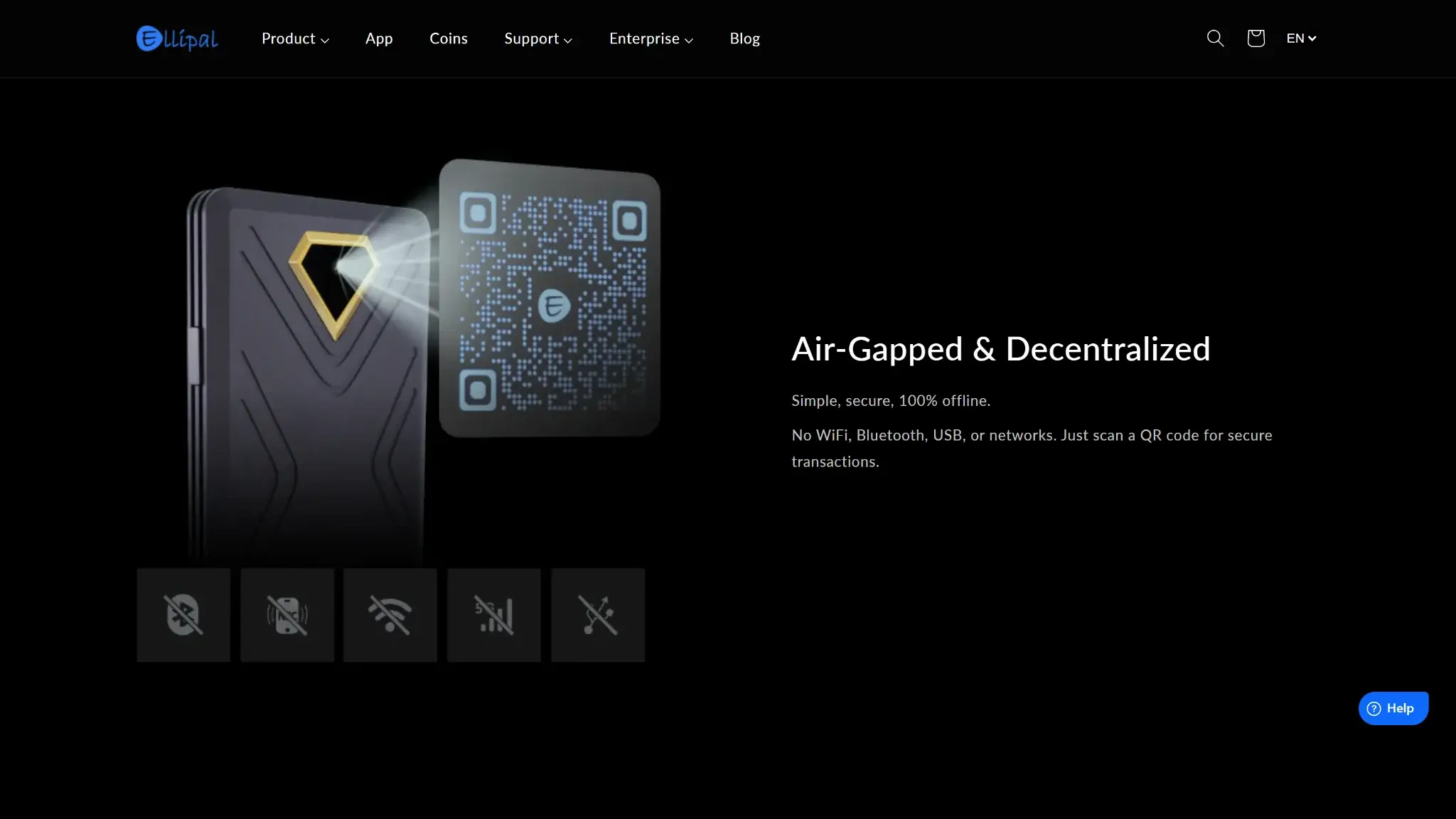
Inside the sealed metal body sits a CC EAL5+ certified secure element holding the keys. Worth stating clearly, because the criticism has a generational trap: the original Titan shipped without a certified secure element, and that complaint still circulates online. It does not apply to the Titan 2.0, which added the EAL5+ chip. Physical defenses go further than most rivals — an anti-disassembly circuit wipes the keys if the case is breached, and ten wrong password attempts trigger the same self-destruct.
Track record: no known breach or exploit of the Titan hardware to date, and the air-gapped design leaves no remote surface for one. That record was tested in October 2025, when a US holder reported roughly $3 million in XRP stolen and first described it as a cold-wallet hack. The loss did not come from the device. By ELLIPAL's account the victim had imported his hardware seed into the mobile app, recreating the keys on an internet-connected phone — the air gap held, the human step around it did not, and ELLIPAL says no theft has ever traced to the hardware. The company discontinued its hot-wallet service on October 31, 2025 in direct response, narrowing itself to cold hardware alone. It reads two ways at once: the device came through clean, and the seed-handling mistake behind the loss is one no wallet can engineer away.
The honest weakness is transparency. The Titan 2.0 is partially open-source at best — the core key-generation firmware is closed, and builds are not reproducible. Third-party assessments describe the codebase as mostly closed. Combine closed key-gen code with a Hong Kong home base and you get the stated reason this device scores in the 6s instead of the 8s: the security architecture is excellent, and you cannot independently verify its most sensitive part.
Supported Chains and Assets
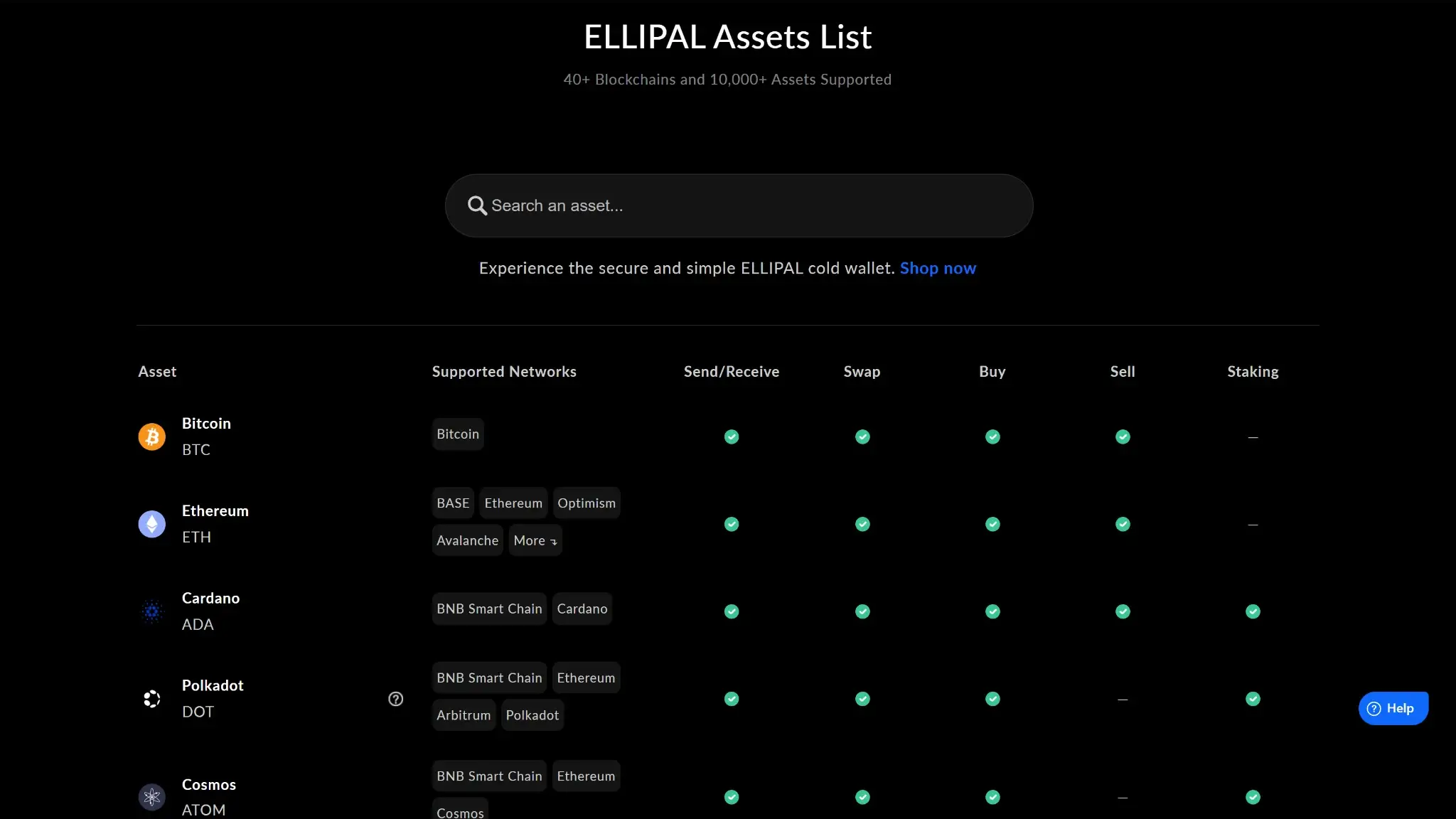
Coverage is broad for a hardware wallet. ELLIPAL lists 45+ blockchains, 50+ stablecoins, and more than 10,000 tokens, supported natively in the ELLIPAL app rather than through headline-only third-party grafts. ERC-20, BEP-20, and TRC-20 token standards are all handled, which covers the bulk of what most multi-chain holders actually own.
NFT support is the narrow spot: Ethereum and Polygon only. Collectors on Solana or other chains will need a different display wallet, though the keys can still secure those chains' coins.
Usability and Recovery
The QR workflow is the price of the air gap. A send starts in the phone app, moves to the device as a QR code, gets reviewed and signed on the touchscreen, then travels back to the phone as another QR code for broadcast. It works reliably, and the 4-inch screen makes verification easier than on button-based devices — but each transaction is a multi-step scan loop, and it is slower than plugging in a Ledger and clicking twice. Anyone sending several transactions a day will feel it.

Firmware updates arrive by MicroSD card, not cable. That keeps the air gap honest — no update path doubles as an attack path — at the cost of a card reader and a few extra minutes per update. The device itself is a full-metal slab, noticeably bulkier than a Nano-class stick, which cuts both ways: harder to lose, harder to pocket.
The wallet is app-centric on iOS and Android. Desktop use exists only through MetaMask's QR-based hardware pairing, which covers EVM chains and nothing else. Recovery follows the standard the industry trusts: write down the 24 words, add a passphrase if you want deniability or a duress layer, and restore on any BIP39-compatible wallet if the hardware dies. No cloud backup exists, by design.
Features
Everything beyond storage runs on third-party rails, and ELLIPAL is upfront that it takes no custody at any point:
- Swaps run through Changelly inside the app. Rates carry Changelly's spread — compare before accepting on larger amounts.
- Buying and selling goes through MoonPay, Simplex, and Banxa. Card purchases on these on-ramps typically cost several percent, and KYC happens with the provider, not with ELLIPAL. The wallet itself requires no identity check.
- Staking covers a limited set — ADA, ATOM, XTZ, DOT, and KSM — delegated through the app while keys stay on the device.
- Desktop and DeFi reach comes via MetaMask QR pairing for EVM chains.
Following the October 2025 hot-wallet shutdown, these integrations appear to continue for cold-wallet users, though the entry points deserve a live in-app check.
Cost
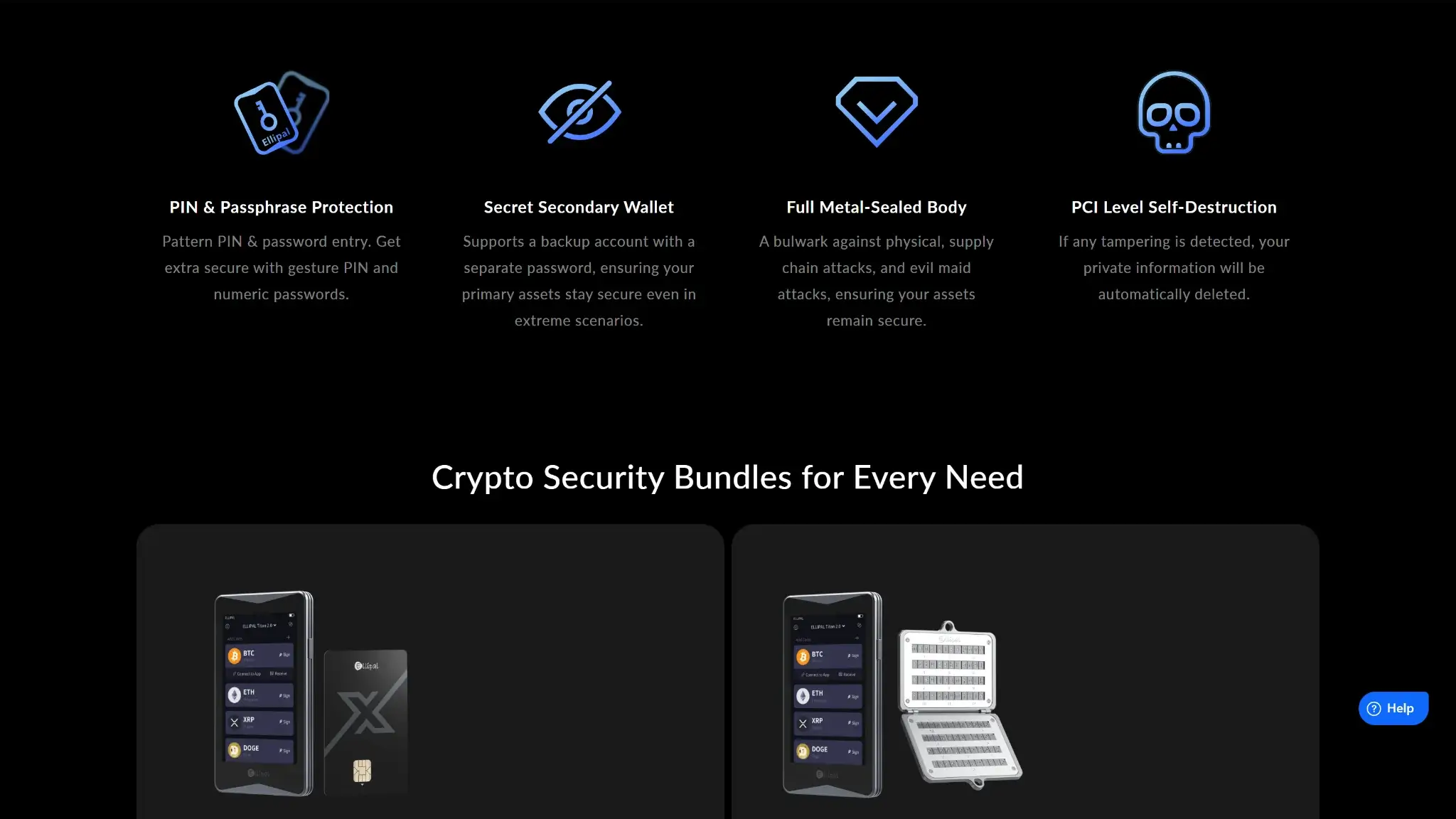
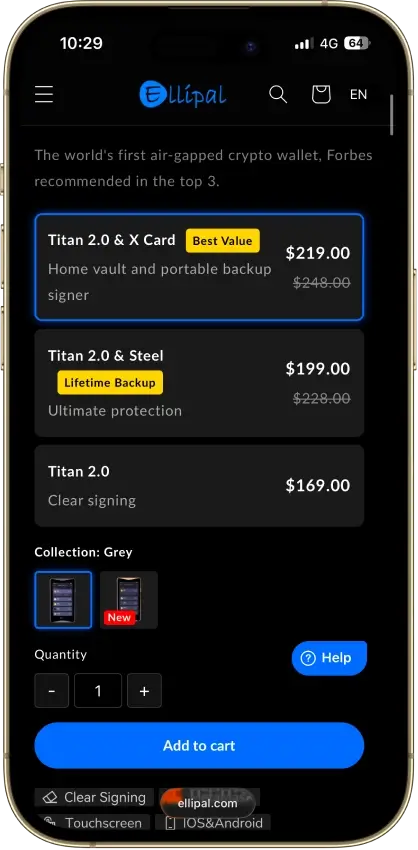
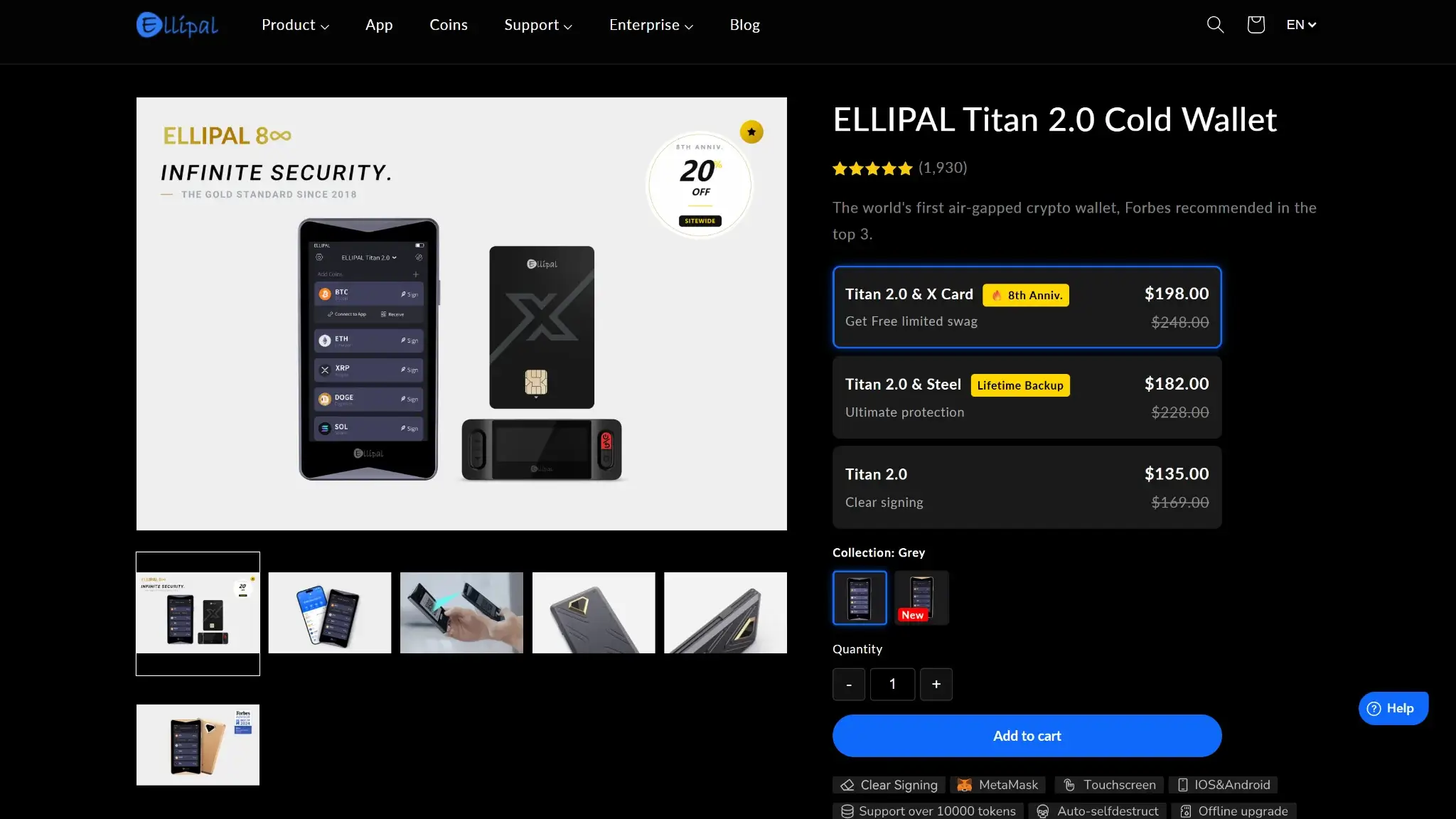
$169 MSRP, with street prices around $135 at the time of writing and an X Card bundle near $198. For a full-metal, air-gapped device with a certified EAL5+ secure element and a 4-inch touchscreen, that undercuts Ledger's Flex ($249) and lands near Trezor's mid-range. There are no subscriptions and no wallet-level fees — ongoing costs are whatever Changelly and the on-ramps charge when you use them, which is optional.
Final Verdict
The security architecture is among the most remote-attack-resistant sold today: a true air gap with no USB, Bluetooth, Wi-Fi, or NFC, a CC EAL5+ certified secure element, anti-tamper self-destruct, clean non-custodial key handling, and no device breach even through the 2025 XRP theft, which traced to a seed imported into the phone app rather than the Titan hardware. Scoring that stack like a compromised or custody-confused product would be wrong. It stays out of the 8s for reasons a reader deserves to see plainly. The key-generation firmware is closed, so the chip's most sensitive job cannot be independently audited, and ELLIPAL Limited answers to Hong Kong law, which offers less regulatory visibility than the EU vendors it competes with. Add the genuinely slower QR workflow, MicroSD updates, and thin desktop story, and the device is excellent at its one job while asking for more trust than its open rivals.
No vendor kill switch on the signing path, Pairs with MetaMask over QR codes, Staking on five chains, keys stay put
Why it stands out
- Fully air-gapped, QR-only signing
- CC EAL5+ certified secure element
- Self-destruct wipes keys on tampering
- 40+ chains and 10,000+ tokens natively
- 24-word seed plus optional passphrase
What to consider
- Core key-generation firmware is closed
- Hong Kong jurisdiction, limited recourse
- QR send loop slower than USB signing
- Firmware updates need a MicroSD card
- No desktop app beyond MetaMask QR
Disclaimer: CryptoSlate may receive a commission when you click links on our site and make a purchase or complete an action with a third party. This does not influence our editorial independence, reviews, or ratings, and we always aim to provide accurate, transparent information to our readers.
