


 Xaman Wallet Review: The Best XRP Wallet in September 2026?
- Smooth, mobile-first design tailored for XRP users
- Native access to the XRPL tokens, NFTs, and dApps without extra apps
- Extra security option through NFC-based Xaman Cards
If you spend a lot of time in the XRP Ledger ecosystem, you’ve probably heard of Xaman. This self-custody wallet focuses on XRPL users and delivers direct access to tokens, NFTs, and dApps through a clean, mobile-first interface.
In this Xaman wallet review, we’ll share our first-hand experience testing its security, supported assets, fees, and ease of use.
You’ll see where Xaman delivers, where it falls short, and whether it belongs in your crypto toolkit this year.
Our Take on Xaman: Pros and Cons
Xaman is built for people who spend most of their time within the XRP Ledger ecosystem. Its design, features, and integrations give users complete control over their XRPL assets without the hassle of juggling multiple apps. It suits traders who swap XRP-based tokens daily, NFT collectors active on XRPL marketplaces, and developers working with XRPL dApps.
The wallet’s biggest strengths are its smooth mobile experience, straightforward account management, and strong focus on XRPL-native tools.
Still, the narrow XRPL focus can turn off anyone with a diverse, multi-chain portfolio. Xaman lacks support for major networks like Ethereum or Solana, and it offers no desktop app or browser extension. If you want one wallet to manage all your chains, Xaman won’t be enough on its own.
Pros
- Sleek, easy-to-use mobile app
- Built for the XRP Ledger from the ground up
- Native access to XRPL tokens, NFTs, and dApps
- Extra tools via Xaman Pro and Xaman Cards
- Strong security and reliable performance
Cons
- Limited to XRPL and a few supported assets
- No desktop app or browser extension
- No cross-chain swaps
- Smaller user base than top multi-chain wallets
What Is Xaman Wallet?
Xaman Wallet is a non-custodial mobile wallet built for the XRP Ledger. It first launched in 2021 under the name Xumm before rebranding to Xaman in 2023. From the start, its goal has been to give users a secure, all-in-one platform to store, send, and interact with XRP-based assets without relying on centralized exchanges.
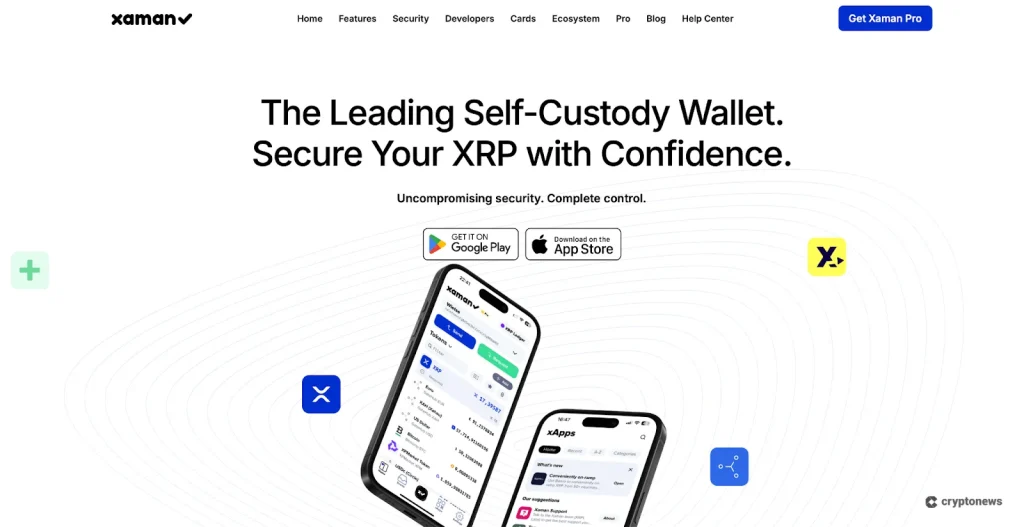
The app supports the core functions XRPL users need – from sending and receiving XRP to managing issued tokens and NFTs. It also connects directly to dApps in the XRPL ecosystem, so users can trade on decentralized exchanges, verify accounts, and handle tax reporting through integrated services.
Most Xaman users are XRP traders, XRPL NFT collectors, and developers who build or test XRPL apps.
By focusing exclusively on the XRP Ledger, the wallet delivers faster transaction speeds, simpler account management, and a more tailored feature set than multi-chain wallets.
Is Xaman Wallet Safe? Security Features Reviewed
Xaman delivers a strong mix of mobile-first convenience and robust security, especially when paired with its Xaman Cards. The app stores private keys locally, encrypts them, and locks access behind a passcode or biometric authentication.
The hardware option pushes security even further by isolating keys inside a certified secure element chip, where all signing takes place internally.
Unlike some multi-chain wallets, Xaman’s entire design focuses on reducing attack surfaces. Keys never leave the device or card, transactions require explicit user approval, and the app limits repeated unlock attempts to stop brute-force attacks.
No public hack of Xaman has ever been reported. A two-phase audit by Cossack Labs – first in 2021 and then reviewed again in 2023 – found no critical vulnerabilities and confirmed significant improvements in encryption and overall security posture.
In the next sections, we’ll review Xaman’s main security features in more detail.
On-Device Encrypted Key Storage
Private keys never touch Xaman’s servers. Instead, they are generated and stored in an encrypted format within the phone’s secure storage system (Keychain on iOS, Keystore on Android).
This means even if someone gains access to the app’s files, the encryption would prevent them from using the keys without the correct authentication.
The app enforces delays after failed passcode or biometric attempts, and locks entirely after multiple wrong entries, which makes brute-force attacks practically useless.
Biometric and Passcode Transaction Approval
Whether using the mobile app or a Xaman Card, each transaction requires manual confirmation. On mobile, this means Face ID, fingerprint, or a user-set passcode.
On the hardware card, the secure chip enforces transaction signing only when tapped to the phone during an active session, so no transaction goes through without you approving it.
Independent Security Audits
Cossack Labs audited Xaman in 2021 and found no critical issues, though the review pointed out several areas to improve. The team strengthened its cryptography, rebuilt its encryption layer, and raised its OWASP MASVS security score from 43% to 89%.
A follow-up review in 2023 confirmed the upgrades and reinforced Xaman’s reputation for transparency and trust.
Xaman Wallet Supported Coins and Networks
Xaman focuses almost entirely on the XRP Ledger. It supports XRP as its primary asset, along with XRPL-issued tokens such as stablecoins, wrapped assets, and community-created tokens. Users can also store and manage XRPL-based NFTs directly in the app, with full metadata and image display.
The wallet connects to XRPL’s decentralized exchange, so users swap XRP and other XRPL tokens without using centralized platforms. Popular XRPL assets like SOLO, ELS, and CSC trade directly through this built-in DEX access.
Xaman does not compete with multi-chain wallets. It offers no support for Ethereum, Solana, or other non-XRPL networks.
For traders, NFT collectors, and developers in the XRPL ecosystem, this single-network focus creates a more optimized experience than general-purpose wallets.
Xaman Wallet Features
Xaman packs a set of tools built for XRPL users, from self-custody to integrated dApp access. Here’s a closer look at its main features.
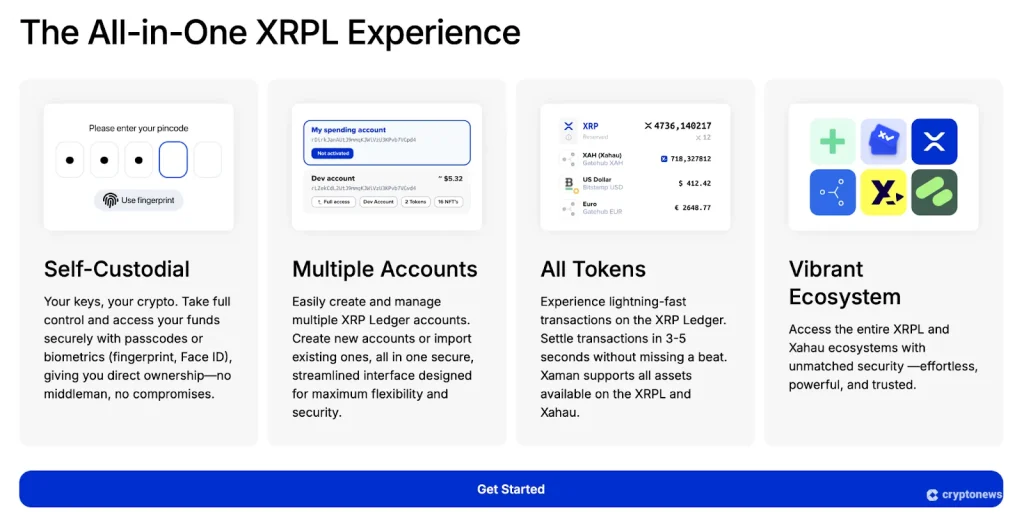
1. Self-Custody
Xaman gives you full control of your private keys. When you create a wallet, the app generates the keys on your device and encrypts them in the phone’s secure storage (Keychain on iOS, Keystore on Android).
The keys never leave your device and never sync to the cloud. You unlock the wallet with a passcode or biometrics, and every transaction requires explicit confirmation.
If you add a Xaman Card, the wallet moves your keys into the card’s secure element. That chip never releases the key – it signs transactions internally and sends only the signed output to the app.
2. Swaps and On-Chain Trading
Xaman connects directly to the XRPL decentralized exchange (DEX), so you can trade XRP for other XRPL tokens without sending assets to a centralized exchange. The DEX uses an order book model, so you can place market or limit orders and see available liquidity before trading.
The wallet also supports XRPL’s automated market maker (AMM) pools for tokens that use this feature. This allows you to swap instantly at quoted rates or provide liquidity to earn fees.
3. Token and Account Management
Xaman supports multiple XRPL accounts within the same app. You can label accounts, switch between them, and manage trust lines for any XRPL-issued token. Setting a trust line authorizes that token in your account, and the app displays the issuer so you can avoid fake or spam assets.
The interface also flags when a token or transaction requires a memo, so you don’t lose funds to missing metadata. Advanced users can adjust account settings such as regular keys, signer lists, and domain verification.
4. dApp Integration
Xaman acts as a secure gateway to XRPL-based services:
- GateHub lets you deposit or withdraw fiat directly to and from your XRPL account.
- DEX Trade gives a more advanced trading interface with charting and order management.
- ZenLedger imports your XRPL transaction history for automated tax reporting.
You connect to dApps through Xaman’s built-in browser or by scanning a QR code. The wallet displays exactly what a dApp requests before you approve it, which helps block unauthorized access.
5. Xaman Pro
Xaman Pro targets users who need more than the standard toolkit. It unlocks premium features such as:
- Priority customer support
- Expanded account slots for managing a larger portfolio
- Advanced analytics for tracking token performance
- Exclusive beta access to new integrations
The subscription costs $5 per month or $50 per year, with a short free trial for new subscribers.
6. Xaman Cards
Developed in partnership with Tangem, Xaman Cards are NFC-enabled hardware wallets that store your keys inside a CC EAL6+ certified secure element. The card generates your key internally, signs transactions inside the chip, and never exposes the key to your phone or the internet.
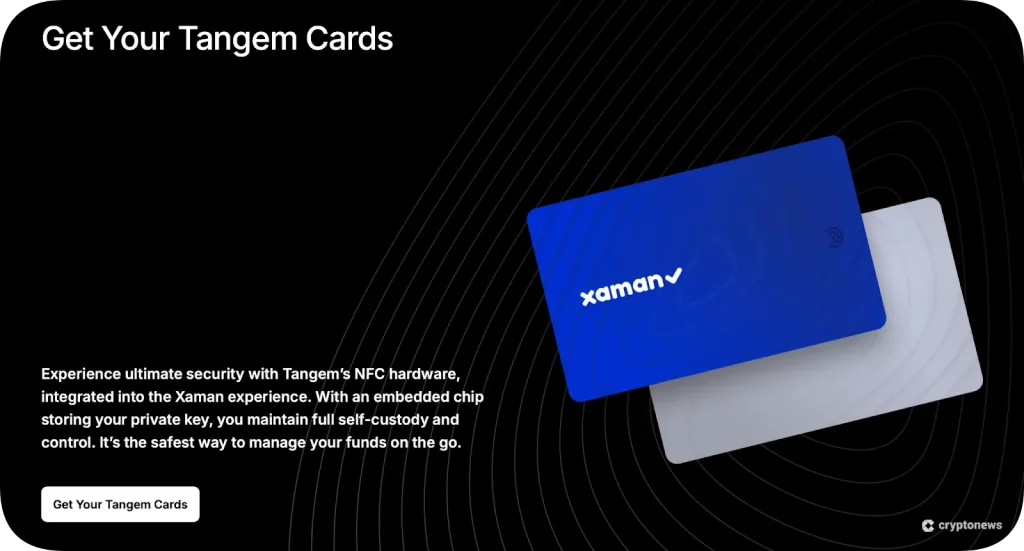
You initiate a transaction in the Xaman app, then tap the card on your phone to approve it. Without the card present, no transaction can go through. This approach works even if your phone is compromised. The card has no battery, lasts for years, and remains waterproof and tamper-resistant.
Xaman Wallet Fees
Xaman does not charge fees for deposits or withdrawals. Like all non-custodial wallets, the only mandatory cost for sending transactions is the XRP Ledger network fee. On XRPL, this fee is extremely low, typically a fraction of a cent per transaction.
Swaps on the built-in decentralized exchange also carry only the standard XRPL transaction fee. The wallet does not add a markup to the swap rate, although the final price can include slippage depending on market liquidity.
For fiat purchases, Xaman integrates with third-party providers. These partners set their own fees, which can vary depending on payment method, currency, and location. The app displays the total cost, including any provider charges, before you confirm the purchase.
Xaman Wallet Customer Support
Xaman offers support through several channels. The in-app help section links to a detailed knowledge base that covers setup, security, and troubleshooting topics. You’ll find answers to most simple questions here, so you probably won’t need to message the team.
For direct assistance, users can submit a support ticket through the official Xaman website or the app. Tickets typically receive a reply within one to two business days, with faster responses for Xaman Pro subscribers.
The team also maintains active profiles on X (formerly Twitter), where community members and staff answer questions in real time.
Overall, Xaman’s support structure works well for general guidance and problem-solving, though live chat or phone support is not available.
Xaman Limitations
Xaman works well if you stick to the XRP Ledger, but it comes with some trade-offs. It only supports XRPL tokens and the Xahau network, so you can’t store or trade major coins like Bitcoin, Ethereum, or Solana. If you keep a mixed portfolio, you’ll still need another wallet.
The app doesn’t run well on tablets. Many iPads won’t install it, and even when they do, the layout feels awkward, and NFC often doesn’t work.
Because XRPL uses issued tokens, you need to trust the token’s issuer. Xaman shows you issuer details so you can double-check, but the responsibility to vet them is still on you.
Some users also point out friction around payments. There’s no option to pay directly from the wallet unless you have certain payment methods, and a few have complained about unclear limits or restrictions.
Xaman Alternatives
If Xaman’s XRPL-only focus feels too narrow, other wallets may suit your needs. You can explore more options in our guide to the best XRP wallets.
Here’s how Xaman compares to some of the best alternatives available:
Best Wallet
Best Wallet takes the opposite approach from Xaman – instead of focusing on one blockchain, it expanded its ecosystem to 60+ chains. You get XRP support alongside Ethereum, Solana, BNB Chain, and pretty much every major network under one roof.
The interface feels just as clean as Xaman’s, which makes it easy to recommend for beginners. If you are looking to explore other chains apart from XRPL, Best Wallet is certainly one of the best options.
Read our Best Wallet review to learn more about this non-custodian wallet.
Visit Best WalletMargex Wallet
Margex isn’t really a wallet; it’s a trading platform where you can deposit XRP and other cryptos to access leveraged trading and advanced orders.
The platform works wonders for users who want to explore trading and seek to profit from the ups and downs of cryptocurrencies, rather than investing in decentralized finance products.
It’s also a great option for those who want an easier way to handle their wallet keys.
Read our Margex review to learn more about what this crypto exchange has to offer.
Visit MargexZengo
Zengo takes an entirely different approach to security – no seed phrases at all. Instead, it uses MPC (multi-party computation) and biometric authentication to protect your assets. You get support for hundreds of coins across major chains, plus perks like 24/7 live support and inheritance planning that Xaman doesn’t offer.
If you are looking for bulletproof security for a diverse portfolio, Zengo should certainly be one of your go-tos.
Read our Zengo review to learn more about how this wallet handles security.
Visit Zengo WalletHow to Set Up Xaman Wallet
In this section, you’ll learn how to install and set up the Xaman app. You can run it alone or link it with Xaman Cards for stronger security.
Step 1: Download the Xaman App
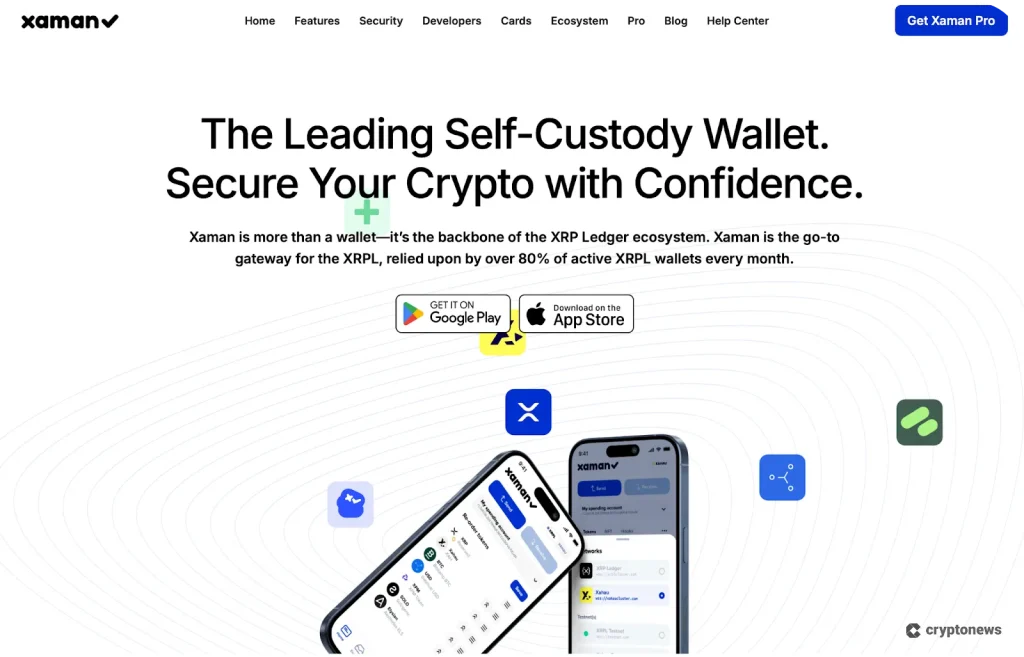
Go to the Xaman Wallet website and tap the Google Play or App Store button above to open the official download page.
Also, make sure that the publisher is XRPL Labs before installing to avoid fake apps.
Step 2: Create and Secure a New Wallet
Open the app and choose “Start.”
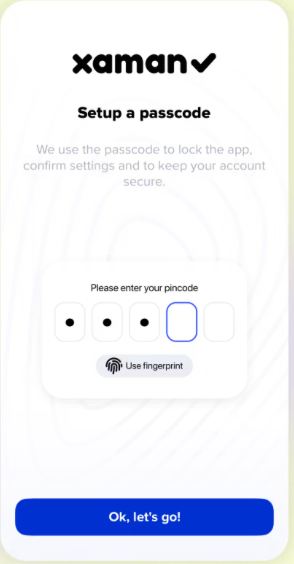
Set a 6-digit passcode and confirm it. Enable Face ID or fingerprint if your phone supports it.
The app will generate your private key in the form of “Secret Numbers” or a seed phrase. Write this down on paper and store it securely offline. Xaman will never display it again after setup.
Note: If you already have a wallet or a Xaman Card, select “Import Wallet” or “Add Tangem Card” instead, then follow the prompts.
Step 3: Deposit XRP or XRPL Tokens
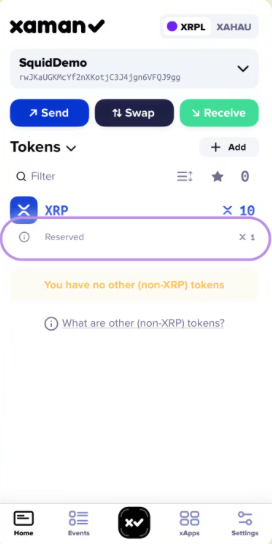
From the main screen, tap the “Receive” button. Choose XRP or another XRPL token. Your unique wallet address (starting with “r”) will appear, along with a QR code.
- Scan the QR code if sending from another mobile wallet.
- Copy the address if transferring from an exchange.
Transactions usually appear in seconds because XRPL processes payments quickly.
Xaman Review Conclusion: Is It the Right XRP Wallet for You?
Xaman nails its role as a wallet built for the XRP Ledger. It gives you full control over your assets, quick transactions, and direct access to XRPL’s DEX and dApps. Tools like trust line management, native NFT support, and Xaman Card integration make it a strong fit for anyone who lives in the XRPL ecosystem.
That focus comes with limits. You won’t manage Ethereum, Bitcoin, or other chains here, so a second wallet is still necessary for a mixed portfolio.
But if most of your activity revolves around XRP and XRPL tokens, Xaman delivers a smooth, secure, and purpose-built experience that’s hard to beat.
Our Methodology: How We Tested and Reviewed Xaman Wallet
We put Xaman through the same rigorous testing we apply to every wallet review. This meant evaluating security features, supported assets, fees, customer support quality, and real-world usability across both iOS and Android.
Our testing covered the complete user experience. We created new wallets, imported existing XRPL accounts, executed dozens of transactions, tested DEX swaps, and connected to multiple dApps. We also used Xaman Cards to review their build quality, NFC performance, secure element rating, and how they handled transaction approval.
Each feature was scored and compared against competing wallets in the same category. We measured everything from setup complexity to transaction speeds, trustline management to dApp connectivity.
FAQs
No public hack of Xaman has ever been reported. The wallet stores your keys on your device or inside a secure hardware card, so only you can approve transactions. As with any wallet, poor personal security practices can still put funds at risk.
Xaman Pro adds premium features like priority support, more account slots, advanced analytics, and early access to new tools. The standard Xaman app remains free and covers all core wallet functions.
Send your XRP or XRPL tokens to another wallet or exchange by tapping “Send,” entering the recipient’s address, and confirming the transaction.
Only if the receiving address asks for one, such as when sending to an exchange. The app will display a memo field when it’s needed.
Yes. Xaman integrates with third-party providers for fiat purchases of XRP and other XRPL tokens. Fees and availability depend on your payment method and location.
References
- Xaman Audit (Cossack Labs)
- What is a Seed Phrase? (CryptoNews)
- XRPL Transaction Costs (XRP Ledger)
