

Uniswap Review 2026: Features, Fees, and Alternatives
- One of the most user-friendly decentralized trading experiences with deep liquidity across major networks.
- Wide range of tokens and chains, including Ethereum, Base, Arbitrum, BNB Chain, and Solana.
- Non-custodial, so users maintain control of their crypto at all times.
Uniswap is one of the largest decentralized exchanges (DEXs) in the Ethereum ecosystem. It provides access to millions of ERC-20 tokens, as well as assets on EVM-compatible networks like Base, Arbitrum, and Polygon. We tested the exchange extensively and reveal our findings in this Uniswap DEX review.
To assess Uniswap’s user experience, we traded a wide range of crypto pairs on various networks. Core research metrics included average commissions, slippage, and available liquidity, as well as security, usability, and required learning curve.
Read on to determine whether Uniswap is the right DEX platform for you or if better alternatives exist.
Uniswap Exchange Review: Pros and Cons
Uniswap appeals to crypto traders who prefer decentralized swaps over centralized order books. As platform traders use non-custodial wallets and smart contract transfers to buy and sell assets, they avoid counterparty risks and centralized control.
We found that Uniswap performs well for ERC-20 token swaps, but the DEX offers limited liquidity on Solana and EVM-compatible networks like BNB Chain and Arbitrum. Users often face high transaction fees, too, as the v4 upgrade lets trading pool creators set custom commissions.
While we like Uniswap’s decentralized finance (DeFi) ecosystem, which lets users provide liquidity and earn passive yields, the feature requires a steep learning curve. The slippage system can also confuse beginners, particularly when trading tokens with weak liquidity.
- The largest Ethereum-based DEX for trading volume and active users
- Trade cryptocurrencies in a non-custodial environment
- Most Uniswap swaps are executed in seconds
- Access up-and-coming ERC-20 tokens before they blow up
- Uniswap v4 lets pool creators set uncapped commissions
- Beginners require a steep learning curve for most platform features
- Weak liquidity on non-Ethereum networks like BNB Chain and Celo
- High gas fees can make small trades unviable
What is Uniswap?
Since it started life in 2018, Uniswap has grown to be the largest DEX platform on the Ethereum network, and the platform allows users to trade ERC-20 tokens in a decentralized environment. Its innovative automated market maker (AMM) framework offers swaps via liquidity pools, which eliminates traditional order books.
To trade cryptocurrencies, users connect a non-custodial wallet, and smart contracts execute positions in seconds. As a decentralized initiative, traders avoid centralized counterparty risks. They trade tokens without giving up control of their private keys, and skip traditional know-your-customer (KYC) procedures.
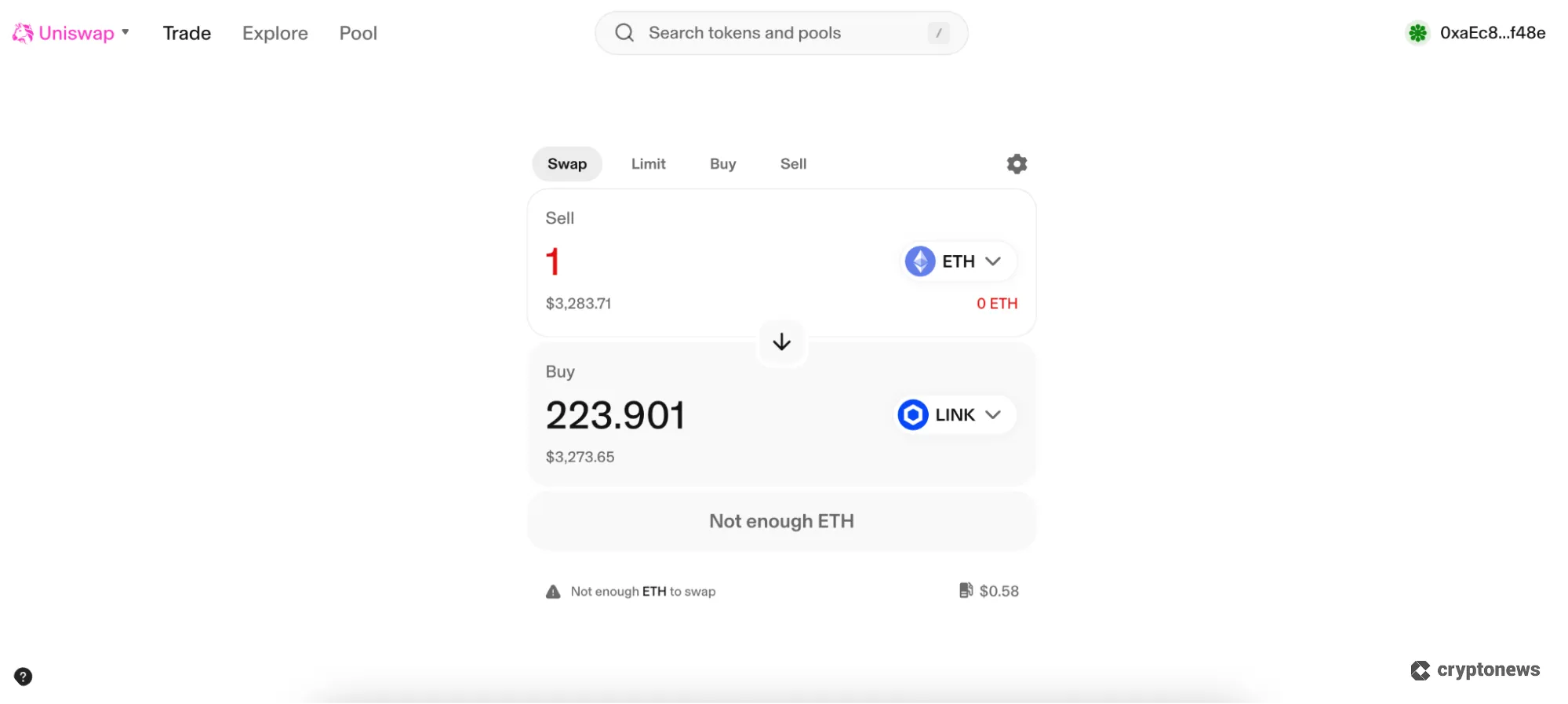
Uniswap has expanded into EVM-compatible networks, including Polygon, BNB Chain, Arbitrum, and Base. This extensive structure unlocks millions of digital assets, including new cryptocurrencies with small market capitalizations.
In addition to trading, Uniswap’s AMM model lets crypto investors generate passive yields on their idle assets. They deposit cryptocurrencies into liquidity pools like WBTC/USDC and ETH/USDT to earn a share of the DEX’s trading commissions.
Is Uniswap Safe and Trustworthy?
Our Uniswap exchange review confirms that the platform is safe. Cybersecurity firms have repeatedly audited the DEX’s smart contract structure, and having an open-sourced nature ensures transparency without secrecy.
Uniswap operates a non-custodial model, which means that you hold your private keys for you wallet and trade cryptocurrencies without relying on centralized exchanges (CEXs). Once you complete a swap, the smart contract transfers the purchased assets into your connected wallet. You can then disconnect the wallet and store cryptocurrencies with full autonomy.
While Uniswap’s decentralized ecosystem, guided by Uniswap Labs, helps traders avoid centralized vulnerabilities, individuals remain responsible for security practices.
Anyone can launch liquidity pools on Uniswap, so scammers often create fake tokens that imitate real crypto projects. The open marketplace often attracts rug pulls, honeypots, and other crypto scams because Uniswap has no involvement in the listing process.
Following general wallet best practices and conducting independent research helps mitigate these risks.
Uniswap Supported Coins and Blockchains
As Uniswap offers a decentralized marketplace with no listing restrictions, millions of tokens are traded on its exchange. The vast majority of these tokens lack sufficient liquidity, so traders likely have several thousand legitimate assets to choose from.
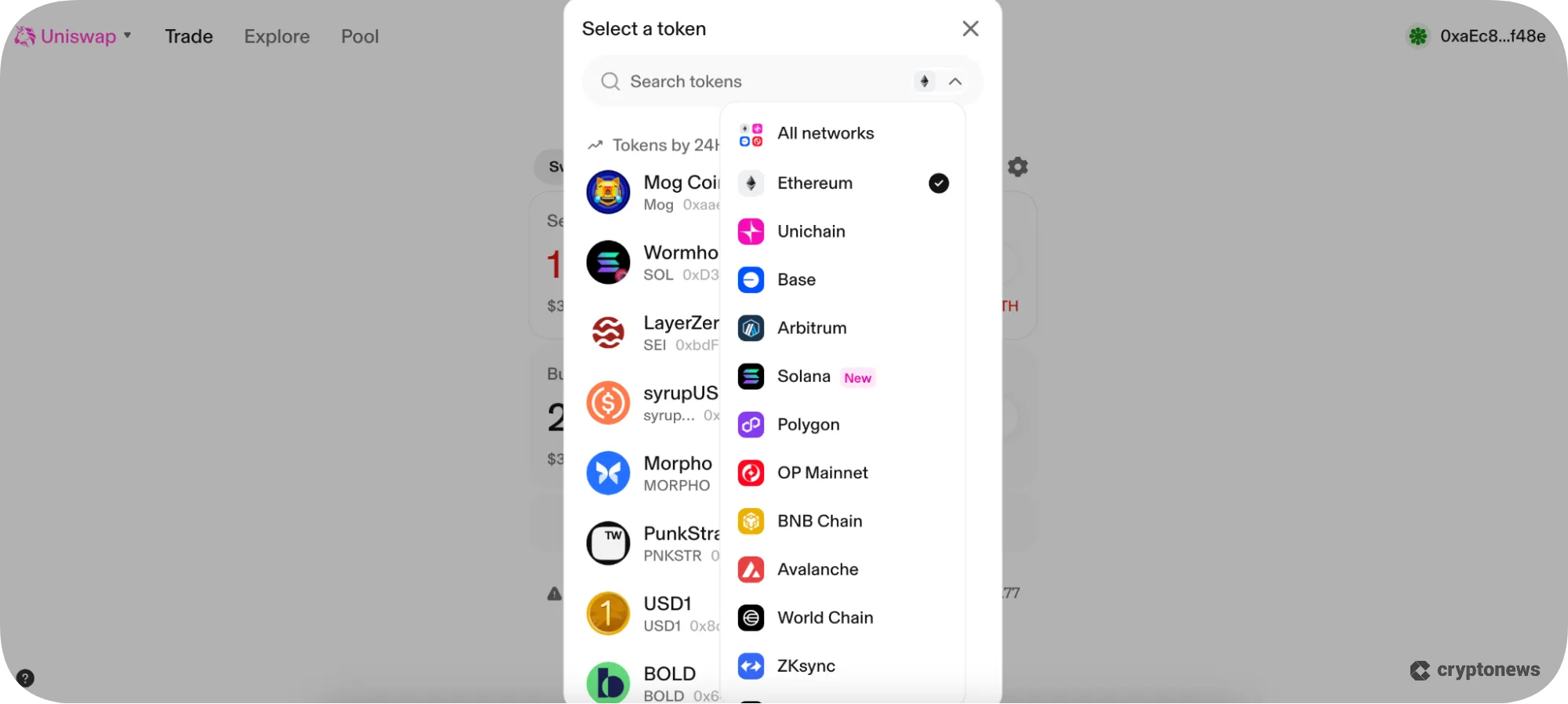
New Uniswap listings appeal to speculative traders who prefer high-growth markets. These tokens often launch with market capitalizations of less than $1 million, making the risks and rewards substantial. In contrast, established cryptocurrencies also trade on Uniswap, including Ethereum (ETH), Shiba Inu (SHIB), Pepe (PEPE), and Aave (AAVE).
Most of Uniswap’s trading volume comes from ERC-20 tokens, although the exchange also supports cryptocurrencies from the following EVM-compatible networks:
- Base
- Arbitrum
- Polygon
- OP Mainnet
- BNB Chain
- Avalanche
- World Chain
- ZKsync
- Soneium
- Zora Network
- Celo
- Blast
While Uniswap also supports SPL tokens on the Solana blockchain, its trading volumes remain small compared with Raydium, Jupiter, and Orca. Similarly, most BEP-20 tokens are traded on PancakeSwap, limiting access to the BNB Chain ecosystem.
In terms of shortcomings, our Uniswap exchange review found that the DEX lacks support for many top cryptocurrencies, including Bitcoin (BTC), XRP (XRP), Litecoin (LTC), Cardano (ADA), and Tron (TRX).
Uniswap Safety Tip
We strongly recommend trading Uniswap tokens via their unique contract address. Searching for cryptocurrencies manually is risky, as multiple tokens appear for the same project name.
Buying the wrong token leads to a loss of funds, as scammers typically control these liquidity pools.
When you input the trade parameters, paste the contract address, and verify that Uniswap displays the correct digital asset.
Uniswap Key Features
Although Uniswap primarily facilitates decentralized swaps, the exchange offers additional features to enhance the ecosystem experience. Popular features include DeFi yields through liquidity provision, as well as partnerships with third-party fiat gateways.
Learn more about Uniswap’s key features and products.
Swaps
Uniswap swaps differ from traditional crypto exchanges, which require platform users to place market or limit orders. On Uniswap, liquidity pools process token swaps via decentralized smart contracts.
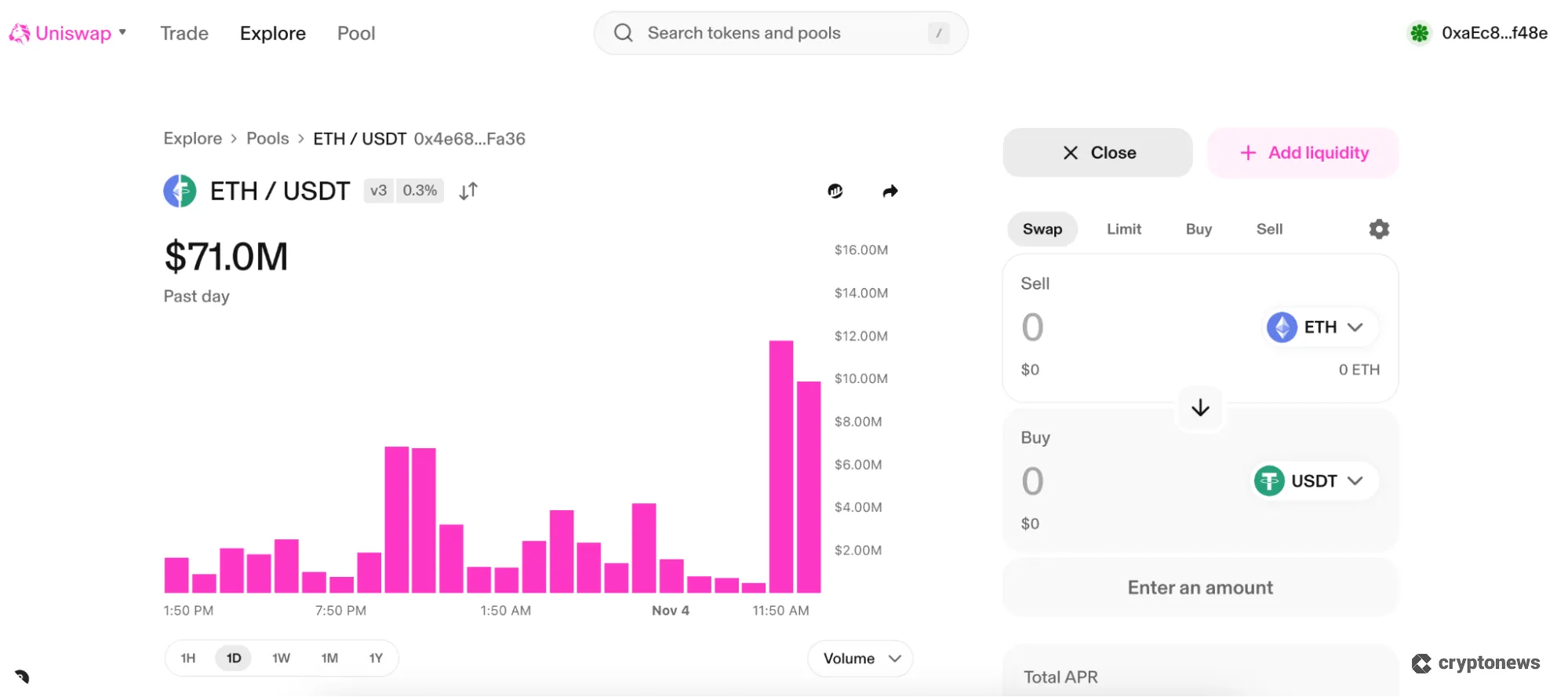
For example, a trader who holds ETH but wants to buy Tether (USDT) uses the ETH/USDT liquidity pool. They connect to Uniswap with their wallet and enter the swap requirements, then a smart contract exchanges ETH for USDT. The trader receives USDT in the same wallet within a minute.
Liquidity Provision
Uniswap relies on liquidity provision, so it incentivizes investors to deposit cryptocurrencies into trading pools. Depositors earn a share of the pool’s commissions, which Uniswap users incur when they swap tokens.
The DEX uses a dual-token system to form trading pairs. To earn yields, users must deposit equal amounts of each digital asset. Uniswap displays estimated APYs for each pair, which fluctuate with volume and swap dynamics.
Blue-chip pairs like ETH/USDC and WBTC/USDT offer the lowest yields, while low-liquid markets offer much higher returns.
Uniswap boasts approximately $3 billion in total value locked (TVL), which highlights its strong position in the broader DeFi sector.
Buy Crypto With Fiat
As a DEX, Uniswap trading markets support crypto-to-crypto swaps only. To help first-time investors enter the DEX ecosystem with traditional money, Uniswap partners with fiat gateways like Topper, MoonPay, and Transak.
These gateways let users buy cryptocurrencies with Google/Apple Pay, PayPal, debit/credit cards, and other convenient methods. Uniswap simply provides the interface, so users complete transactions with the on-ramp provider.
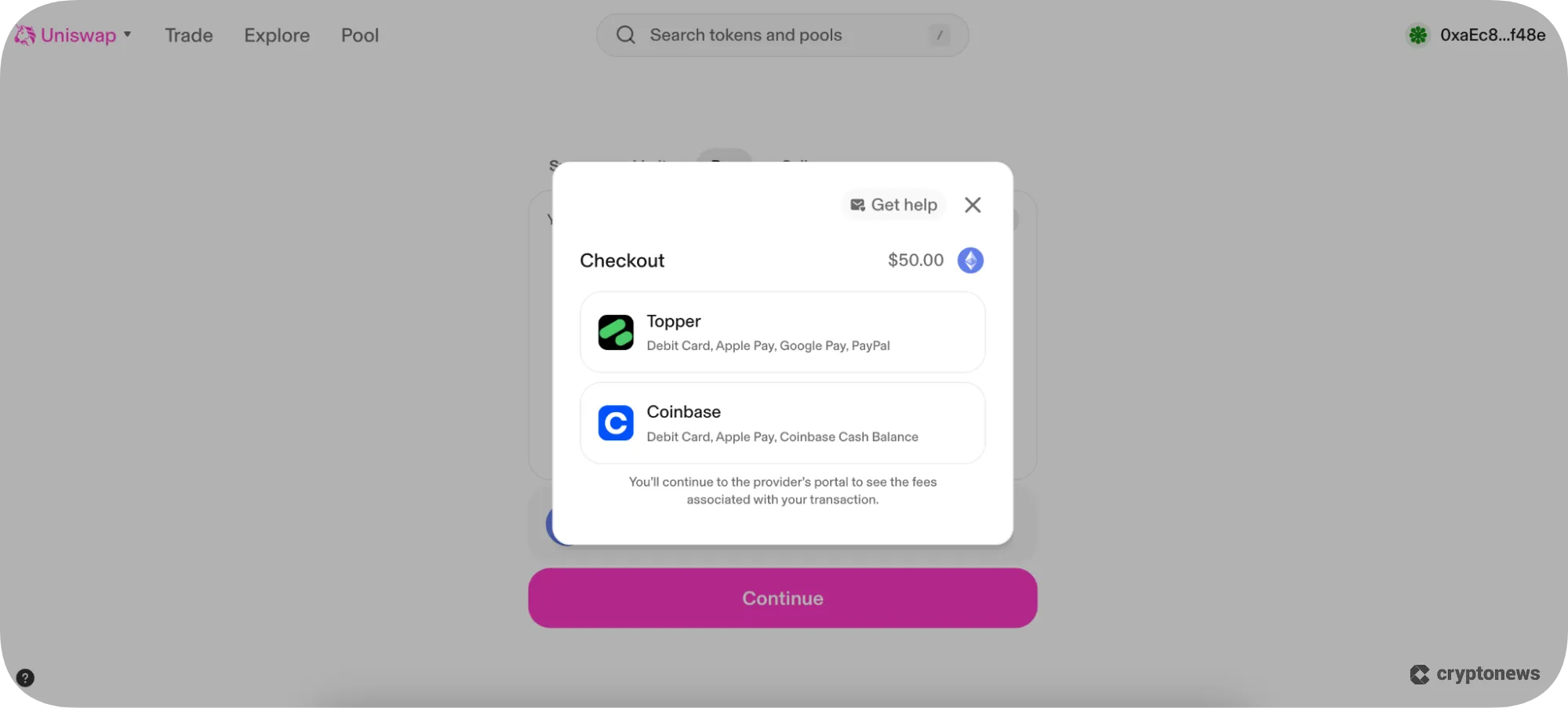
After you connect a wallet and enter the purchase requirements, the gateway collects your personal information, government-issued ID, and payment details. It then transfers digital assets to the same wallet.
Uniswap’s fiat fees lack transparency, as partners include charges in the quoted rate. The exchange likely adds a markup because fees average 3-5% of the transaction amount.
Uniswap API
Uniswap offers an API service that supports several use cases.
End users get live prices on selected pairs, explore historical data, and gain liquidity and volume insights. The API also allows developers to offer Uniswap trading tools on their native websites or applications. Existing API customers include OKX, Ledger, and Fireblocks.
UniswapX
UniswapX offers an alternative way to swap tokens in a decentralized framework. The platform uses a meta-aggregator structure, since it compares token prices on multiple DEXs, including the primary Uniswap exchange.
The system executes swaps at the best market price, helping traders reduce investment costs.
UniswapX users also gain access to gasless swaps. This feature lets traders swap Ethereum-based cryptocurrencies without needing ETH for network gas. Instead, users cover network fees in the same assets that they swap. If a swap fails to execute, users receive a full refund on the paid fees.
Another core feature is MEV protection. It helps traders avoid bots that front-run exchange participants, as UniswapX broadcasts swap requirements privately.
Uniswap Wallet
Uniswap Wallet is a native crypto wallet that offers non-custodial storage. The wallet supports iOS and Android smartphones, plus a Chrome browser extension.
Users store cryptocurrencies from over 15 networks, including Ethereum, BNB Chain, Solana, and Polygon. Network compatibility aligns with the main Uniswap exchange, which means it lacks support for Bitcoin, Cardano, and other top blockchains.
The decentralized wallet streamlines DEX trading through Uniswap integration. Traders swap any Uniswap token from the wallet interface, so they avoid secondary connections.
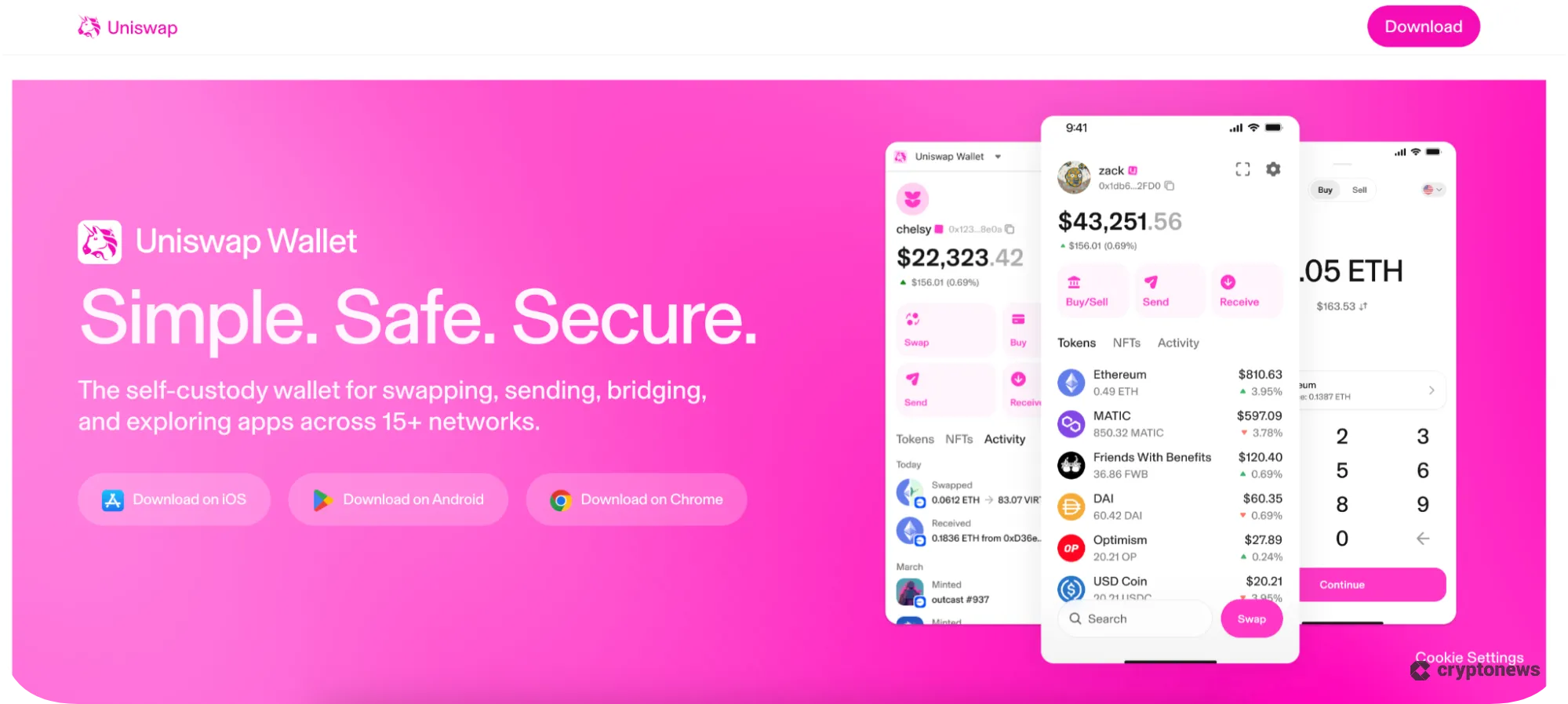
Regarding safety, Uniswap Wallet users receive encrypted private keys when they download the wallet. The open-source app and extension offer transaction alerts, suspicious token warnings, and Face/Touch ID logins.
The wallet enables fiat purchases with multiple payment types, and the off-ramp tool lets users cash out crypto balances for local money.
What is the Best Wallet to Use With Uniswap?
The Uniswap exchange requires traders to connect a non-custodial wallet that supports the token’s network standard. Users need an Ethereum wallet, for instance, to trade ERC-20 tokens. The Uniswap Wallet app offers an alternative method, but weak asset compatibility and limited security features mean better options exist.
Since Uniswap supports WalletConnect, the DEX works with the best crypto wallets. In our view, the Best Wallet app is a top choice. It supports over 60 blockchains and networks, including Bitcoin, Ethereum, XRP, Solana, and BNB Chain.
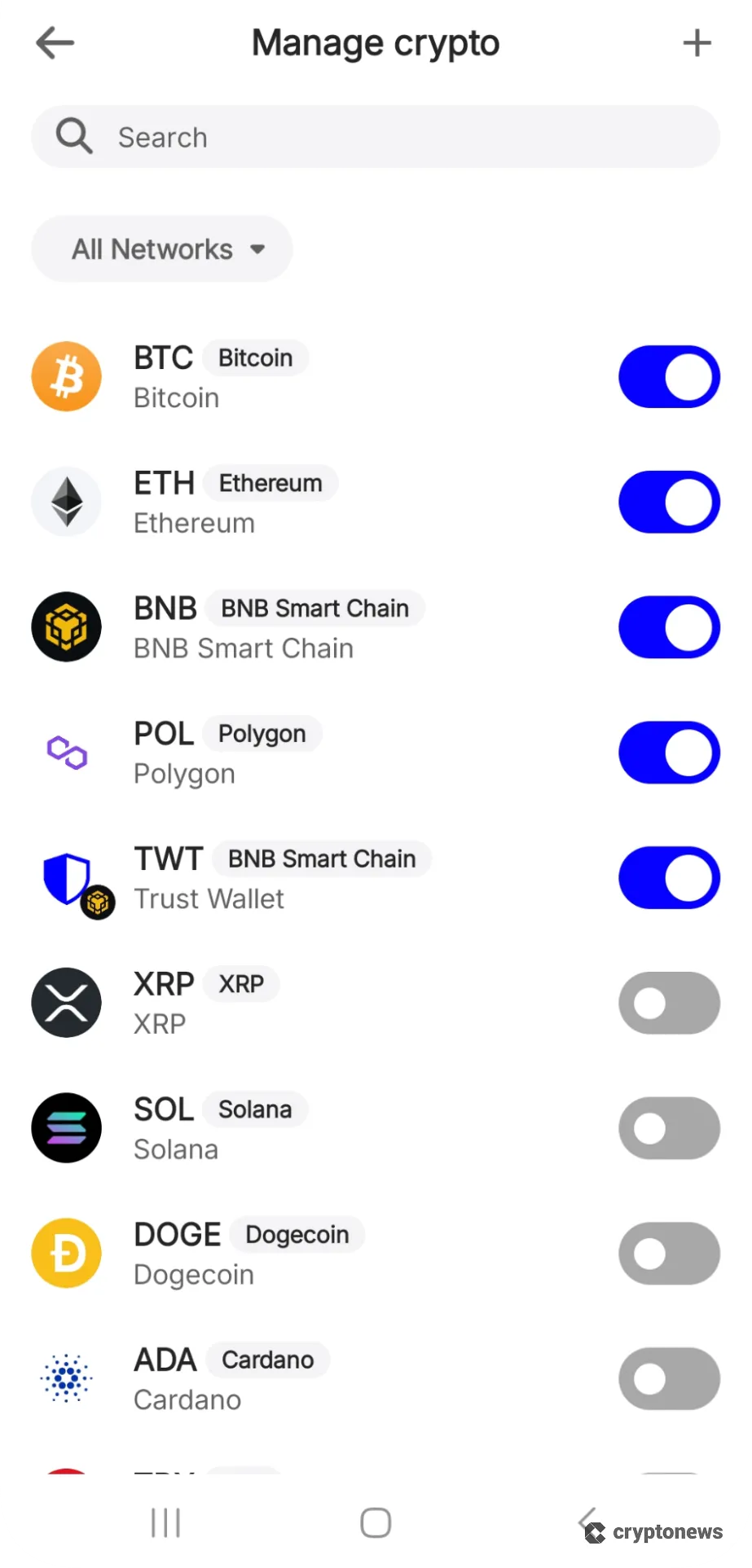
The wallet suits complete beginners and experienced traders alike, and its security controls include biometrics and two-factor authentication.
As Best Wallet has a built-in launchpad, users buy new cryptocurrencies before they list on Uniswap and other DEXs. This feature offers a first-mover advantage on innovative Web3 projects.
Visit Best WalletUnichain and $UNI Token
Uniswap has a proprietary Layer 2 network called Unichain. Built on the OP Stack to improve Ethereum’s scaling capabilities, Unichain processes transactions in about 200 milliseconds at near-zero fees.
The ecosystem hosts over 100 dApps from DeFi and other Web3 niches, including Orbiter Finance, Hyperbridge, and Pyth Network. However, with only $215 million in TVL, the network attracts minimal adoption. Base, Arbitrum, and other Layer 2s have TVLs of several billion dollars.
Although Uniswap has a native token, UNI, Unichain users must pay gas fees in ETH. This is an unusual dynamic, since the developers had the opportunity to increase UNI’s use cases.
UNI’s utility is limited to governance rights, albeit it indirectly offers exposure to the Uniswap ecosystem. Long-term holders hope that Uniswap will implement a DEX revenue-sharing program; however, the governance proposal was postponed in June 2024.
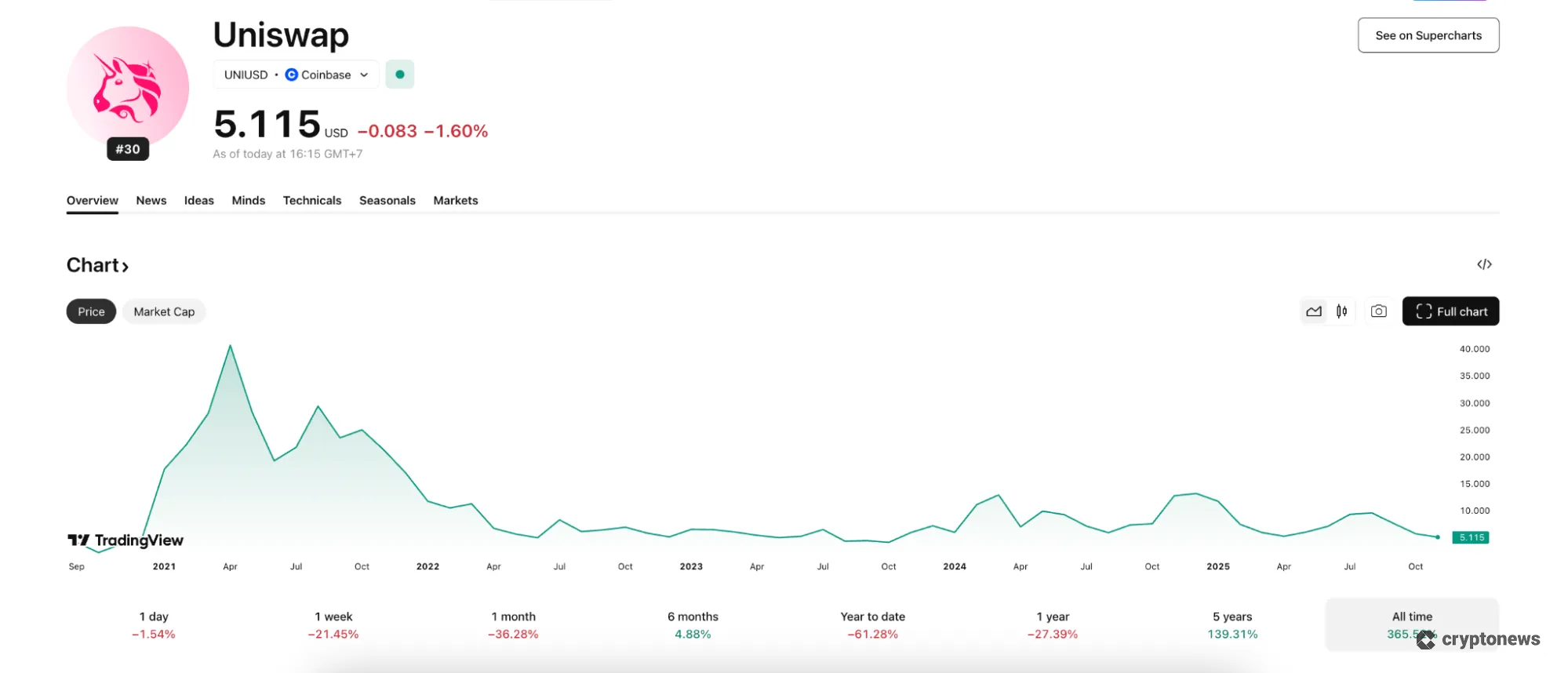
Exchange data shows that UNI launched in September 2020 at $1.09. The UNI price rallied thereafter, alongside the broader DeFi market. UNI reached an all-time high of $44.97 in May 2021, which reflects 4,000% returns for early backers. Since the market peak, the UNI price has declined by almost 90%. This substantial drop values the DEX at about $3 billion.
Despite its poor performance since the 2021 peak, UNI has strong fundamentals. The exchange has served over 119 million users and processed more than $3 trillion in swap volume. It also has over $3 billion in TVL, which shows trust from the wider DeFi community.
Uniswap Fees
Uniswap users incur various fees when they trade cryptocurrencies.
Unlike previous Uniswap versions, which used flat commissions only, v4 also enables dynamic fees. If pool creators activate dynamic pricing, the DEX automatically adjusts fees based on market conditions. If projects prefer fixed fees, they decide the exact commission.
Traders also pay gas fees, which the underlying network determines. Uniswap adds no markups on gas, so it displays real-time prices based on demand. The network fee covers smart contract execution when users swap tokens.
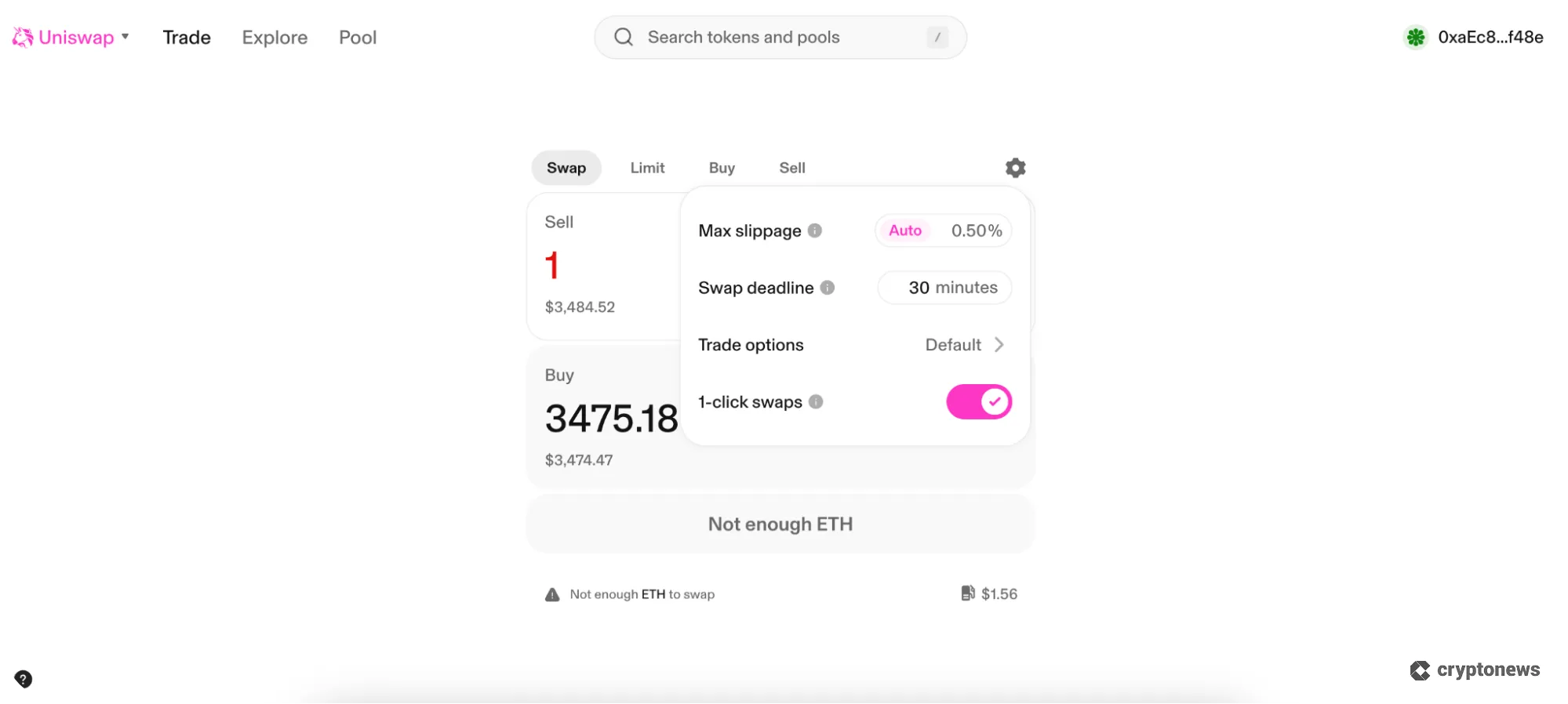
Slippage is another indirect fee. Uniswap sets slippage at 0.5% by default, which is often insufficient to trade tokens with small liquidity pools. Raising the slippage percentage increases the execution probability, yet traders receive fewer tokens for their investment.
Uniswap also charges a bid-ask spread when users buy or sell cryptocurrencies with fiat money. Exchange documents do not publish the markup rate.
When you compare ecosystem charges to the lowest-fee crypto exchanges, trading on Uniswap can be expensive. Ethereum network fees rise significantly during bull cycles, and they sometimes surpass $10. Trading cryptocurrencies on EVM-compatible networks like Base and Polygon is much cheaper.
Is Uniswap User-Friendly?
The Uniswap interface itself is user-friendly, yet the DEX process may intimidate some users. We recommend using the desktop website for a more seamless transaction experience. Once users connect a wallet, they fill out a simple trading form. Traders input the swap currencies and amount, and Uniswap displays a real-time quote.
The liquidity pool system can cause Uniswap transactions to fail. Users must increase the slippage percentage and resubmit the position. This requirement may disadvantage beginners with minimal DEX experience.
Another learning curve is the network fee system. Platform users require “gas” in the network’s native asset, such as ETH or BNB, to trade ERC-20 and BEP-20 tokens, respectively. During volatile market conditions, gas fees can be extortionate, which makes low-value swaps unviable.
We found that the liquidity provision process is suitable only for experienced investors. Users must deposit equal amounts of cryptocurrencies to fund liquidity pools, and understand concepts like LP tokens and impermanent loss.
What are the Drawbacks of Uniswap?
Our Uniswap exchange review identified the following drawbacks:
- Learning Curve: Entry-level crypto traders might find that Uniswap is too complex for their experience level. Platform users must navigate unconventional trading mechanisms such as non-custodial wallets, slippage adjustments, smart contracts, and network gas.
- High Fees: Uniswap v4 lets liquidity pool creators set trading commissions. These commission rates are often much higher compared with CEXs like MEXC and OKX. Users also cover network fees, which increase rapidly during high-demand periods.
- Limited Customer Support: Uniswap offers subpar customer support via email only. According to our research, the DEX often takes several days to reply. Trustpilot reviews, rating Uniswap 1.1/5, highlight these customer concerns.
- No Access to Top Layer 1s: The exchange appeals to investors who want to trade Ethereum and select EVM-compatible tokens, yet it lacks support for many Layer 1 ecosystems. Unsupported blockchains include Bitcoin, XRP, Dogecoin, and Tron.
- No Derivative Access: Unlike many DEX competitors, Uniswap users lack access to derivative products like perpetual futures. This drawback prevents traders from short-selling cryptocurrencies and applying leverage.
Uniswap Alternatives
We rate Uniswap’s decentralized infrastructure highly because it unlocks access to a significant range of cryptocurrencies from the Ethereum ecosystem. It facilitates fast token swaps directly from non-custodial wallets, and users trade assets without relying on other exchange participants.
However, crypto investors may find that Uniswap falls short in several areas, especially non-EVM support, trading fees, and derivative access.
Here are some Uniswap alternatives to consider in 2026.
Best DEX
The Best Wallet app, a non-custodial wallet for iOS and Android, includes a native DEX aggregator that connects users with over 330 liquidity providers. It sources the best market prices from these liquidity partners, so rather than rely on Uniswap exclusively, users explore competitive quotes from other DEX ecosystems.
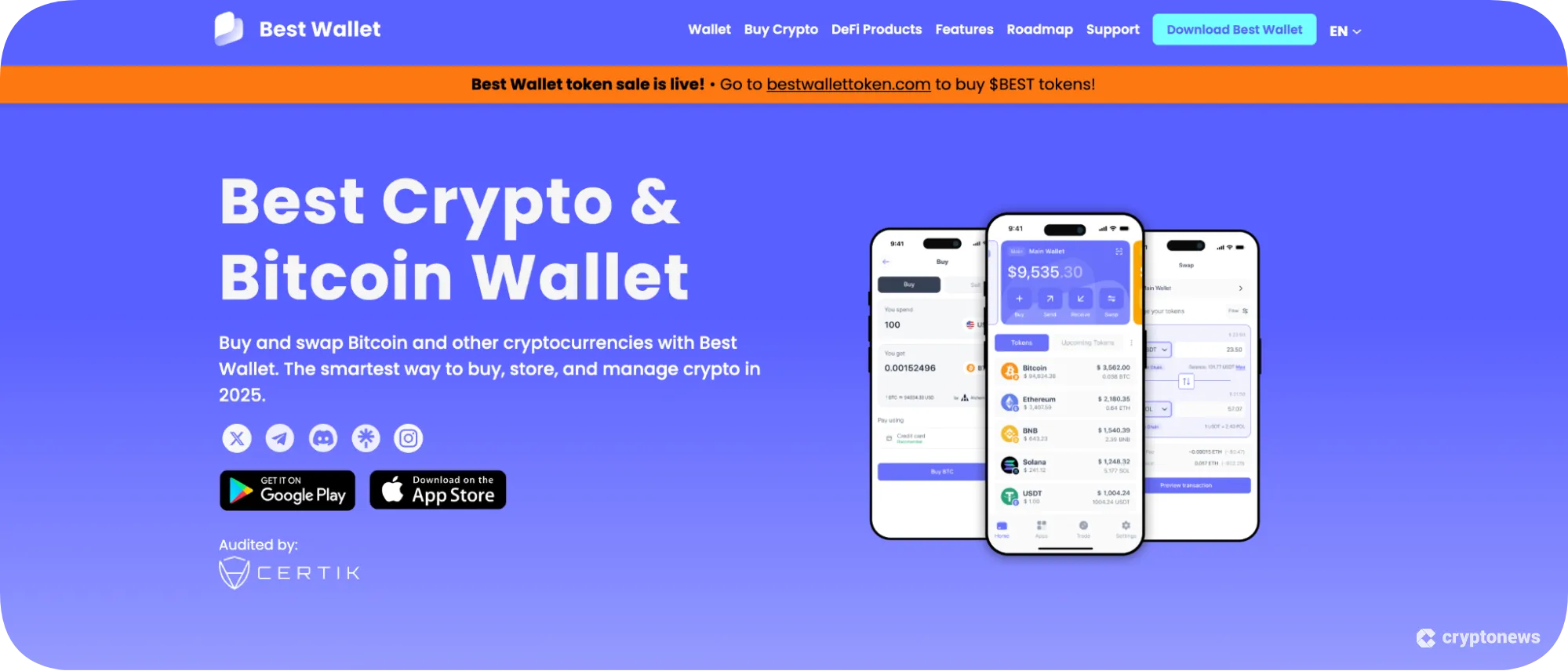
Best Wallet connects with many blockchains that Uniswap lacks support for, including Bitcoin and XRP, and lets users manage crypto assets safely. It also supports cross-chain trading across over 30 bridges, and the best crypto presales via vetted launchpad events. The beginner-friendly wallet interface offers strong security, including facial or fingerprint ID, two-factor authentication, and encrypted private keys.
CoinFutures
Since Uniswap users cannot access derivative products, CoinFutures is a solid alternative. The licensed platform specializes in crypto futures, and listed markets include BTC, ETH, ADA, and LTC. Traders go long or short with leverage of up to 1000x, which amplifies market exposure from $10 to $10,000.
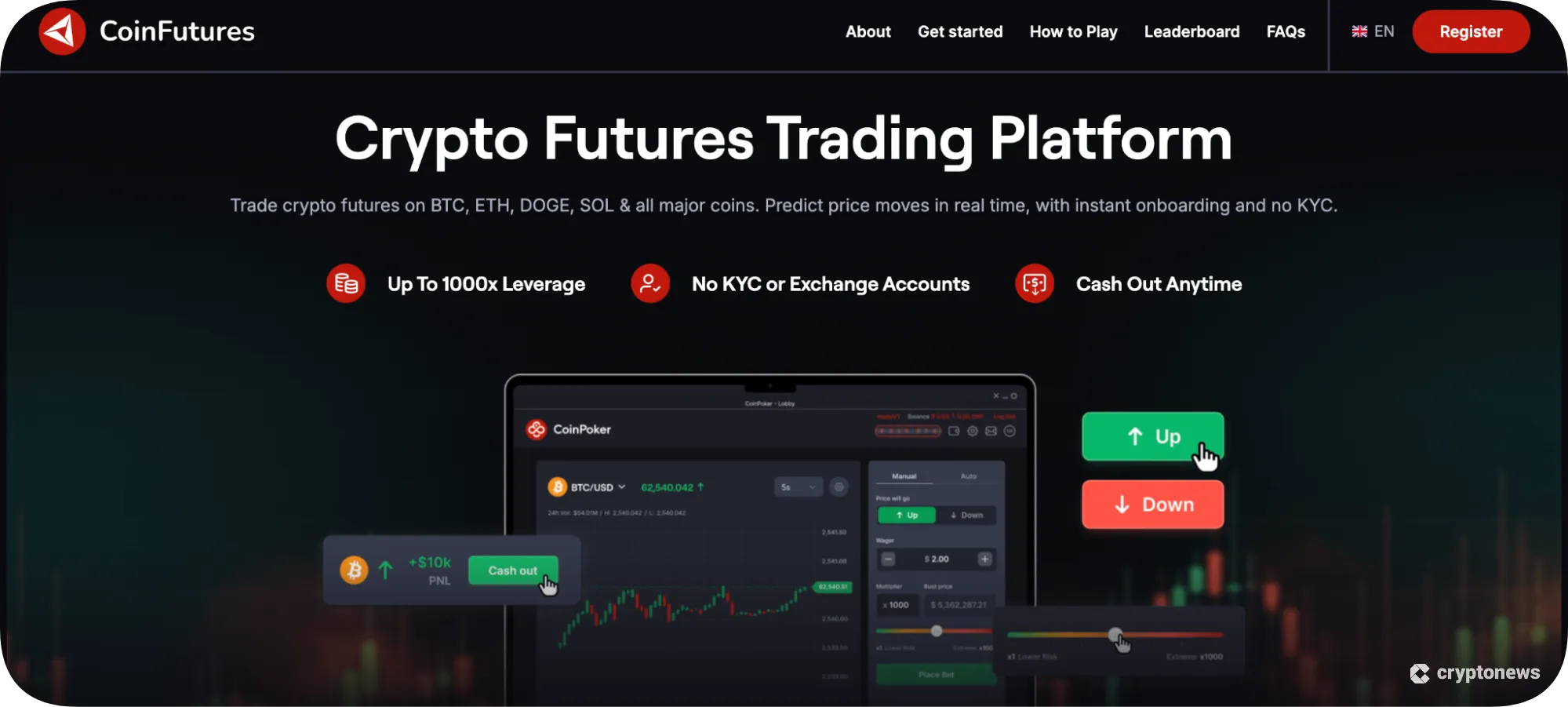
Available on native desktop and mobile software, CoinFutures’s user-friendly dashboard helps simplify derivative trading. Minimum trade requirements are $1, and users enter positions without navigating the order book system. As one of the best crypto futures trading platforms, CoinFutures lets users register and trade without completing KYC verification.
PancakeSwap
Although Uniswap supports BEP-20 tokens on the BNB Chain, insufficient liquidity leads to substantial slippage risks. PancakeSwap is the leading DEX for BEP-20 trading with over $2.3 billion in TVL (Uniswap has just $72 million). Platform commissions start at just 0.01%, making them considerably cheaper than most Uniswap liquidity pools.
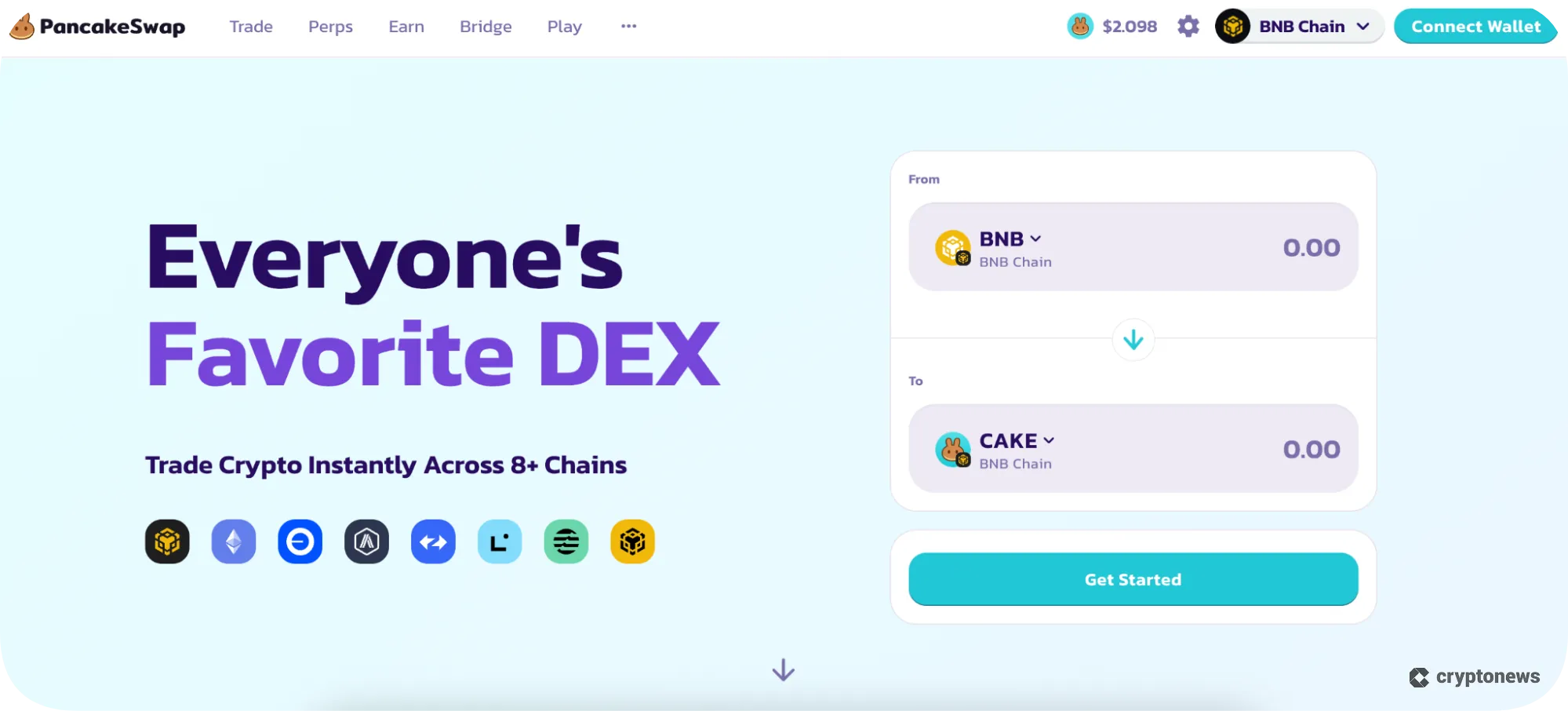
PancakeSwap users earn passive income in various ways, including staking and liquidity provision. They also trade perpetual futures directly from their non-custodial wallet. Leveraged markets include BTC and major altcoins, as well as stocks, commodities, and forex. Other features include crypto lotteries, prediction markets, and a cross-chain bridge to eight networks.
Visit PancakeSwapHow to Get Started With Uniswap
Learn how to use the Uniswap exchange in this simple step-by-step walkthrough. We explain how to set up and fund a suitable wallet, connect to the DEX, and place a decentralized token swap.
Step 1: Get a Non-Custodial Wallet
Uniswap traders need a non-custodial wallet to buy and sell cryptocurrencies. The wallet must support the Ethereum blockchain. If you plan to trade other token standards, ensure compatibility with EVM-compatible networks.
We use Best Wallet for this tutorial, as it supports Ethereum and over 60 other networks, including Base, Polygon, and BNB Chain. Download the iOS or Android app on the Best Wallet website, input an email, and choose a four-digit PIN.
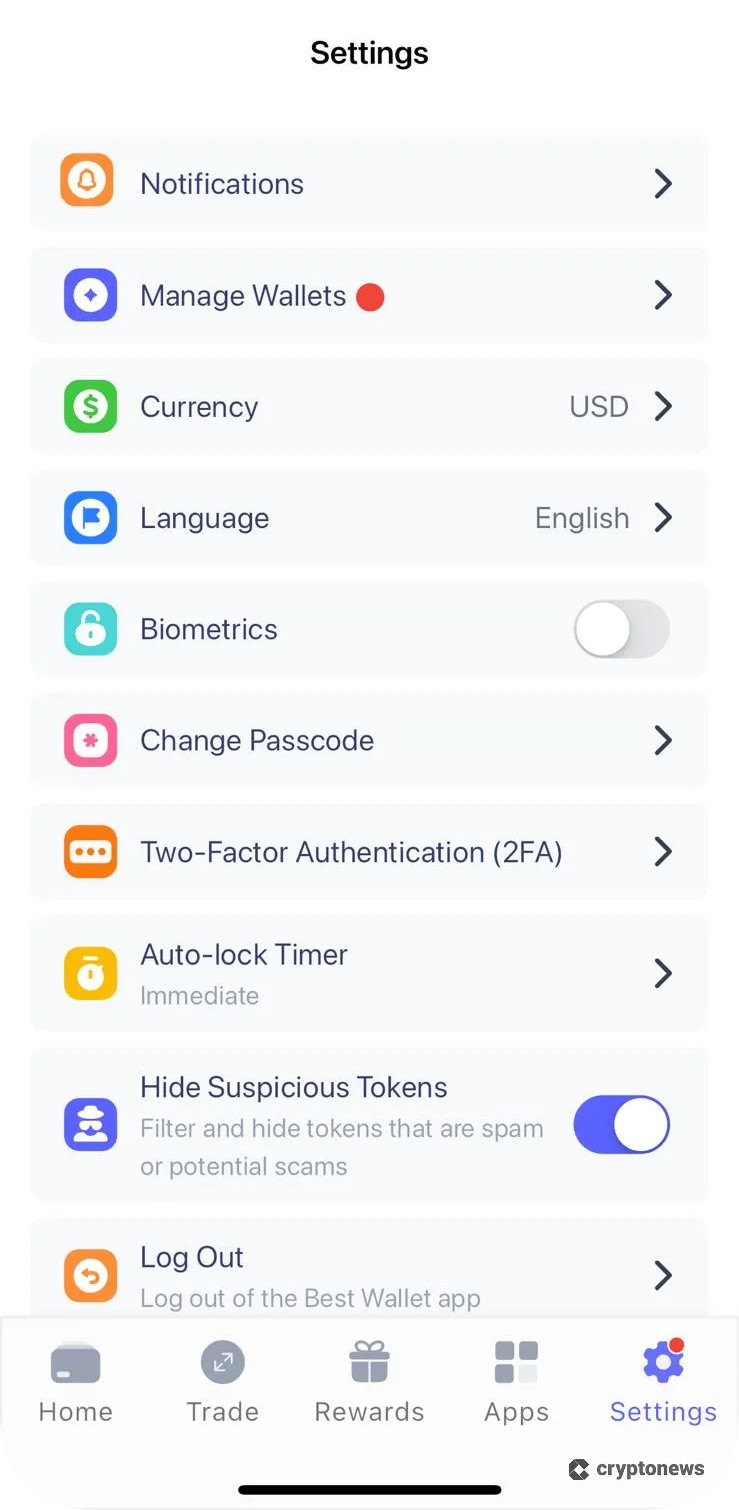
The app displays your seed phrase as 12 randomly generated words. Write them down on a sheet of paper because you need the seed phrase for wallet recovery.
Then tap the “Settings” tab to set up two-factor authentication. You can also activate biometric logins, which use the smartphone’s fingerprint ID or facial recognition.
Step 2: Deposit or Buy ETH
You can trade all ERC-20 tokens on Uniswap with ETH. If you already hold ETH, transfer coins to the Best Wallet app. Tap “Ethereum” to get the wallet address.
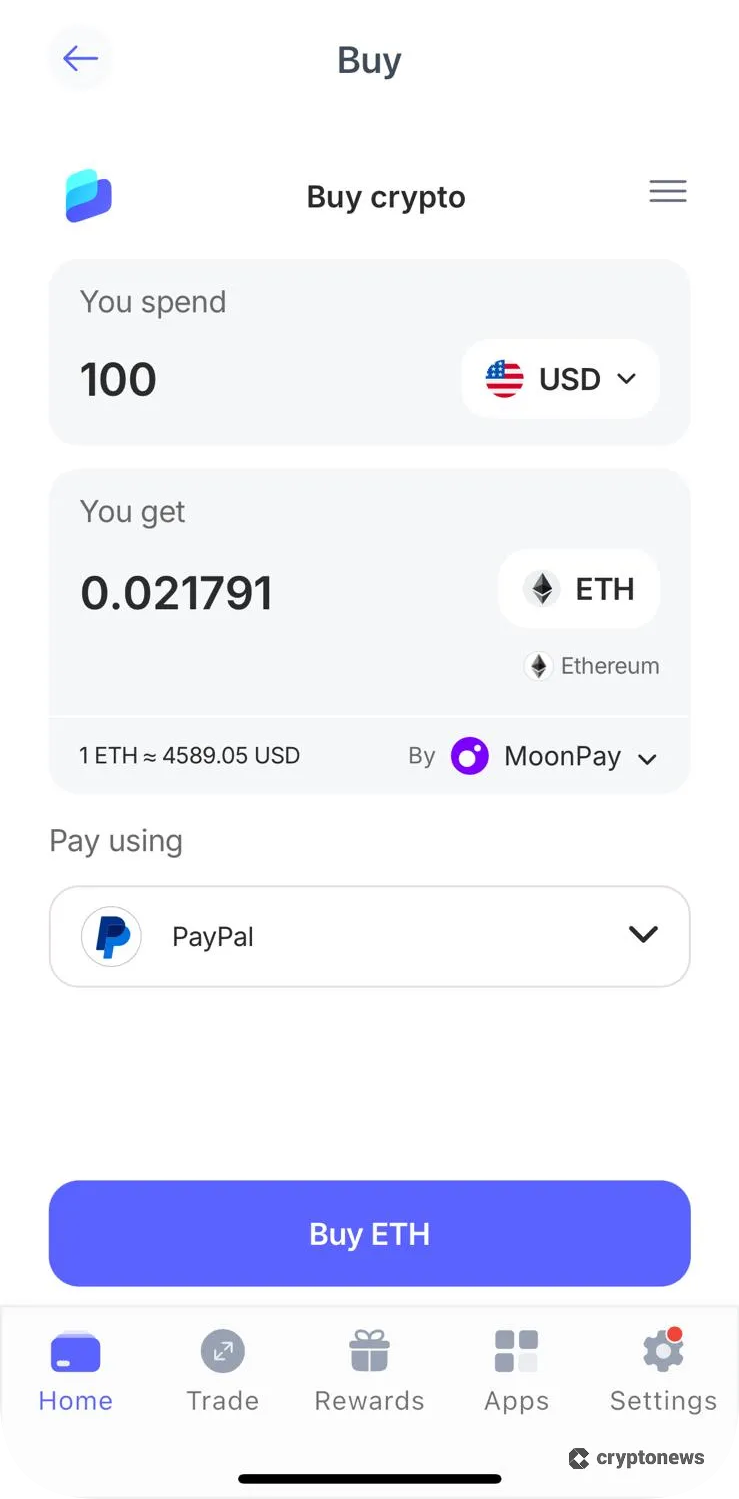
The wallet also lets users buy ETH with real money. Instant payment methods include Google Pay and Apple Pay, PayPal, and debit/credit cards. Tap “Trade” and “Buy”, select ETH as the purchase asset, and complete the payment.
Step 3: Connect Wallet to the Uniswap Exchange
Visit the Uniswap exchange (the desktop version offers the best user experience) and click “Connect” and “WalletConnect”.
Then open the Best Wallet app, tap the camera icon, and scan the WalletConnect QR code that the Uniswap website displays.
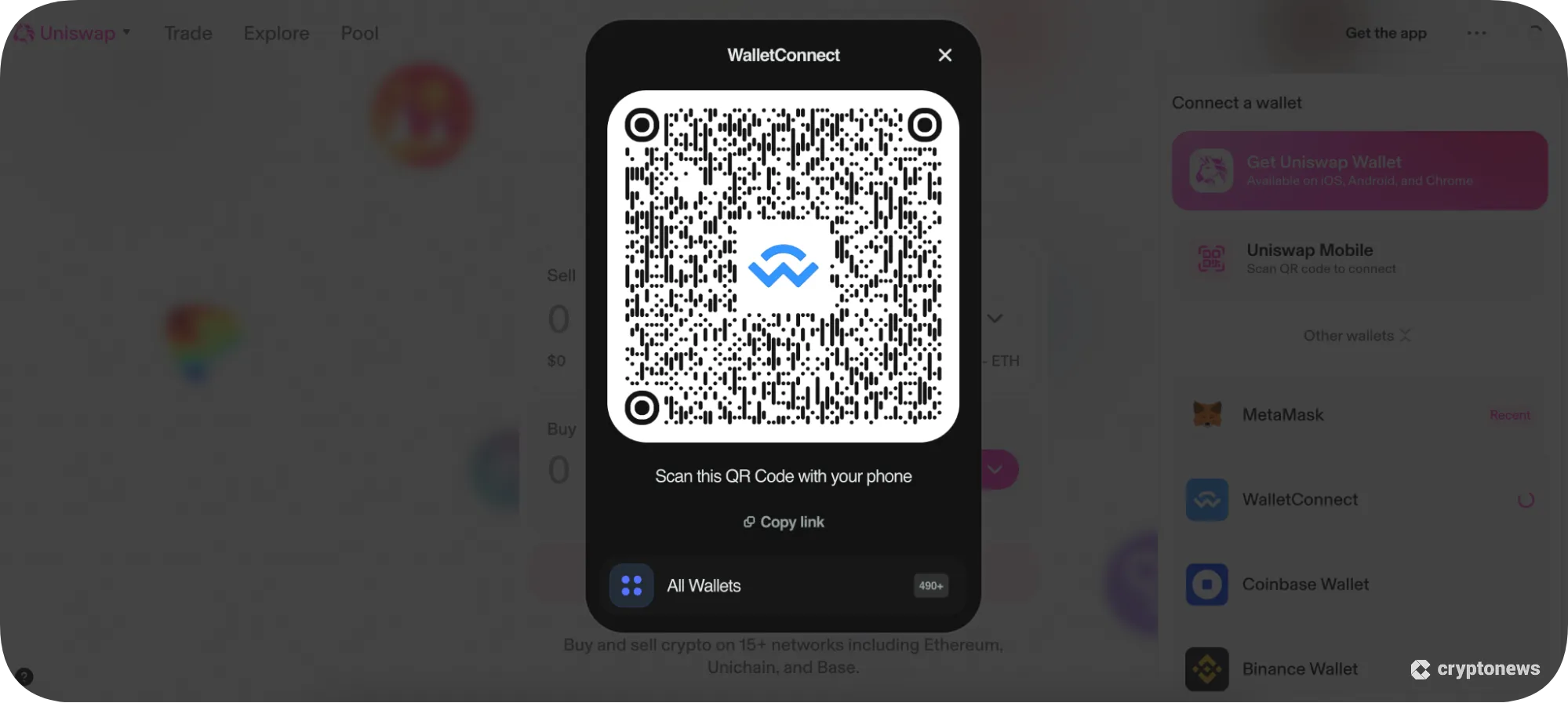
If you prefer trading on a smartphone, select “All Wallets” and search for “Best Wallet”.
Approve the connection request in the Best Wallet app.
Step 4: Choose Cryptocurrencies to Swap
Leave ETH as the “Sell” currency, and click “Select Token” to input the receiving asset. We strongly advise pasting the contract address for the token you want to buy.
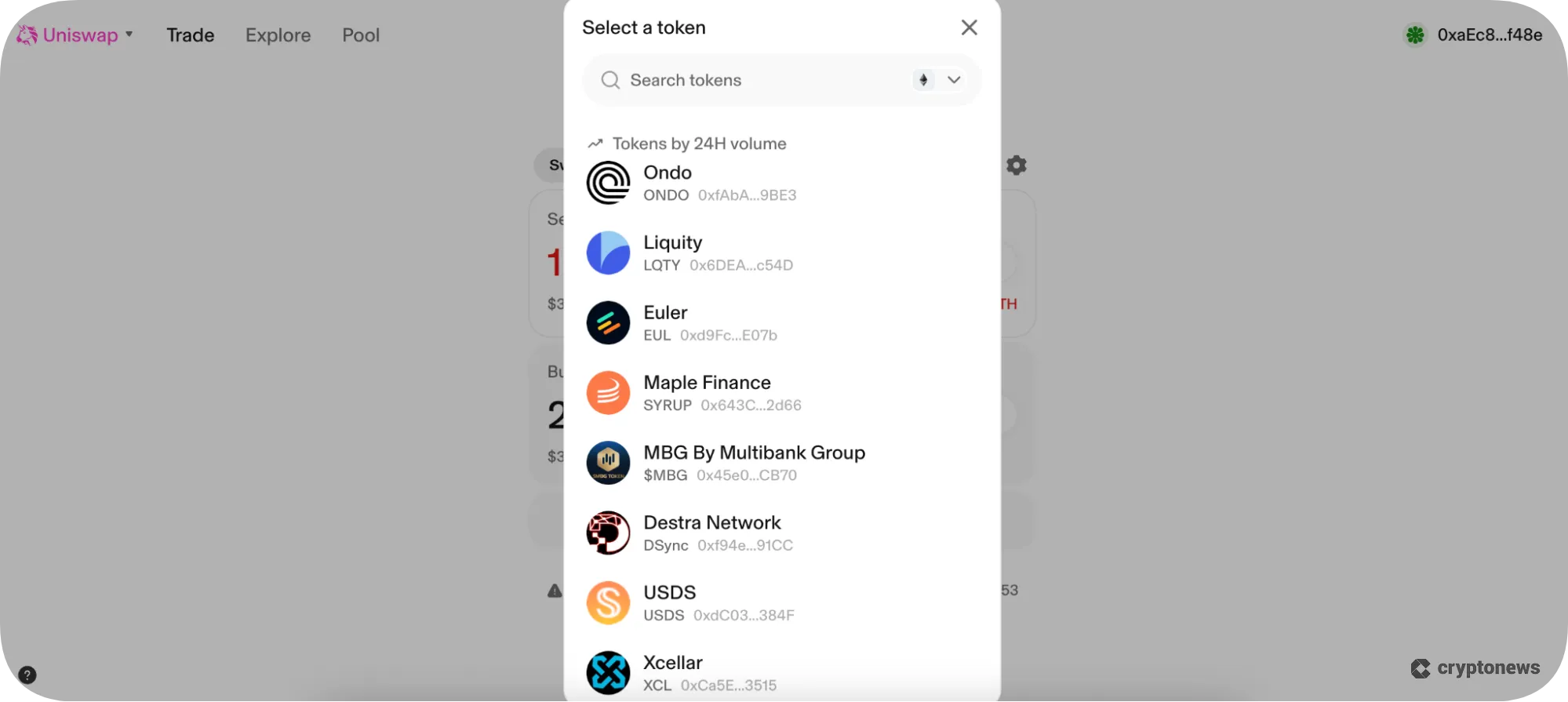
If you search for the asset’s name manually, multiple cryptocurrencies may appear. Buying the wrong token results in a loss of funds.
Get the contract address from the project’s website, Telegram channel, or X page.
Step 5: Input Swap Size and Confirm Uniswap Trade
The final section explains how to make a Uniswap trade.
Enter the ETH trade size in the “Sell” field. Uniswap queries the liquidity pool for the real-time exchange rate. The form displays the number of tokens you receive for that swap amount.
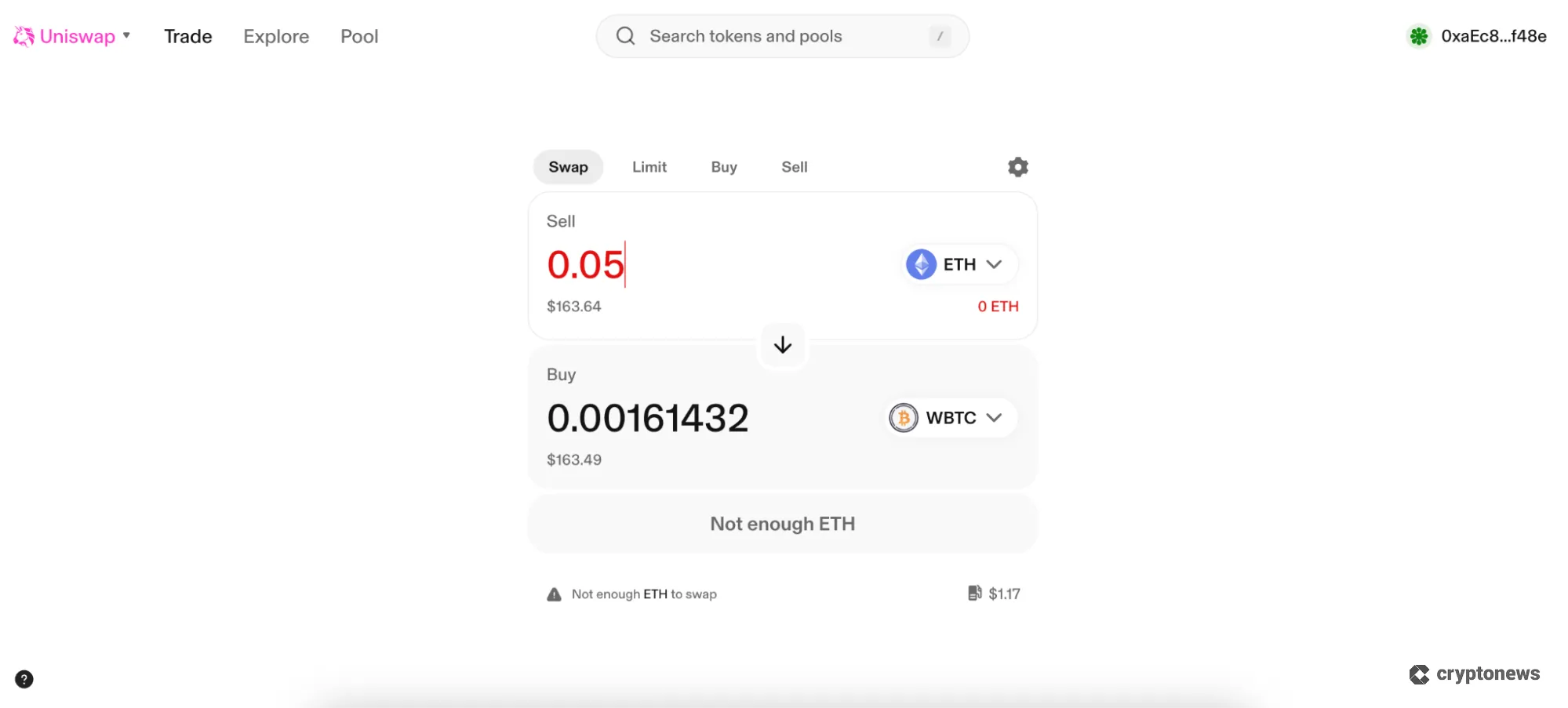
Ensure you leave enough ETH for network gas, and reduce the trade size if needed.
Once you confirm the swap, Uniswap smart contracts convert ETH to the purchased asset and transfer tokens to the connected wallet.
If the swap fails, tap the “Settings” icon and increase the slippage percentage slightly. Repeat the process until the swap executes.
Uniswap Review Conclusion: Is it Good Enough in 2026?
Our Uniswap exchange review found that the DEX is a top choice to trade ERC-20 tokens. Better options exist when trading other network standards, as Uniswap attracts minimal liquidity on non-Ethereum markets.
Due to its v4 upgrade, which allows pool creators to set uncapped commissions, Uniswap users often incur high trading fees. Best Wallet is a more cost-effective alternative, as it sources the best exchange rates from over 330 DEXs.
The non-custodial app also supports more blockchains than Uniswap, including Bitcoin, Dogecoin, and XRP. As its cross-chain bridge connects with over 30 ecosystems, users access deep liquidity and tight spreads.
Visit Best WalletOur Methodology: How We Tested and Reviewed Uniswap
The research team tested the Uniswap exchange with a funded non-custodial wallet. We initially focused on the primary swap service to evaluate available markets, fees, transaction speeds, and overall trading experience. To assess fee competitiveness, we compared our findings with other DEXs, as well as leading CEX platforms.
Our Uniswap exchange review also scrutinized other ecosystem features. We tested the liquidity provision process, Uniswap Wallet, and API service, then used on-chain aggregators to explore its native Layer 2 network. Our impartial research findings help readers make informed decisions, and we update this page regularly to ensure accuracy.
FAQs
Is Uniswap a wallet or an exchange?
Is Uniswap anonymous?
Can US residents use Uniswap?
Is Uniswap Ethereum only?
How do I send from Uniswap to a bank?
Does Uniswap support Solana?
References
- Uniswap documentation (Uniswap)
- UniswapX whitepaper (Uniswap)
- Wallet Security: Best Practices For Keeping Your Crypto Safe (Hacken)
- Unichain on-chain data (DefiLlama)
- DeFi Boom Makes Uniswap Most Sought-After Crypto Exchange (Bloomberg)
- What is a DEX? (Coinbase)
- What is a Smart Contract? (Corporate Finance Institute)