

 Changelly Review - Instant Cryptocurrency Exchange
- Fast crypto-to-crypto swaps with competitive 0.25% fees.
- Supports 1,000+ cryptocurrencies and major blockchains.
- Simple, non-custodial design with wallet integrations (Ledger, Exodus, Best Wallet).
- Optional fixed-rate swaps for predictable pricing.
Founded in 2015, the Changelly cryptocurrency platform remains a popular way to swap one cryptocurrency for another with just a few clicks, and often without identity verification.
In our Changelly DEX review, we detail how the platform works, whether Changelly is a safe platform, and how fees are applied. We’ll also cover how to use the platform for instant crypto swaps, buying and selling crypto with traditional fiat currencies, and accessing the advanced trading features, such as Changelly PRO.
To test the platform, we performed several transactions, including fiat purchases and crypto-to-crypto swaps. Let’s get started with the pros and cons we found during our Changelly app review.
Pros
- Easy-to-use swap platform
- Competitive 0.25% fees for floating-rate swaps
- Support for 1,000+ cryptocurrencies
- No KYC required for most transactions
Cons
- Semi-custodial (users send crypto first)
- KYC subject to undefined “triggers”
- High (4% to 7%) fees for fiat-based transactions.
What is Changelly?
The Changelly platform is a cryptocurrency exchange app that aggregates supply from multiple sources and also supports fiat-to-crypto purchases.
The platform differs from other exchanges in two key areas: it offers non-custodial transactions and utilizes multiple marketplaces to deliver the best value for each trade.
Basic services include crypto-to-crypto swaps (e.g., BTC to ETH) and fiat-to-crypto purchases (e.g., USD to BTC).
The platform scans prices from more than 20 sources to find the most favorable exchange rate for BTC and more than 1,000 altcoins.
The platform launched in 2015, initially in support of the MinerGate community. Early functionality (prior to 2015) focused on enabling quick swaps of proof-of-work (PoW) coins. For example, Monero miners could easily swap their mined XMR to BTC.
In 2015, the platform launched in earnest, with its own team and an API (Application Programming Interface) that enabled third-party wallet apps to tap into Changelly’s functionality.
Adoption by leading wallets like Ledger and Exodus put Changelly front and center, making it a popular way to swap crypto assets without customer funds ever leaving their private key control.
The platform is also easy to use through a web app and a mobile app, and several popular wallets support Changelly.
How Does Changelly Work?
At a basic level, Changelly uses a simple structure: the user sends Crypto A to Changelly, and Changelly sends an equivalent value of Crypto B to the user (minus fees). However, the mechanics under the hood are more complex.
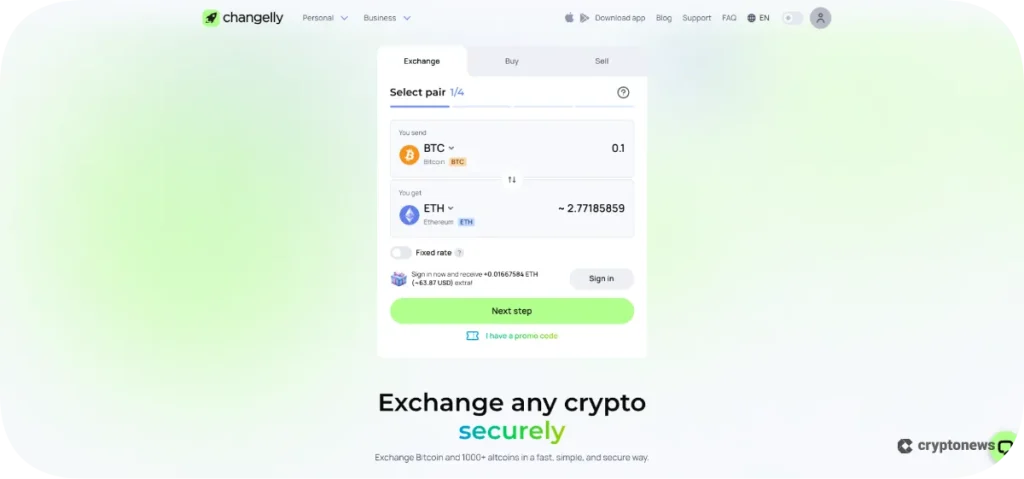
Let’s say you want to swap BTC for ETH. You visit the app to set up the swap, choosing an amount of BTC to send and a crypto asset you want to receive in exchange.
Changelly then searches the order books on more than 20 cryptocurrency exchanges to find the best value for the swap and displays a quote. Floating rate, the default, allows some flexibility in the exchange rate based on market conditions.
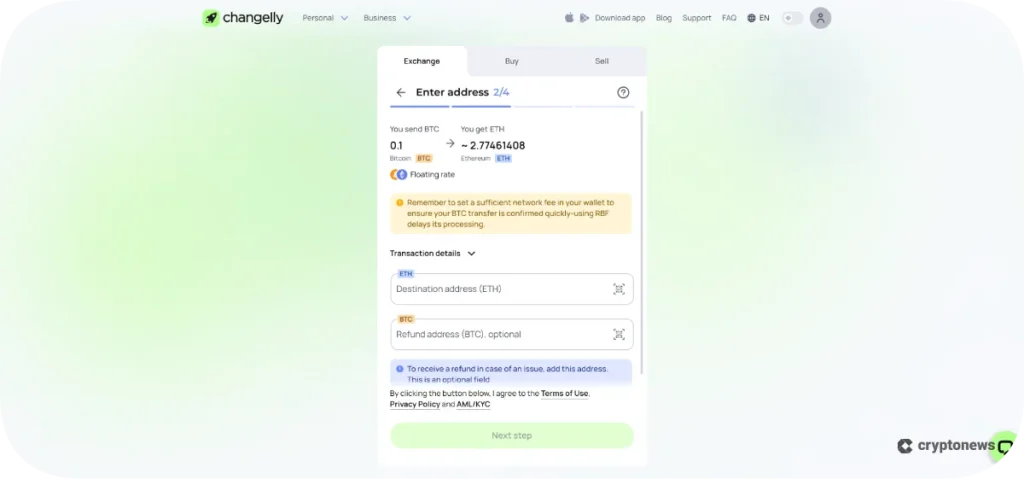
Next, the app asks for the destination address and an optional refund address (for transactions that cannot be completed).
You then send the exact amount of BTC to the provided address. Once Changelly verifies receipt of the funds, the platform sends ETH to the wallet address you provided earlier.
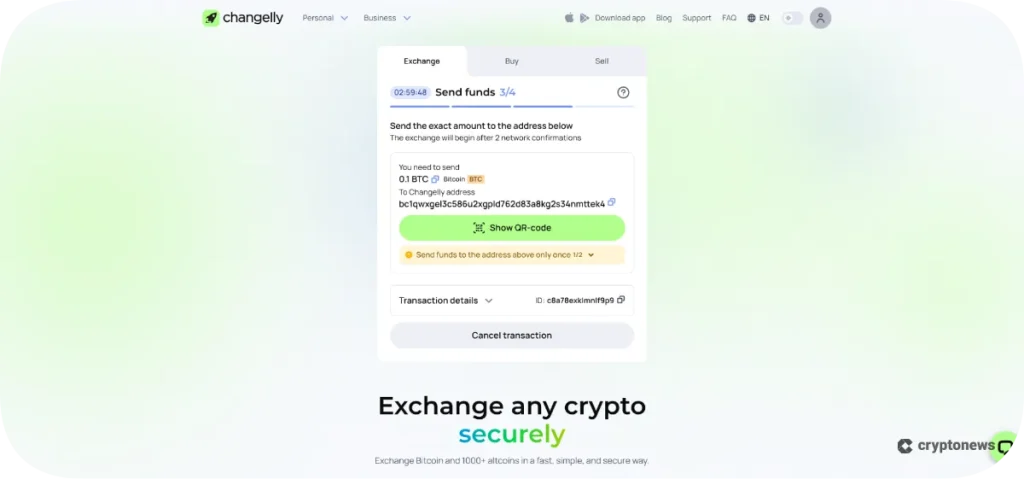
When using Changelly’s floating rate, the amount you receive could be higher or lower than the initial quote. Changelly charges a 0.25% fee for its service, which is higher than the 0.1% trading fees on major centralized exchanges (CEXs).
However, Changelly’s fee structure is competitive compared to other instant-swap services that rely on opaque spreads (markups). Changelly also offers fixed-rate swaps, which do utilize a spread to lock in quoted prices.
Under the hood, Changelly uses a “trading robot” to automate these transactions. The bot uses an algorithm to connect to multiple liquidity sources, including centralized exchanges such as Binance and Poloniex, as well as decentralized exchanges (DEXs) like Uniswap and PancakeSwap. Changelly also maintains an inventory of popular assets in hot wallets to facilitate fast swaps.
Transaction times vary based on network traffic for the two assets used in the swap. Changelly advertises average transaction speeds of 5-40 minutes.
Is Changelly Safe and Trustworthy?
While Changelly advertises its service as non-custodial (and therefore trustworthy), the reality is more nuanced. Earlier, we detailed the swap process, with one of the first steps requiring the user to send a crypto asset, such as BTC, to Changelly.
This step of the process still requires trust, and unlike smart contracts, there are no third-party audits to verify the safety of the mechanisms powering Changelly swaps.
For the amount of time required to complete a swap (5 to 40 minutes), Changelly becomes custodial in the sense that the platform holds the assets you’ve sent. The user receives nothing until the transaction completes. Unlike DEXs or atomic swaps, which are both typically powered by auditable smart contracts, Changelly temporarily asks the user to “Trust me”.
However, the platform has been operating since 2015 and provides a transaction ID for each transaction that functions similarly to a tracking number. The platform boasts a “zero-breach” record during this time.
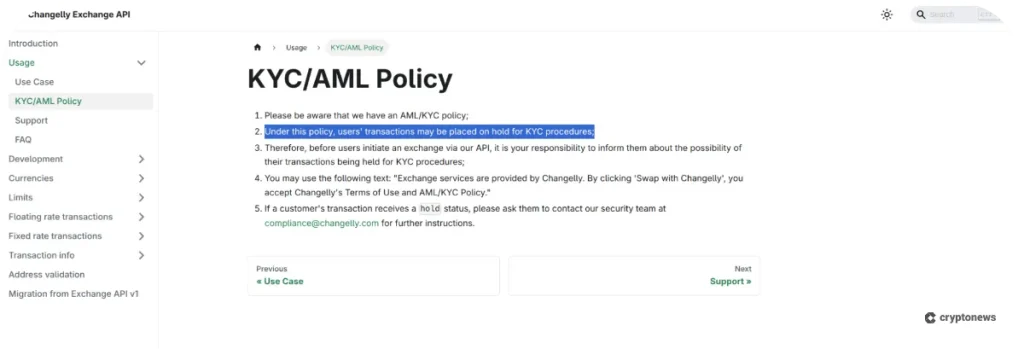
But the platform’s (briefly) custodial nature introduces potential risks for users. The primary risks center on Changelly’s automated Risk Management System (RMS). If the RMS flags a transaction for size, address activity, or other black-box reasons, Changelly will place the transaction on hold and retain the funds used to initiate it.
In many cases, Changelly users must then complete Know Your Customer (KYC) verification, which could further delay or even prevent the transaction.
Changelly reviews on Trustpilot highlight frustration with this aspect of the system when it’s triggered. However, the service scores higher than most crypto market-related services on Trustpilot, earning a 3.5 out of 5-star rating. Generally speaking, users give positive feedback to the service.
Additional potential risks of using the platform largely parallel those of centralized exchanges.
- Incorrect wallet addresses can result in a loss of funds.
- Platform insolvency puts temporarily custodied funds at risk.
- Attempts to bypass geo-restrictions can result in loss of funds.
- Platforms that collect KYC documents may “dox” users through data breaches.
Changelly Supported Coins and Blockchains
Changelly evolved from a swap tool for PoW coins, such as Monero and Bitcoin. However, the platform quickly adopted additional chains as liquidity on exchanges grew. Today, Changelly supports over 1,000 assets, including those traded on major exchanges and a diverse range of tokens listed on DEXs. Many of the platform’s DEX tokens are centered on Ethereum Virtual Machine (EVM) chains, such as Ethereum, BNB Smart Chain, Polygon, and several Layer 2 chains (e.g., Base, Arbitrum).
Leading markets on Changelly Pro, a more full-featured exchange we’ll discuss later, parallel the most common swaps on the standard platform.
1. Bitcoin (BTC)
2. Ethereum (ETH)
3. Solana (SOL)
4. Cardano (ADA)
5. TRON (TRX)
6. XRP (XRP)
7. Bitcoin Cash (BCH)
8. Chiliz (CHZ)
9. Stellar (XLM)
10. Chainlink (LINK)
11. BNB (BNB)
12. Litecoin (LTC)
In total, Changelly supports more than 1,000 cryptocurrencies, including many that aren’t available through leading crypto exchanges.
What Payment Methods and Fiat Currencies Does Changelly Support?
We’ll discuss buying on Changelly in more detail in a later section. However, the platform supports fiat purchases, allowing users to buy crypto with USD, with hundreds of supported digital assets, and more than 100 other currencies, including EUR, GBP, JPY, and CAD.
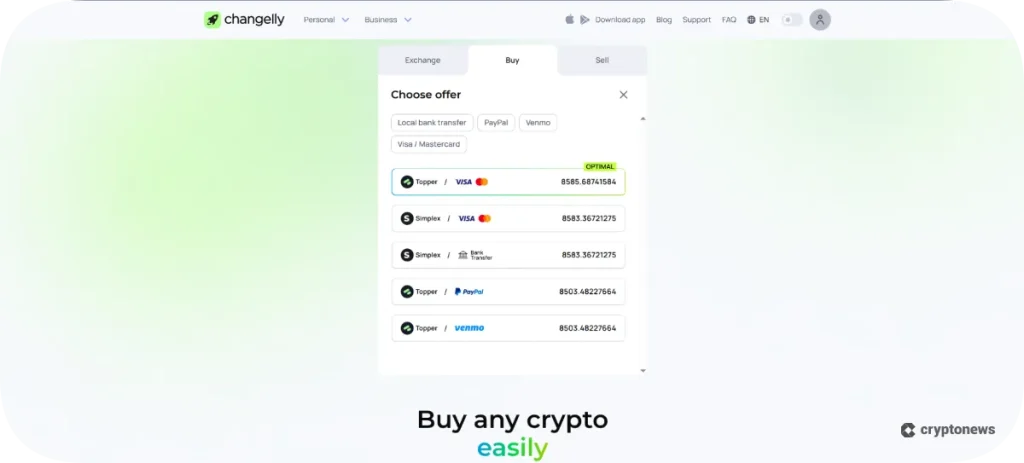
Payment methods include Visa, Mastercard, Bank Transfer, Apple Pay, and Google Pay, although supported payment methods vary by region.
The platform’s on-ramp providers also support PayPal, Venmo, Skrill, and Revolut in specific countries.
This selection of payment methods compares well with those of popular crypto exchanges, many of which do not support PayPal, Venmo, or similar services.
Changelly Key Features
Part of Changelly’s appeal centers on the simplicity of its key features. Swaps remain the main draw, allowing users to trade Crypto A for Crypto B using a beginner-friendly interface that eliminates several steps compared to using a traditional crypto exchange.
Other features include buying and selling crypto as well as Changelly’s unique self-custody structure. Let’s discuss each of these in more detail.
Swaps
Changelly has become one of the most popular crypto swap sites due to its wide range of assets, non-custodial structure, and simple interface. The platform also supports cross-chain swaps, simplifying portfolio rebalances and giving users access to a wide range of cryptocurrencies from any supported base asset. Have Cardano and want Ethereum? Easy. Changelly can complete the swap in a single user transaction.
By design, the platform optimizes swap values, finding the best price for both assets in a swap pair. In the background, Changelly leverages its automated bot to source the best value for your swap using more than 20 sources.
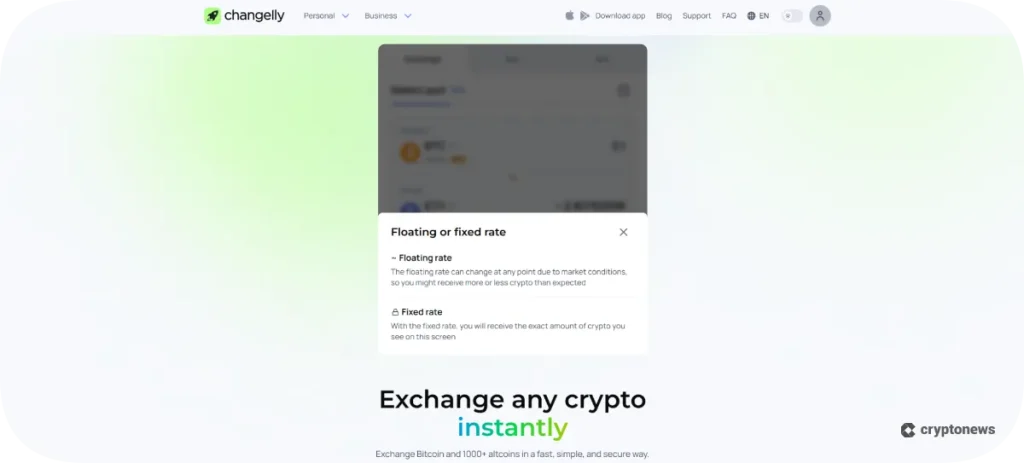
Two swap rate options enhance the platform’s capabilities: floating-rate and fixed-rate.
- Floating-rate swaps (the default) adjust the amount you receive based on market conditions; you might receive more or less than you expected.
- Fixed-rate swaps ensure you receive the precise amount quoted by using a spread — a markup buffer that allows Changelly to lock in a price for volatile assets.
Every asset we tested required a minimum swap amount, typically about $27.
Buy and Sell Crypto
Changelly also supports buying and selling crypto. This functionality is offered in conjunction with third-party providers, such as MoonPay, Simplex, Topper, and others.
While similar to integrated instant-buy services found on other exchanges and wallet apps, Changelly offers a wider selection than we’ve seen elsewhere. Often, instant buy options only support popular stablecoins, paired with a handful of top-ten cryptocurrencies. We were able to find less common assets, such as Kaspa, which isn’t available on many major platforms like Binance and Coinbase.
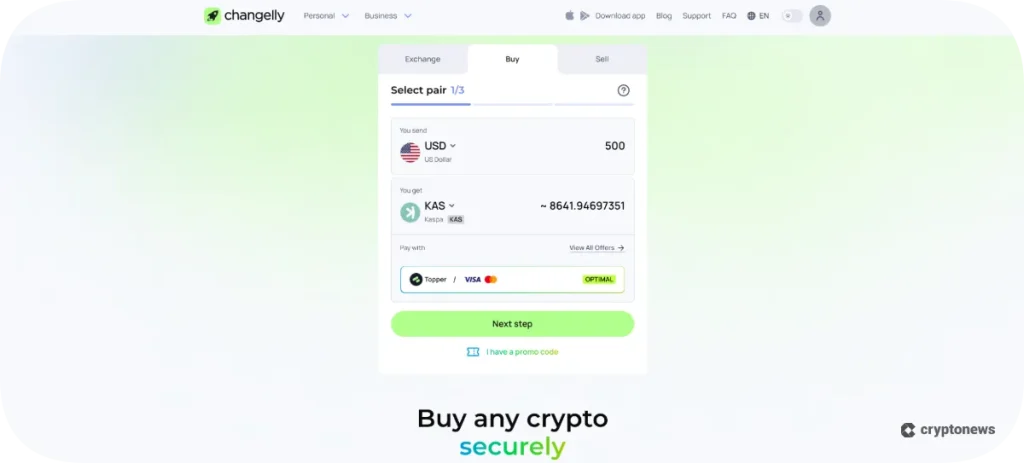
As a caveat, buy transactions on Changelly are pricier than some options available on traditional centralized exchanges. For example, we can buy USDC on Coinbase for free when using a bank transfer. By contrast, the minimum fee for fiat-to-crypto buying on Changelly is 4%, with some transactions costing up to 7%.
Selling fees on the platform are similar, with a minimum fee of 3.95%. We appreciated the convenience of buying or selling without leaving the platform. However, there are often more cost-effective ways to buy and sell.
Another concern with buying and selling on the platform is cost disclosures. Changelly displays a list of providers, payment methods, and exchange rates. However, the platform does not clearly disclose third-party fees. Instead, these details are available on the site’s FAQ pages. But, in short, expect to pay between 4% and 7% in third-party fees, which may include a spread, where applicable.
Notably, while low-value swaps often do not require KYC, buying or selling through Changelly’s third-party providers does require identity verification.
Self-Custody
Changelly posits itself as a self-custody platform, which is partly true. The platform does not control your crypto wallet’s private keys, as is typically the case with custodial exchanges. However, users must send crypto to a one-time-use address and then wait for the transaction to complete.
There also exists a possibility that the transaction could be flagged, effectively freezing the funds sent to the one-time address. Changelly offers a generally safe way to perform low-value swaps, but it requires users to trust a third party to complete the transaction.
Changelly for Business
Ultimately, the bulk of Changelly’s transactions run through wallet apps and other third-party tools that integrate the swap platform as a value-added feature. Changelly’s added functionality also provides earning opportunities to partner apps through a revenue-sharing model.
Changelly’s business offerings center around ways to integrate the platform’s swaps, buying and selling services, the Changelly Pay tool, or a no-code website widget. The portal also offers a way for crypto projects to get coins or tokens listed on Changelly, and by extension, dozens of partner apps with over two million monthly users.
- Crypto Exchange API: Apps can integrate Changelly’s exchange and DEX swaps, pulling instant data with an API.
- Fiat On/Off-Ramp API: Changelly also offers a way to integrate its fiat on and off-ramps, making a worldwide network of providers available.
- Changelly Pay: The Changelly Pay tool provides a merchant solution for crypto payments.
- Listing Service: Changelly accepts applications for utility tokens, with customized packages to help projects find their investor audience.
As a separate product, Changelly also offers a PRO platform that provides a full-featured centralized exchange (KYC required), featuring spot trades, futures, margin, and limit orders. Project tokens that qualify for Changelly’s listing service may also be listed on Changelly Pro.
What is the Best Wallet to Use With Changelly?
Changelly’s strength is cross-chain swaps, so you’ll need a wallet that supports multiple chains (or multiple wallets). A user-friendly multi-chain wallet, such as Best Wallet, is well-suited for the task.
Best Wallet supports 60+ chains, including Bitcoin, Ethereum, BNB Smart Chain, Polygon, Solana, and more.
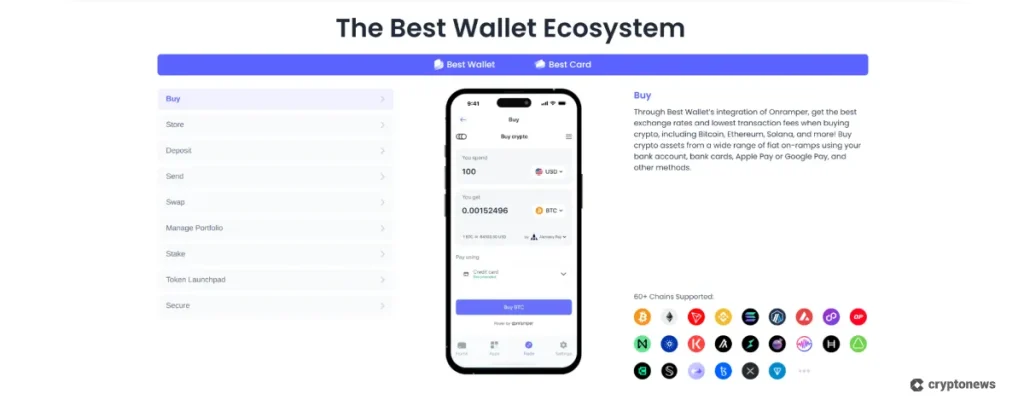
The app is available for Android and iOS mobile devices, making it a perfect choice for swaps on the go. Setup is a snap for new users as well due to Best Wallet’s secure yet intuitive design.
The app utilizes Multi-Party Computation (MPC) technology to secure the wallet’s private keys without requiring cumbersome seed phrases.
Best Wallet also offers its own built-in swap support. Between Best Wallet and Changelly, users have access to the most popular cryptocurrencies as well as promising new tokens that haven’t yet reached major trading platforms.
Changelly Fees
For basic swaps, Changelly’s fee structure offers a competitive way to swap Crypto A to Crypto B, with the lowest fees at 0.25%. Changelly Pro reduces trading fees to 0.1%, positioning the platform alongside the lowest-fee crypto exchanges. The table below summarizes Changelly’s fee structure.
| Crypto-to-Crypto Swaps (Floating Rate) | 0.25% |
| Crypto-to-Crypto Swaps (Fixed Rate) | The commission is built into the guaranteed rate |
| Fiat On/Off-Ramps (Buying/Selling) | Typically ranges from 4% to 7% of the transaction amount, including processing charges and the provider’s spread. |
| Changelly PRO (Advanced Trading) | Maker/Taker Fees: Start as low as 0.1%, with lower fees based on trading volume. |
Fees for fiat on and off-ramps make Changelly less attractive for initially acquiring crypto. Floating-rate swaps offer the best value based on overall costs.
Changelly App Review: Is It User-Friendly?
We performed most of our testing on Changelly’s web app, which provides a user-friendly interface that guides users through a simple 4-step swap process. Buying and selling each follow a 3-step process.
While generally easy to use, we did find some UI features that could slow down the swap process, leaving us wondering if we had gotten the best deal. For example, Changelly offers a bonus for signing in with an email address.
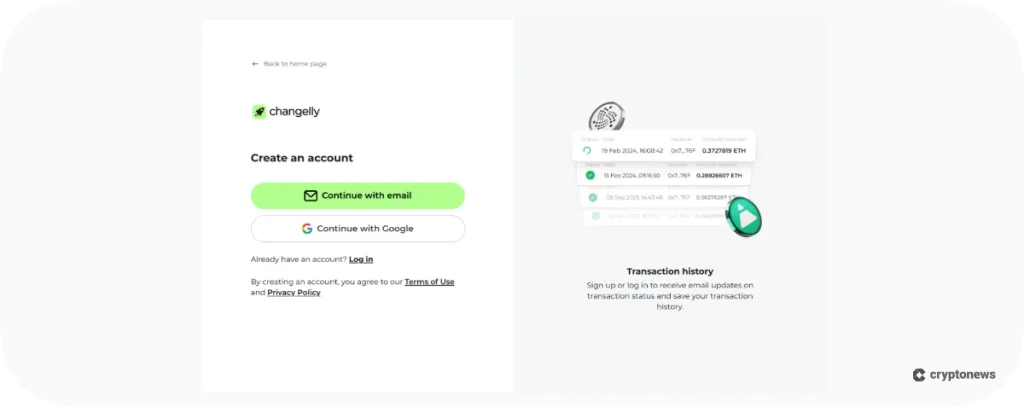
Using a Changelly account offers nominally lower costs for small transactions but can yield significant savings ($160+ on a 0.25 BTC swap in our testing) for larger swaps. Notably, larger swaps are also likely to trigger KYC requirements. Creating an account makes it easier to track transactions, but it may also raise privacy concerns by associating your wallets with an email address (or your identity for KYC accounts).
Changelly’s mobile app, available for both Android and iOS, offers a busier experience. Users are greeted with an explore tab that shows winners and losers. Simple swaps, likely the most commonly used feature, are accessible through a pop-up widget on the bottom menu.
As a less-busy alternative, we preferred the web app, which is also available on mobile and offers an easy-to-navigate responsive design.
What are the Drawbacks of Changelly?
Changelly’s drawbacks center on three key areas: fiat transactions, (partial) custodial structure, and potential KYC triggers.
- Fiat Transactions: Whether making fiat-to-crypto buys or crypto-to-fiat sells, fees are high at 4% to 7%. Some competing platforms also do a better job of detailing fees for third-party providers.
- Custodial Structure: While Changelly is often referred to as non-custodial, in fairness, the platform never controls your wallet’s private keys. However, users need to send crypto to the platform and wait 5 to 40 minutes (or longer) to receive anything in return. During this time, Changelly has custody of your crypto.
- KYC Triggers: We didn’t find any clarity on which types of transactions might trigger KYC requirements, which was concerning because the trigger occurs after the user sends crypto to Changelly. Smaller transactions seem to go through without event. However, we recommend using clean wallet addresses that have no history with mixer apps or other addresses that might trigger Changelly’s automated risk management system.
How to Get Started With Changelly
Let’s walk through the basic steps to swap with Changelly. In this example, we’ll swap Solana (SOL) for Bitcoin (BTC). First, let’s navigate to Changelly’s web app.
1. Select Pair and Choose Rate
We need to swap SOL for BTC, so we’ll choose the amount of SOL to send.
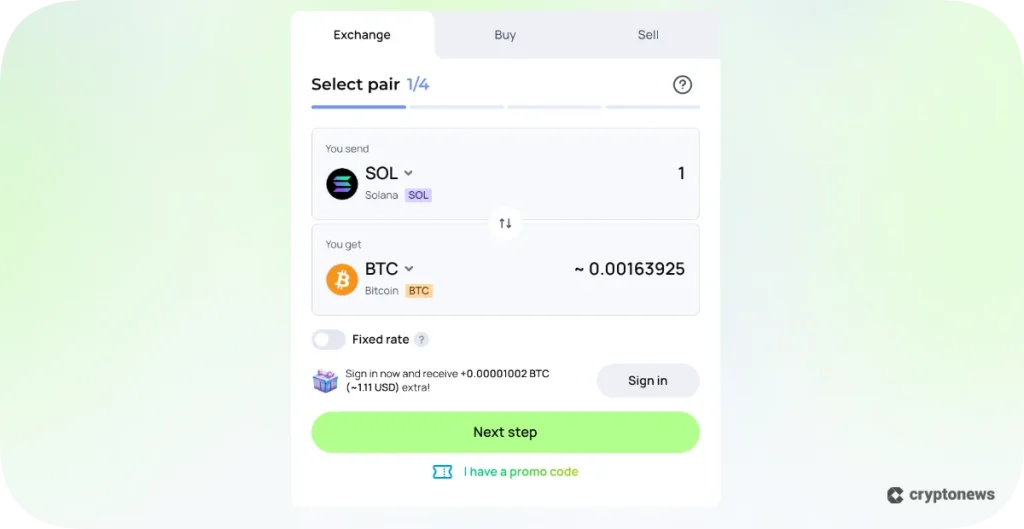
We also select a rate type. A floating rate may deliver more or less than the quoted amount of BTC, based on market conditions. A fixed rate locks in an exchange rate by using a markup (spread) to guarantee the price. We’ll leave this toggle at the default floating rate in our example transaction. We’ll also proceed without signing in to preserve privacy.
2. Provide Wallet Addresses
We want to receive BTC, so we need to provide a wallet address for the transaction.
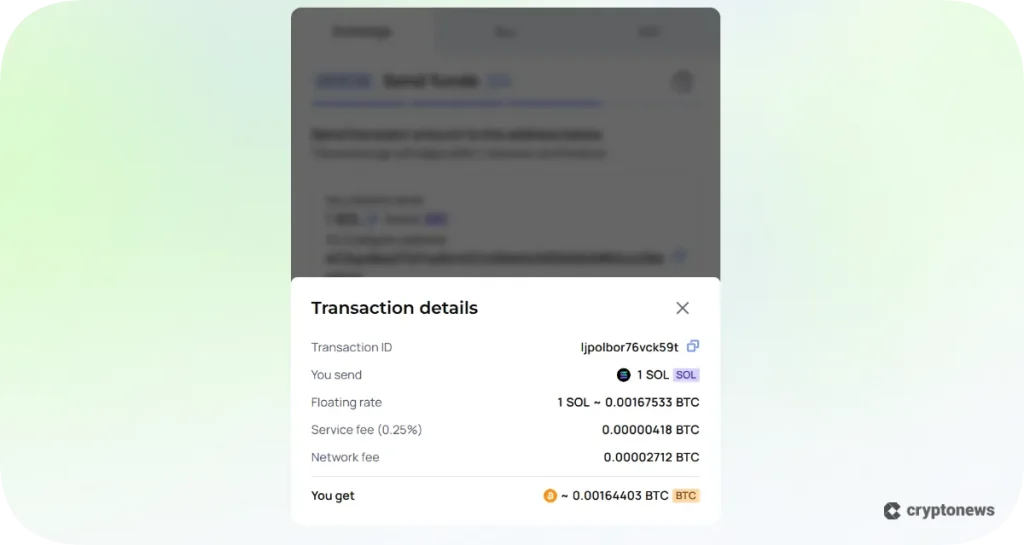
Optionally, we can also provide a Solana address for refunds.
You can get these addresses from your wallet apps. To reduce the risk of typos, use copy/paste to populate these fields.
Note: The addresses displayed above are randomly generated.
Read the Terms of Use, Privacy Policy, and AML/KYC policies. Select Next Step if you agree to the terms.
3. Send Funds to Changelly
Changelly then provides a one-time-use address for the transaction. This wallet address is associated with the transaction, bypassing the need for user accounts.
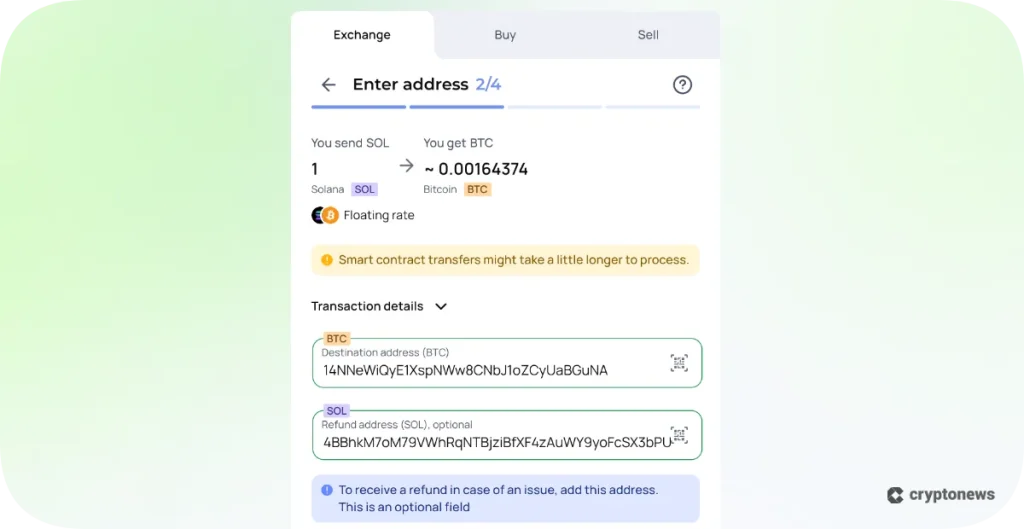
Review the transaction details and copy the transaction ID. This ID number works like a tracking number to view the status of the transaction.
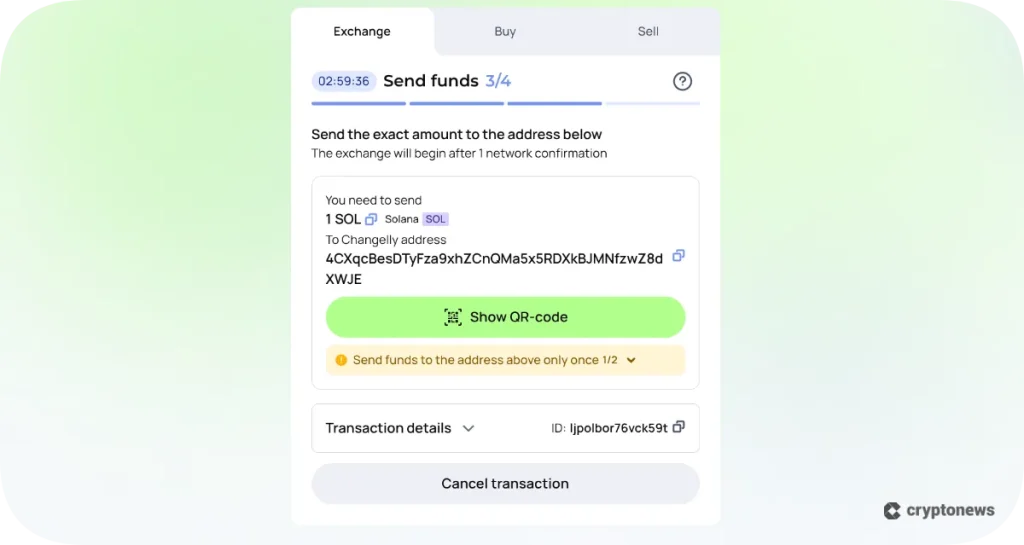
If everything looks correct, send the agreed-upon amount of SOL to the one-time-use address provided by Changelly. Network fees apply, so ensure you have sufficient SOL in your wallet to cover the transaction amount and network gas fees.
4. Swap Execution and Final Delivery
Changelly’s system monitors one-time-use addresses for deposits and automatically scans transactions using its risk management system. If the correct amount was received and the transaction was not flagged, Changelly automatically sends your BTC to the Bitcoin wallet address you provided in step 2.
Our Methodology: How We Tested and Reviewed Changelly
To test the Changelly platform, we performed real-world transactions, prioritizing the Changelly Instant Swap platform over the Changelly PRO centralized exchange. Given this use case (swaps), we evaluated selection, ease of use, costs, and potential security or privacy concerns. We also reviewed the platform’s security structure.
The Changelly app requires users to use non-custodial wallets for each asset in a swap transaction. We used both dedicated wallets and multi-chain wallets to test the app.
In our testing, we measured the final received amount against the initial quote for all floating-rate swaps. We also confirmed the exchange rate for fixed-rate swaps. Fees for each supported transaction were evaluated for clarity and accuracy. All transactions were completed within the advertised time of 5 to 40 minutes.
Lastly, we confirmed the platform’s non-custodial claims, finding them nuanced due to the need to send crypto to a one-time-use address, which might later be flagged. We also evaluated the KYC process for third-party providers.
Changelly Exchange Review Conclusion: Who Is It Best For?
Changelly is well-suited to simple swaps, while also offering the convenience of integrated fiat on and off-ramps. We preferred using the web app due to its simplicity, and we were able to complete basic swaps with no issues.
Although beginner-friendly, the platform is best suited for users who already own crypto and need to swap to another asset in small amounts. High fees for fiat-based transactions make Changelly impractical for buying or selling in most cases, but the fees for swaps are reasonable at 0.25%. We particularly liked the floating-rate structure that automatically “fills” the order based on market conditions.
Most users will first encounter Changelly through a partner app, but the platform is a bookmark-worthy destination on its own, offering a simple way to swap Crypto A for Crypto B without using a traditional crypto exchange.
FAQs
Is Changelly legit?
What type of exchange is Changelly?
Does Changelly require KYC?
Can US residents use Changelly?
How long do Changelly swaps take?
How do I send from Changelly to a bank?
Can I use Changelly in the US?
References
- Wallets working with Changelly (changelly.com)
- AML/KYC POLICY (changelly.com)
- Changelly (trustpilot.com)
- Changelly PRO (coingecko.com)
- How can I buy crypto on Changelly? (changelly.com)
- About Fees & Rates (changelly.com)
- Expand your trading with PRO. (changelly.com)
- What is MPC (Multi-Party Computation)? (fireblocks.com)