Vitalik Buterin Holds Q&A on Tako, Discusses Ethereum’s Long-Term Development and Decentralization


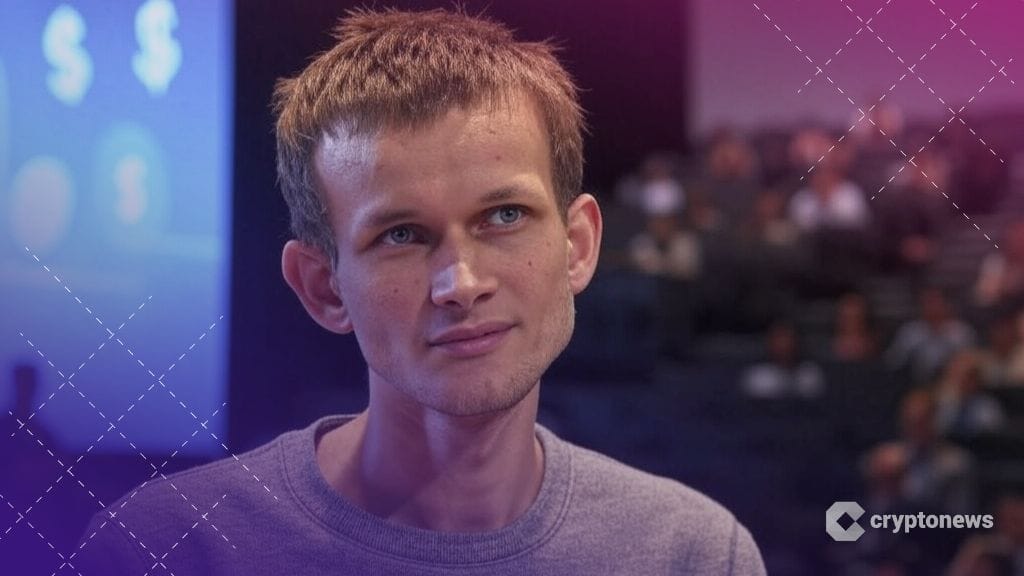
Ethereum co-founder Vitalik Buterin discussed the network’s long-term development on Wednesday, emphasizing the importance of balancing Layer 1 scalability with Layer 2 expansion while ensuring the blockchain remains decentralized and resilient.
“Hybrid L1 + L2” Approach Proposed by Vitalik Buterin
During a Q&A session on Tako, Buterin addressed Ethereum’s long-term scalability strategy, stressing the necessity of maintaining a balance between Layer 1 (L1) and Layer 2 (L2) networks.
He elaborated on the need for increased gas limits on L1 and the implementation of stateless verification methods like Verkle trees.
These enhancements, he said, would improve transaction efficiency without compromising decentralization.
Buterin acknowledged that L2 solutions play an essential role in Ethereum’s scalability, particularly by handling high-frequency transactions.
However, he cautioned against relying solely on L2, stating that Ethereum should not take an “everything on L2” approach.
“Cross-L2 interactions still require L1. If an L2 fails, users must be able to migrate to another L2, meaning some use cases cannot avoid L1,” he explained.
Ethereum’s roadmap includes improvements in L2 interoperability to facilitate seamless transitions between different L2s, reducing reliance on L1 for every transaction while maintaining flexibility.
On the topic of L2 sequencers, Buterin highlighted both their benefits and risks.
He noted that centralized sequencers provide instant confirmations and help prevent frontrunning, but also introduce potential vulnerabilities.
“It is also important to have the ability to trade based on rollup or directly on L1. So I support the two-part ecosystem to promote these two methods at the same time, and then we can see which method is more suitable for which application,” Buterin stated.
“Maintaining the ability for regular users to issue censorship resistant transactions is of course critical,” he added.
Decentralization and Future of Blockchains
As Buterin said, Ethereum’s decentralization is evident in its ability to operate independently of its foundation.
Unlike centralized projects, its development is distributed across multiple teams.
This separation reinforces resilience, but maintaining decentralization requires ongoing effort.
Without it, networks risk external control, contradicting blockchain’s purpose of open participation and autonomy in financial and technological systems.
If decentralization deepens, blockchain networks may evolve into autonomous infrastructures, resistant to corporate or governmental control.
Future advancements could focus on minimizing reliance on centralized intermediaries, ensuring open participation remains intact.
However, sustaining this model will require continued innovation in governance, scalability, and security to prevent consolidation and maintain true decentralization.
- Bitcoin Price Prediction: Trillion-Dollar Giant Vanguard Quietly Buys Into BTC Treasury – Is Wall Street Preparing for $250K BTC?
- XRP Price Prediction: Ripple Quietly Unlocks a Billion Tokens – Is a Price Shock Coming in the Next Few Hours?
- China’s DeepSeek AI Predicts the Price of XRP, Solana and Bitcoin By the End of 2026
- Google’s Gemini AI Predicts the Price of XRP, Ethereum and Solana By the End of 2026
- XRP Price Prediction: Top XRP Voice Sounds Alarm on Bitcoin’s Quantum Risk – Could XRP Be the Winner?


2M+
250+
8
70





- Bitcoin Price Prediction: Trillion-Dollar Giant Vanguard Quietly Buys Into BTC Treasury – Is Wall Street Preparing for $250K BTC?
- XRP Price Prediction: Ripple Quietly Unlocks a Billion Tokens – Is a Price Shock Coming in the Next Few Hours?
- China’s DeepSeek AI Predicts the Price of XRP, Solana and Bitcoin By the End of 2026
- Google’s Gemini AI Predicts the Price of XRP, Ethereum and Solana By the End of 2026
- XRP Price Prediction: Top XRP Voice Sounds Alarm on Bitcoin’s Quantum Risk – Could XRP Be the Winner?
More Articles


 in numbers