Nokia Aims for Metaverse Expansion in 2030 Strategy



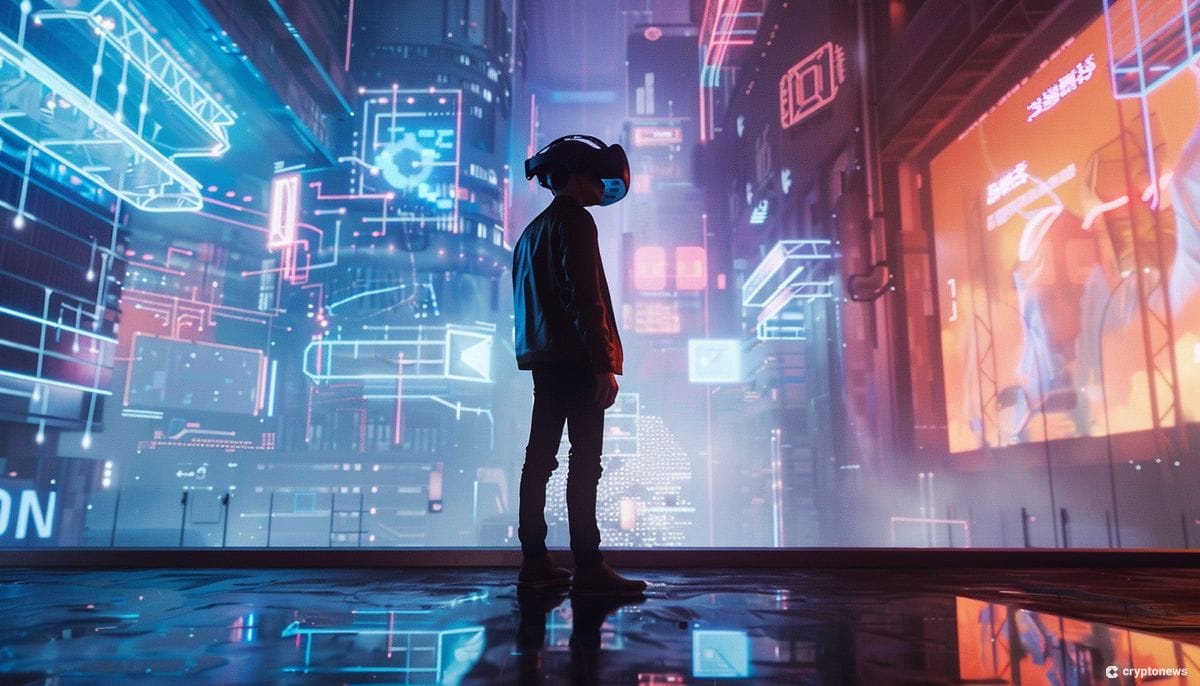
Nokia is gearing up for a surge in network demand driven by anticipated advances in the metaverse, Web3, and artificial intelligence (AI) by the year 2030.
The company’s Technology Strategy 2030 report outlines plans to address this increased demand through investment in network infrastructure and services.
Nokia predicts a substantial 22%–25% rise in network demand from 2022 to 2030, fueled by the growing adoption of generative AI and virtual reality devices. Federico Guillén, president of network infrastructure at Nokia, attributes this uptick to the mainstream emergence of these technologies.
Nokia’s Strategic Investment in Network Technologies for the Metaverse and Beyond
As the distinction between the digital and physical worlds continues to blur, organizations and service providers will increasingly adopt technologies that augment network traffic requirements significantly.
To address this anticipated surge in demand, Nokia plans to invest heavily in its portfolio of network equipment and services over the coming years.
The company aims to cater to various emerging ecosystems, with a particular focus on the Internet of Value, decentralization, blockchain, and smart contracts.
Additionally, Nokia is gearing up to capitalize on opportunities in the metaverse, with a focus on human augmentation, spatial computing, and split processing.
In line with its strategic objectives, Nokia has already established two labs dedicated to studying the metaverse and its underlying technologies.
Furthermore, the company has conducted numerous experiments involving industrial and wide-scale metaverse initiatives, including projects aimed at enhancing aircraft maintenance through augmented reality.
One noteworthy initiative involved using a 5G-connected Microsoft HoloLens to provide remote instructions for servicing Cessna aircraft. This innovative approach demonstrated the potential of augmented reality to assist technicians at remote airports.
Navigating the Future of Connectivity and Digital Transformation
The initial approach at Nokia focuses on exploring key emerging trends and identifying a suitable set of network technologies to mitigate complexities and unlock new possibilities by enhancing synergies between the human, physical, and digital worlds.
The Technology Strategy 2030 highlights AI, cloud computing, the metaverse, the Internet of Value, Industry 5.0, and API networks as key trends shaping the future.
According to Nokia, by 2030, the world is expected to witness a surge in new connected devices, driving mass adoption of the metaverse across consumer, enterprise, and industrial sectors.
Supply chains and manufacturing facilities will undergo extensive transformations, with real-time interactions between enterprises and distributor systems enabling efficient supply planning and estimation. The metaverse will revolutionize manufacturing operations, from design to testing, real-time monitoring, and remote maintenance.
Businesses are also experiencing the emergence of Web3, a decentralized, user-centric Internet infrastructure built on blockchain technology. Nokia noted in its report that cloud computing and advanced AI have become foundational requirements in organizations’ digital transformation journeys.
However, the deployment of multi-cloud architecture and the use of AI-embedded devices for developing cutting-edge business models are expected to gain further momentum in the years ahead.
Nokia’s Technology Strategy 2030 places a strong emphasis on advanced, dynamic, and intelligent network infrastructure capable of real-time performance optimization, zero-touch automation, customer experience analytics, advanced security, privacy features, and more.
The network architecture will incorporate a digital twin system with diverse APIs, empowering service providers and enterprises with valuable situational awareness and streamlined management of interconnected infrastructures.
By driving the transition of global enterprises into smart virtual networks, Nokia aims to create a single network for all services, converging mobile and fixed broadband, IP routing, and optical networks with the software and services to manage them.
By leveraging state-of-the-art technology, Nokia will transform the way people and things communicate and connect with each other, positioning itself at the forefront of the digital transformation.
- FTX Founder Sam Bankman-Fried Takes Fraud Conviction to Supreme Court
- Ripple News: XRP Uses AI Agents in $1 Billion Treasury Push
- Revised CLARITY Act Would Shift DeFi Compliance to Controllers
- Ethereum Price Faces a Reality Check as EIP-8288 Puts Its Technology to the Test
- XRP Faces Key Levels as Top Holders Reveal Who Controls the Supply
2M+
250+
8
70





- FTX Founder Sam Bankman-Fried Takes Fraud Conviction to Supreme Court
- Ripple News: XRP Uses AI Agents in $1 Billion Treasury Push
- Revised CLARITY Act Would Shift DeFi Compliance to Controllers
- Ethereum Price Faces a Reality Check as EIP-8288 Puts Its Technology to the Test
- XRP Faces Key Levels as Top Holders Reveal Who Controls the Supply
More Articles

 in numbers