U.S. Lawmakers Unveil Bipartisan Crackdown on Explosive Growth of AI-Powered Fraud



U.S. lawmakers have introduced a sweeping bipartisan proposal to crack down on the rapid rise of AI-powered fraud, responding to a series of high-profile impersonation attacks and a surge in automated criminal activity now spreading across financial and crypto markets.
The AI Fraud Deterrence Act, unveiled Tuesday by Rep. Ted Lieu (D-CA) and Rep. Neal Dunn (R-FL), seeks to impose far tougher penalties on crimes committed with the help of artificial intelligence.
New Bill Seeks Up to 30 Years in Prison for AI-Driven Fraud
Under the bill, bank fraud carried out with AI tools could carry prison sentences of up to 30 years and fines as high as $2 million.
AI-assisted wire fraud, mail fraud, and money laundering would also see stricter sentencing, with fines up to $1 million and terms reaching 20 years.
The legislation further targets impersonation of federal officials, a crime that would now carry three years in prison and a $1 million fine.
The proposal arrives after a wave of alarming incidents in Washington, where scammers used AI models to mimic the voices of senior government figures.
In one case, attackers breached the cellphone of White House Chief of Staff Susie Wiles and used AI-generated audio to call lawmakers and business leaders.
Two months later, fraudsters cloned the voice of Secretary of State Marco Rubio to contact foreign ministers and U.S. officials in an attempt to obtain sensitive information.
Lawmakers say these episodes show how quickly AI has changed the risk environment. “AI has lowered the barrier of entry for scammers,” Lieu warned.
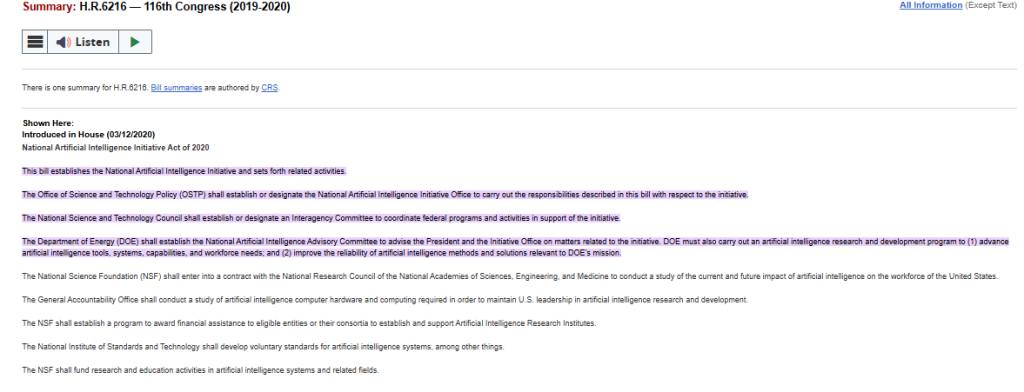
The bill adopts the definition of artificial intelligence from the 2020 National AI Initiative Act and includes First Amendment protections that exempt satire, parody, and other expressive content with clear disclosures.
Dunn said the measure is intended to match rapid technical change and warned that AI-assisted identity theft and fraud require harsher consequences.
The federal debate is unfolding as the White House considers an executive order that would override a patchwork of state-level AI regulations, even as more than 200 state lawmakers urge Congress to reject AI-preemption language in the national defense bill.
A similar federal moratorium collapsed in July after a 99–1 Senate vote, but a draft order circulating in Washington shows the administration exploring its own path to reclaim authority over AI rules.
AI-Powered Scams Surge 456% as Deepfakes Drive Billions in Losses
The push for new legislation comes amid a sharp increase in AI-based scams across the country.
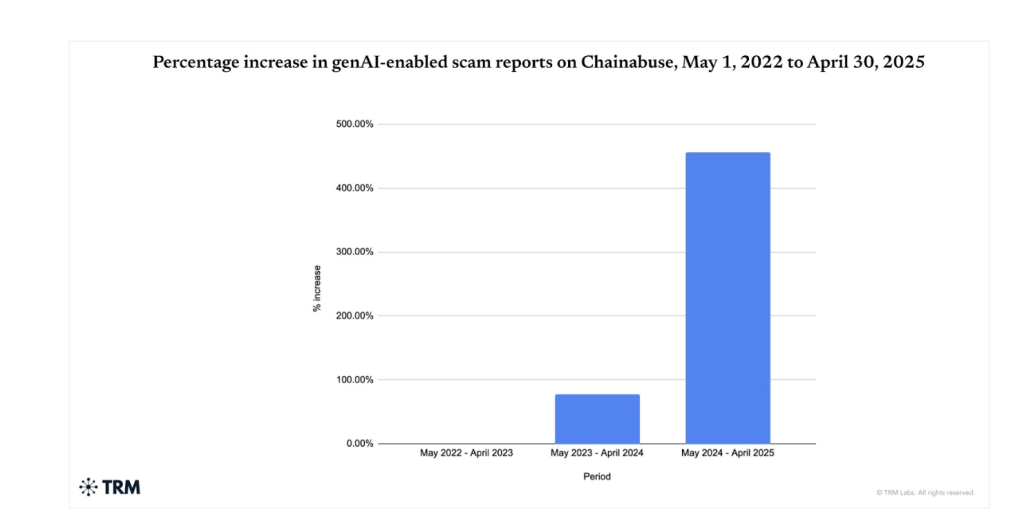
Federal data shows that U.S. citizens lost $9.3 billion to crypto scams last year, and a report from TRM Labs found a 456% rise in AI-facilitated scams in 2024.
Generative models are now being used to produce deepfake videos, cloned voices, realistic chatbots, and automated token schemes at a scale that investigators describe as unprecedented.
Analysts say AI is transforming fraud into an automated operation capable of moving funds across hundreds of wallets within seconds.
State and federal agencies are trying to keep up. New laws such as the TAKE IT DOWN Act now require platforms to remove non-consensual intimate imagery, including AI-generated content, within 48 hours.
Agencies like NIST and DARPA are developing detection standards, while the FTC has begun using existing regulations to target AI-driven scams.
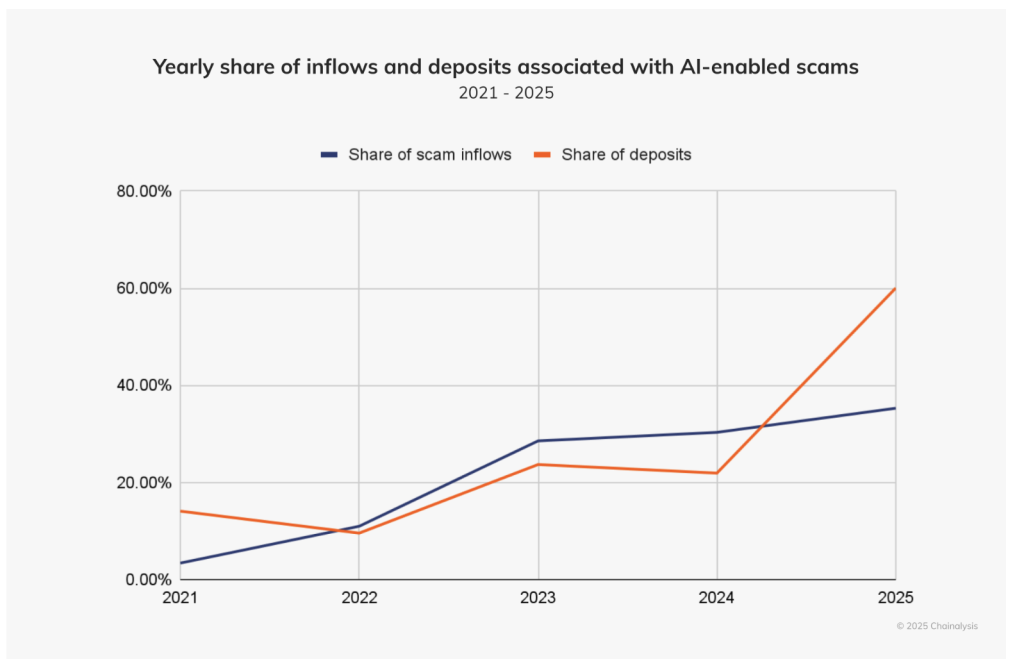
The crypto sector is facing similar pressure. Research from Chainalysis shows that roughly 60% of all deposits into scam wallets are now driven by AI-powered schemes.
Criminal groups are using deepfake livestreams, synthetic Zoom calls, and cloned public figures to lure investors.
A recent report from Bitget, SlowMist, and Elliptic estimated that AI-enabled crypto scams caused $4.6 billion in losses in 2024.
Investigators say the tactics continue to evolve, with scammers using fake apps, Trojan-laced job offers, and cross-chain laundering techniques that move faster than human monitors can track.
- Mark Zuckerberg Meta AI Predicts Gold and Silver Price Will Skyrocket by End of 2026
- Elon Musk Grok AI Predicts XRP Will Explode by End of 2026
- Sam Altman ChatGPT AI Predicts Bitcoin Price Will Shock Everyone by End Of 2026
- Standard Chartered Holds $500K BTC Call as Trump Cites China Risk
- XRP Price Prediction: Can XRP Crack $1.20 Before Clarity Act?
2M+
250+
8
70





- Mark Zuckerberg Meta AI Predicts Gold and Silver Price Will Skyrocket by End of 2026
- Elon Musk Grok AI Predicts XRP Will Explode by End of 2026
- Sam Altman ChatGPT AI Predicts Bitcoin Price Will Shock Everyone by End Of 2026
- Standard Chartered Holds $500K BTC Call as Trump Cites China Risk
- XRP Price Prediction: Can XRP Crack $1.20 Before Clarity Act?
More Articles

 in numbers