Symbiotic Sees 80% of Deposits Flow into Private Vaults as Custom Staking Takes Off: Interview


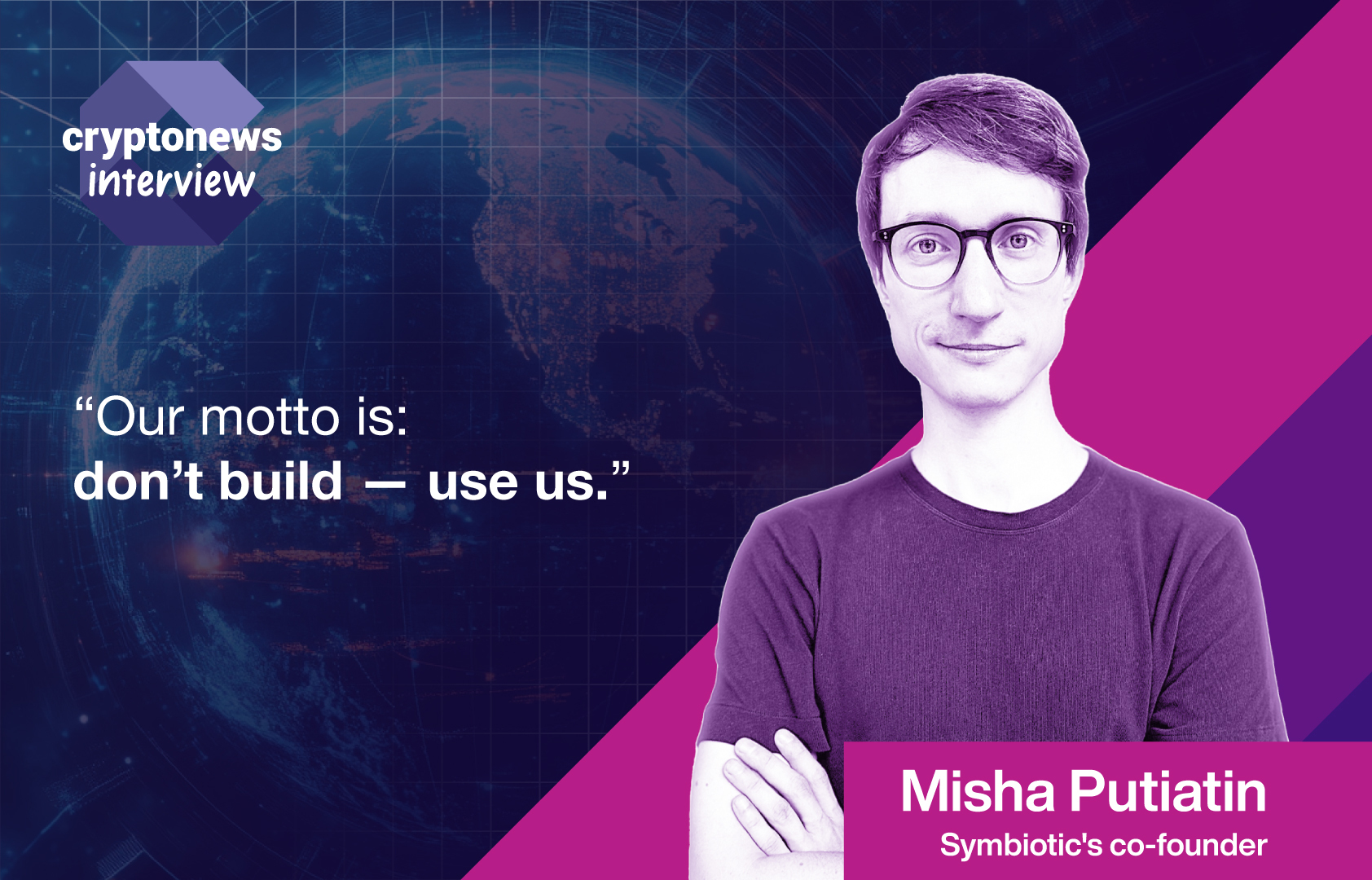
As offchain crypto products dominate headlines and billions pour into ETFs, Symbiotic is quietly building the foundation for a very different future across decentralized networks.
The Web3 protocol, founded less than two years ago, wants to be the backbone of crypto’s next infrastructure layer. It is positioning itself as a universal staking framework that any decentralized network can plug into.
Whether the need is for oracles, rollups or data availability chains, Symbiotic aims to provide the infrastructure so networks can focus on users, not servers.
“We are a universal staking framework,” said Misha Putiatin, the company’s cofounder. “Every sort of network that needs decentralization and incentive alignment is in our wheelhouse.”
Why Symbiotic’s ‘Uniswap for Staking’ Pitch Is Gaining Traction
Symbiotic launched its mainnet earlier this year. In the months since, it has quietly attracted over 200 staking vaults and helped more than a dozen networks go live.
But its bigger goal is more ambitious. Instead of every protocol building its own staking infra from scratch, Symbiotic wants to offer a permissionless base layer — something Putiatin likens to “Uniswap for staking.”
That design philosophy explains why more than 80% of deposits have gone into private permissioned vaults. These vaults, controlled by liquidity managers and protocols, offer full customization while maintaining compatibility with Symbiotic’s rules.
Each vault can run its own strategy, whether focused on native tokens, liquid staking assets or even pre-token projects. They can control where funds come from, how they are managed, and build their own reward mechanisms, Putiatin explained.
More LRTs Are Choosing Flexibility Over Custom Code
This flexibility is what makes Symbiotic especially appealing to liquid restaking token (LRT) protocols. These projects, which rely on complex capital deployment strategies, have flocked to Symbiotic to avoid building and auditing staking infra themselves. “Our motto is, don’t build — use us,” Putiatin said.
The appeal runs deeper. While conventional models tie users to a single token and protocol, Symbiotic’s vaults empower a single dollar to support multiple networks at once. This unlocks sophisticated risk-reward strategies, fundamentally transforming how DeFi liquidity flows, according to Putiatin.
The company is already seeing signs of this shift. Many vaults now operate like mini hedge funds, allocating assets across a mix of risk profiles.
Some prefer slashing-free roles like governance voting, while others stake with rollups or oracles, accepting higher risks for potentially greater returns.
Symbiotic Sees Modular Infra as DeFi’s Internet Moment
Symbiotic works with analytics firms like Gauntlet and Chaos Labs to educate vault operators on risk, lockups and slashing.
This modularity stands in contrast to custodial products like BlackRock’s Ethereum ETF, which holds ETH but does not secure the network. “They just hoard the asset,” Putiatin said.
He believes staking ETFs are the next evolution, followed by smarter allocation platforms that stake across chains based on protocol traction and yield potential.
Institutional adoption remains cautious but is growing. Putiatin notes a shift in regulatory tone following recent clarity in US laws. Legal teams are more comfortable, and institutions are increasingly open to onchain staking conversations.
“My lawyers are way more relaxed,” he said. Previously, even small decisions could take months. Now they’re resolved in days.
Symbiotic itself has a 30-person team and a strong sense of mission. Putiatin sees the rise of shared infrastructure as inevitable. He compared the shift to early internet days, saying projects no longer need to build the entire stack from scratch. Now, the goal is simply to launch quickly and reach users.
That shift, from infra obsession to user focus, is what Symbiotic is betting on. If Putiatin’s vision proves correct, DeFi’s next wave will depend on who collaborates most effectively with its foundational layer, rather than who builds the fastest blockchain.
- Ripple CEO, Brad Garlinghouse, Calls CLARITY Act Within Reach as XRP Runs
- XRP Price Prediction: Spot Trading Volume Hits Highest in 6 Months
- Bitcoin ETF News: BlackRock IBIT Captures 62% of Inflows
- Ethereum News: Double Three Pattern Hints at Another Rally
- XRP Price Analysis: Wealth Managers Show Growing Interest in XRP


2M+
250+
8
70





- Ripple CEO, Brad Garlinghouse, Calls CLARITY Act Within Reach as XRP Runs
- XRP Price Prediction: Spot Trading Volume Hits Highest in 6 Months
- Bitcoin ETF News: BlackRock IBIT Captures 62% of Inflows
- Ethereum News: Double Three Pattern Hints at Another Rally
- XRP Price Analysis: Wealth Managers Show Growing Interest in XRP
More Articles



 in numbers