


USDT prices in Venezuela dropped sharply as demand for the stablecoin eased, narrowing the gap with the Central Bank’s official exchange rate. The move reflects shifting market expectations around greater foreign currency availability following recent US intervention.
Analysts warn the adjustment may be temporary, as it has not translated into lower living costs and remains unsupported by sustained foreign investment or structural inflows.
SponsoredDollar Demand Eases Amid Policy Signals
The price of USDT in Venezuela has fallen by over 40% in the past 10 days, surprising the local market. Meanwhile, the exchange rate gap has narrowed to almost 31%.
The country has experienced great political instability since the start of the year. Three days into January, the American capture of Venezuelan strongman Nicolás Maduro injected uncertainty into the markets over what the future of the government would look like.
Venezuelans have since reacclimated themselves to a new normal. Now, with former vice president Delcy Rodríguez in charge, the government has signed several new oil agreements with the United States.
With the prospect of greater foreign currency supply and international investment, dollar demand, as measured by USDT, has waned.
On the surface, the data reflect expectations of increased foreign exchange supply and tentative signs of economic normalization.
Nonetheless, other factors may be at play that partially explain this shift.
SponsoredMarket Correction Masks Ongoing Economic Strain
Ongoing bolívar instability, combined with capital controls and limited access to stable foreign currencies, has driven widespread cryptocurrency adoption in Venezuela. Cryptocurrencies are commonly used to pay salaries and facilitate everyday purchases of goods and services.
Because of this, stablecoins, more specifically USDT, have become the reference point for dollar demand in Venezuela.
Over the past two days, USDT fell below 500 bolivars on P2P platforms for the first time since December. The data indicates that buyers are no longer competing aggressively for dollars. Meanwhile, sellers are more willing to accept lower prices.
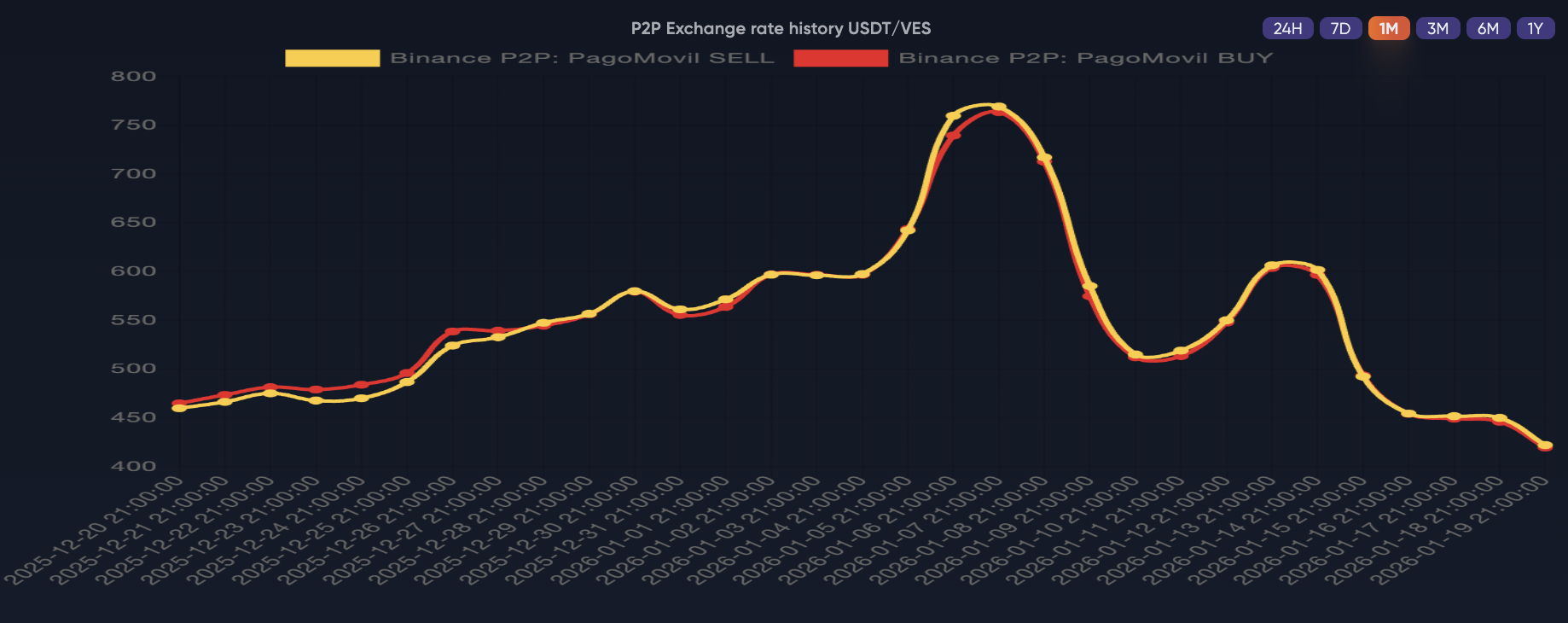
Because P2P markets in Venezuela reflect real household and business demand, this move signals a temporary easing of dollar scarcity and a reduction in fear-driven pricing.
However, it does not indicate improved purchasing power or lower inflation. Although the exchange rate gap has narrowed significantly, food and service prices continue to rise, generating a strong perception of economic disconnection.
The bigger question now is whether the decreased demand represents a structural change or just a momentary respite.
Without sustained capital or export revenues, the current balance could quickly unravel. Any lasting stabilization will depend on deeper structural reforms and a steady supply of external funding.

