


Only days after BitMine’s (BMNR) annual shareholder meeting in Las Vegas, controversy has erupted, exposing a sharp divide between management and investors.
It centers around governance, transparency, and the company’s ambitious shift from a pure Ethereum staking vehicle to a “digital Berkshire-style” capital allocator.
BitMine Exec Addresses Shareholder Concerns After Controversial AGM
Shareholders criticized the meeting for absent executives, rushed presentations, and unclear vote outcomes.
Both the new CEO and CFO failed to attend, while the promised high-profile guest speakers did not appear. Based on this, investors describe the gathering as poorly managed and disrespectful, with some likening it to a “clown show.”
Concerns were heightened by Tom Lee’s simultaneous leadership of Fundstrat, raising questions about whether he could dedicate sufficient attention to BitMine.
Rob Sechan, a board member, acknowledged shareholder frustration but emphasized that the meeting occurred during a transitional period. Reportedly, several executive positions were filled only days prior.
He defended the board’s oversight, noting that the AGM’s goal was to explain the company’s “DAT-plus” strategy and illustrate its long-term potential.
Critics, however, argued that the board’s response failed to address fundamental issues of planning, transparency, and accountability.
Strategic Shift: From Staking to Digital Capital Allocation As MrBeast Deal Divides Investors
Despite the governance criticism, management highlighted a major strategic pivot. BitMine is moving beyond ETH staking to become a digital holding company, deploying its capital into projects that expand Ethereum adoption.
The company holds over 4 million ETH (approximately $14 billion) and generates $400–$430 million annually from staking, with projections rising to $540–$580 million as it targets 5% of Ethereum’s total supply.
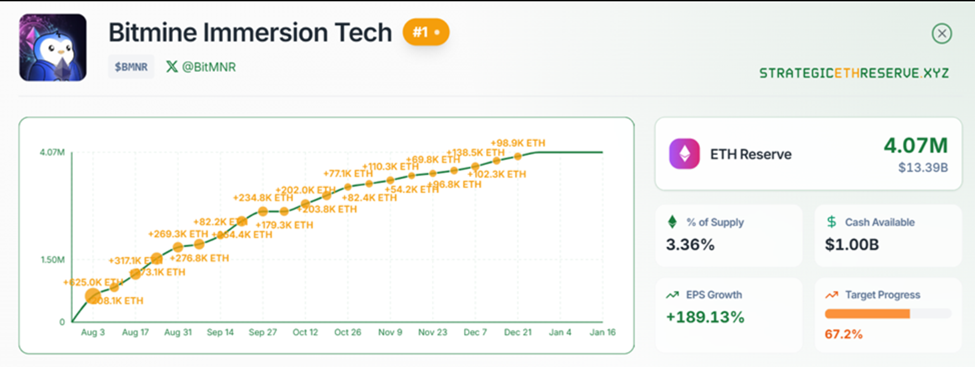
Sechan likened the strategy to Berkshire Hathaway, describing it as disciplined capital allocation, adapted for the digital age.
“A capital base plus disciplined deployment into productive businesses is exactly what $BRK does. Same concept, different era and rails,” he wrote, countering critics who dismissed the move as overambitious.
The most contentious element was BitMine’s $200 million commitment to MrBeast’s Beast Industries. The investment is designed to integrate Ethereum into the creator economy through tokenized platforms and distribution networks.
Supporters argue the deal leverages one of the largest global attention engines to accelerate adoption among Gen Z and Alpha audiences.
Critics, however, view the partnership as a distraction from governance and operational priorities, questioning whether the company is overextending itself.
Taken together, the meeting exposed a stark tension between ambition and accountability. While BitMine’s strategic vision promises long-term growth, stakeholders remain wary of execution risks and leadership gaps.
Sechan pledged improvements in transparency and engagement, with future meetings expected to be more structured and interactive.
As BitMine seeks to balance governance, investor trust, and bold innovation, the company faces a critical test. It must prove that its “digital Berkshire” model can deliver both on ETH returns and its broader vision without alienating shareholders.


