




In brief
- Monero and Zcash were the top losers in the top 100 by market cap, both down about 8% on the day.
- The privacy coin sector fell about 5.8% on the day, showing Monero and Zcash’s declines were deeper than the category’s average.
- The drawdown is a mix of risk-off sentiment and privacy-specific regulatory pressure, Decrypt was told.
Privacy-focused cryptocurrencies led losses across the digital asset market on Tuesday, with the sector falling sharply even as broader declines remained more contained.
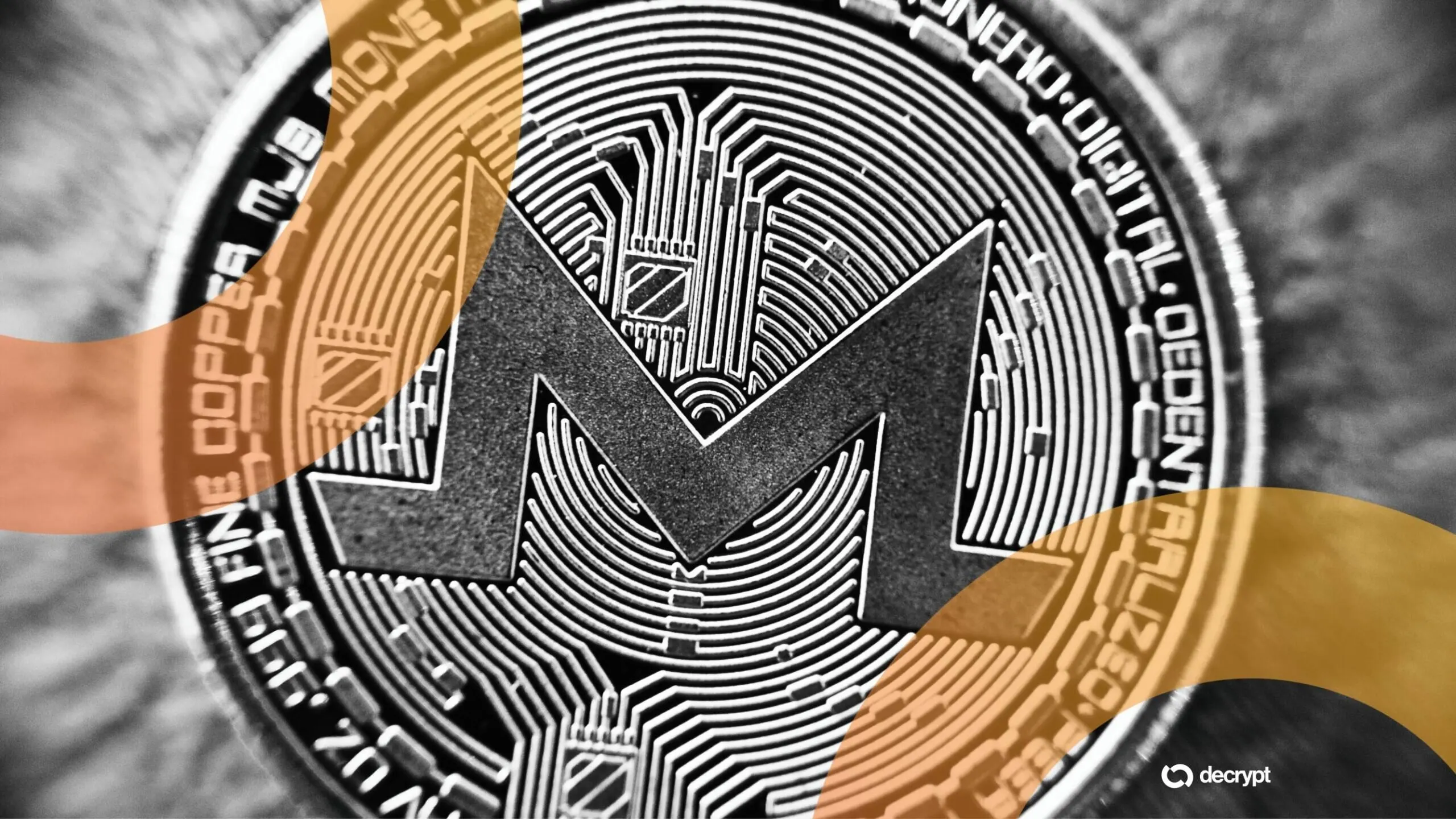
Monero (XMR) and Zcash (ZEC) were among the weakest performers in the top 100 by market capitalization, both dropping by about 8% over the past 24 hours.
Monero and Zcash both posted sharp losses on the day, showing declines that were deeper than the broader privacy coin average of 5.8%, according to CoinGecko data.
Monero is down almost 20% over the past week, trading around $376 with roughly $125 million in daily volume. The decline comes after a sharp rally into mid-January, when Monero briefly surged above $680 before reversing lower in the weeks that followed.
Zcash, meanwhile, has dipped by more than 26% over the week, with heavier turnover of roughly $399 million in 24-hour volume. The pullback follows a late December surge that carried Zcash above $540, before prices reversed lower through January and into early February.
On prediction market Myriad, owned by Decrypt's parent company Dastan, users place just an 18% chance on Zcash's next move taking it to $550 rather than $250.
Why are privacy coins down?
This week’s privacy coin drawdown “looks like a mix of broader risk-off positioning and privacy-specific pressure,” Pavel Nikienkov, co-founder of privacy blockchain Zano, told Decrypt.
“When markets get cautious, narratives that are perceived as ‘regulatory risk’ tend to be sold first, and privacy coins are often placed in that bucket regardless of their actual use cases,” Nikienkov explained. “The difference is that privacy assets also face structural headwinds like delistings and reduced access, which can amplify moves compared to the rest of the market.”
Newly listed privacy token Zama, which leverages fully homomorphic encryption (FHE), also traded lower, with an intraday drawdown of about 19% coinciding with the losses posted by Monero and Zcash.
The broader privacy coin selloff comes as privacy-focused assets continue to face structural headwinds tied to regulation and exchange access.
Over the past three years, centralized platforms have either threatened restrictions or altogether removed privacy coins from listings, citing compliance and surveillance requirements from regions such as the EU, a trend that has weighed on liquidity and institutional participation.
Such a predicament opens broader conversations over whether privacy coins are being priced out as regulatory liabilities, or misread as expendable features.
“Privacy isn’t losing relevance, it’s only becoming more necessary, but the market is still treating it like a niche feature instead of core infrastructure,” Zano’s Nikienkov said.
The industry’s mistake, he opined, is “pushing opt-in privacy models, because privacy only works as a network effect: if most users stay transparent, the private set becomes small, weaker, and more identifiable.”
Privacy as a default “is what makes crypto usable for real commerce, payroll, and everyday payments, because no functioning economy runs on fully public transaction histories,” he added.
