
Thai SEC probes “The BIG Secret” crypto hack
Thailand’s Securities and Exchange Commission (SEC) said it is reviewing reports circulating on social media that claim a major local cryptocurrency exchange was hacked.
On Sunday, Thai social media channel The Big Secret posted an image of what it described as an internal document detailing a large-scale breach. The document, which has not been verified, had its date and related blockchain addresses redacted.
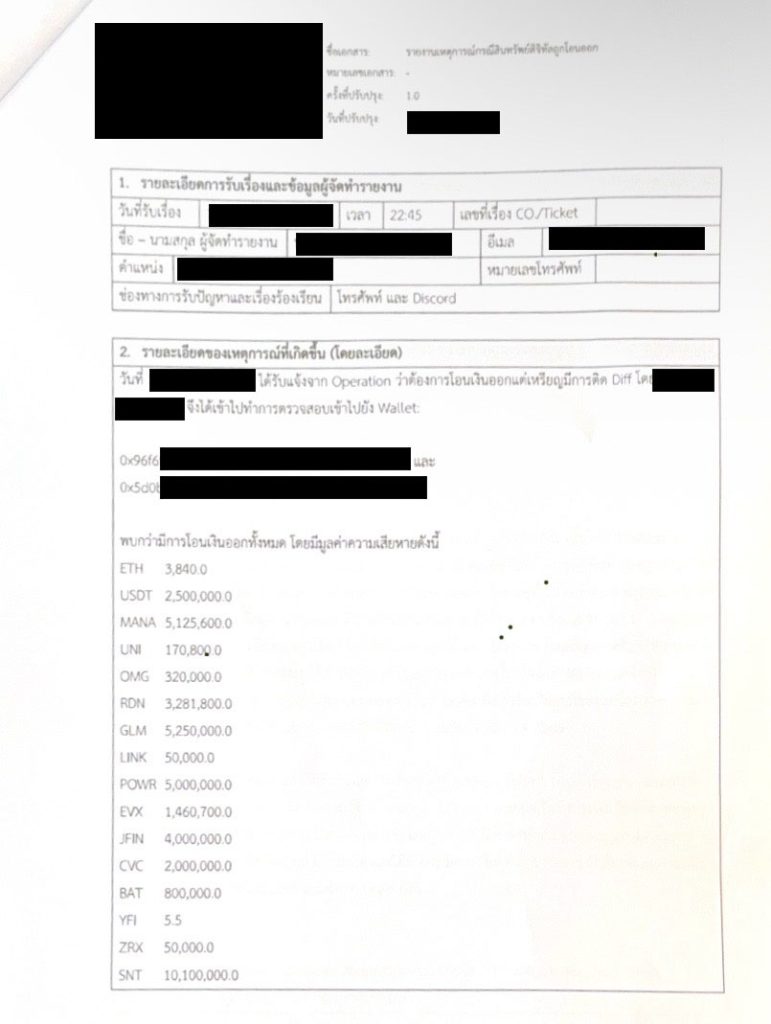
Following the post, several exchanges issued statements assuring customers that their assets remain safe. The exchange allegedly involved has not been publicly identified.
In a livestream on Monday morning, the operator of The BIG Secret said the documents were obtained from an undisclosed source and acknowledged they require further verification. He added that the leaked files contained multiple pages, some dated as far back as four years.
“The question is about what happened back then. If this incident really occurred four years ago, why didn’t we know about it? Did a Thai exchange actually get hacked back then?” he asked.
According to the influencer, the documents suggested the hack would have been valued at around 7.7 billion baht ($242 million) at the time. Using today’s prices, the same basket of assets would be worth more than $41 million.
Nudge wants to launch Japan’s first credit card repayments in JPYC stablecoins
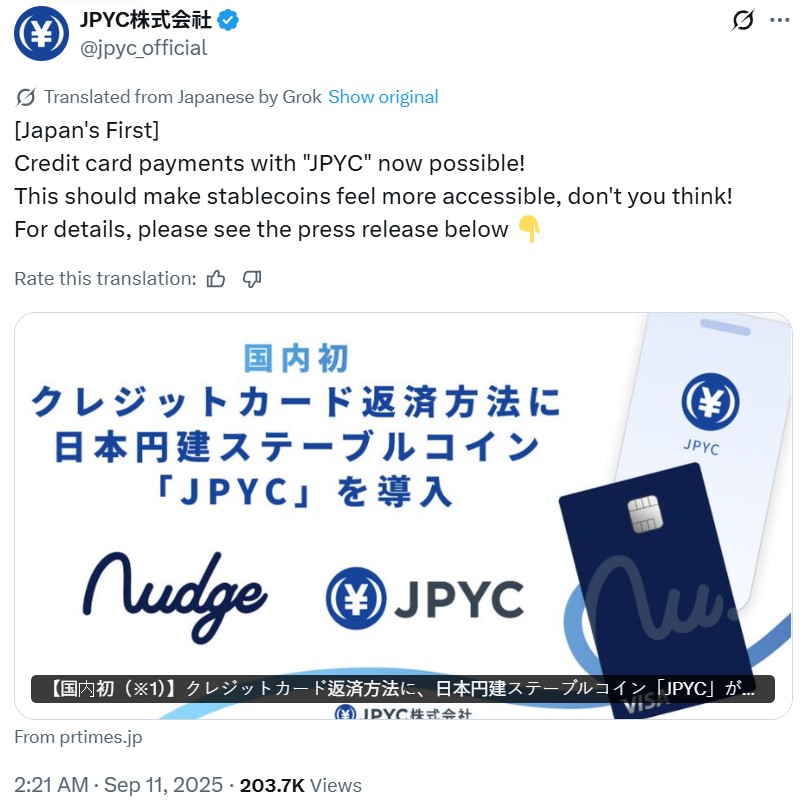
Japanese fintech startup Nudge said it will allow users to repay credit card bills in the yen-backed JPYC stablecoin starting from October.
Japan’s established its regulatory framework for stablecoins under the revised Payment Services Act (effective mid-2023), which requires issuers to register as funds transfer service providers and to maintain full reserve backing. JPYC obtained its registration last month, becoming the first entity in Japan formally authorized to issue a yen-denominated stablecoin.
With the tie-up, purchases made with the Nudge card at any of Visa’s merchants can effectively be paid back later in stablecoin, avoiding the need to rely solely on bank transfers. Nudge said it plans to expand repayment support to additional stablecoins and tokenized deposits in the future.
Xinyuan’s last-ditch blockchain rebrand
Chinese real estate giant Xinyuan Group will restart its blockchain program to explore real-world asset tokenization (RWA), the firm announced on its official WeChat account.
The company’s blockchain program returns to a strategy it toyed with years ago but never fully brought to market. Back in 2016, it partnered with Tsinghua University’s PBC School of Finance — established by the People’s Bank of China — to create a fintech research center with blockchain as a core area of study. By 2018, it was incubating blockchain startups and piloting applications such as onchain property registration and token economy models.
Despite experimenting with tokenization concepts internally, Xinyuan never issued tradable real estate tokens or conducted onchain fundraising — steps that would likely have triggered regulatory scrutiny in China, where token issuance has been tightly restricted since 2017.
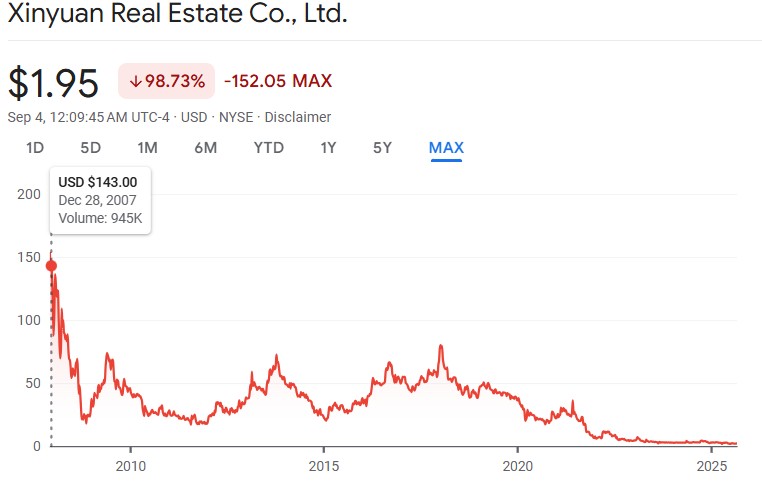
The recent blockchain revival also comes as Xinyuan faces mounting business challenges. On Sept. 3, the New York Stock Exchange announced it had begun delisting proceedings against the company after its average market capitalization fell below $15 million over 30 consecutive trading days.
Xinyuan’s return to blockchain reframes its effort under the global RWA narrative, which has gained momentum as major institutions experiment with tokenized treasuries, credit, and real estate. The company says it will pursue partnerships with international blockchain providers, compliance experts, and investors to launch its first tokenized property projects. It also flagged plans to explore onchain financing as an alternative to traditional real estate funding, pitching RWA as a way to improve liquidity and efficiency in its asset portfolio.
Stablecoins are beginning to enter mainstream payments in Japan just as the global industry faces heightened scrutiny and fresh regulation. In the US, lawmakers have passed the GENIUS Act to regulate dollar-pegged stablecoins, while in Europe, the MiCA framework for euro-denominated tokens is already in force.

South Korean college district sells crypto to collect tax
A district in South Korea’s capital has collected overdue taxes by liquidating cryptocurrency seized from tax delinquents.
The sale was made possible by a rule change earlier this year that allows local governments and institutions to open accounts at cryptocurrency exchanges, which was previously limited to retail investors.
Seodaemun District said it has been seizing crypto since 2021, but was unable to convert them into cash due to the lack of a legal liquidation mechanism. This marks the first time one of Seoul’s 25 districts has settled tax arrears through the sale of seized crypto.
Traditional delinquent tax measures in South Korea have focused on assets such as bank deposits, wages, and real estate. Authorities say using cryptocurrency could accelerate the recovery of unpaid taxes.


Yohan Yun

Visa stablecoin plan, debt ceiling’s effect on Bitcoin price: Hodler’s Digest, April 23-29
Circle launches cross-chain transfer protocol, Visa shares plans for stablecoin product, Kraken fights back in court, and more.
Read more
What people still get wrong about VeeFriends: Andy Krainak, NFT Creator
Andy Krainak was basically living at Gary Vaynerchuk’s apartment for the launch of VeeFriends, and says he never saw his boss more emotional.
Read moreBitcoin ‘bullish’ in Q1 says Willy Woo, XRP lacks CLARITY: Trade Secrets
